Pêcheurs Et Bateau De Pêche — History & Facts
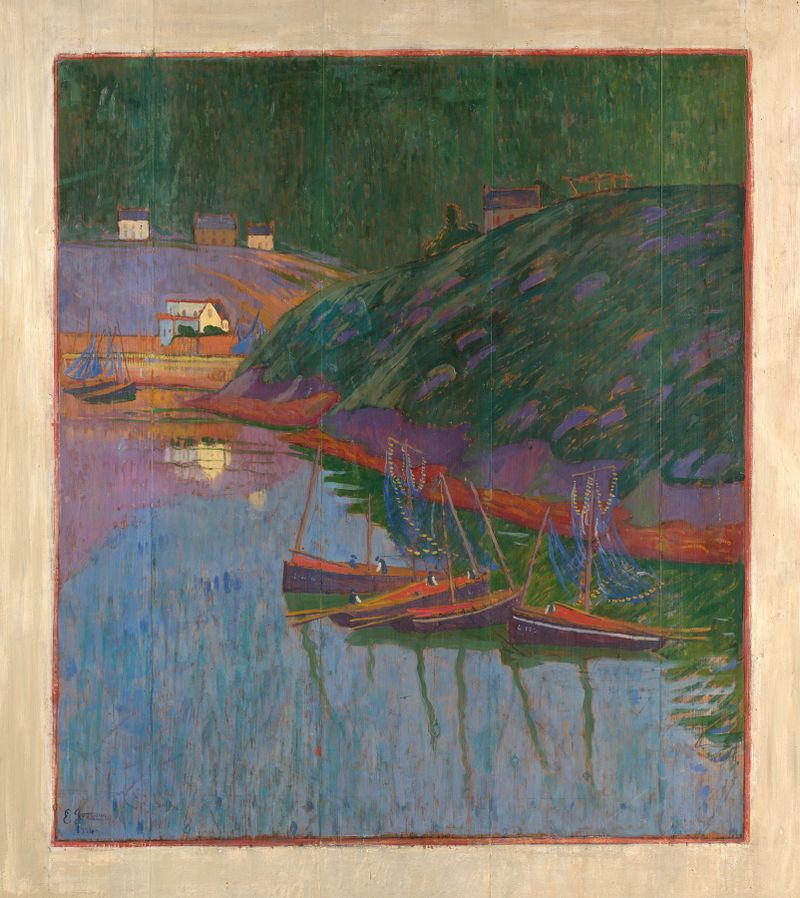
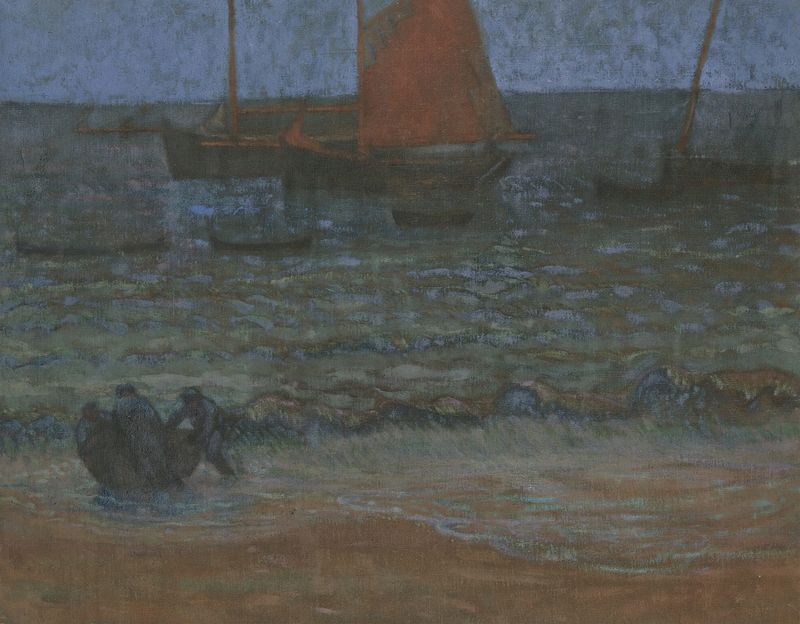
Can beauty exist without sorrow? In Pêcheurs Et Bateau De Pêche, Émile Jourdan captures the delicate interplay of joy and melancholy, evoking a profound sense of longing beneath the tranquil surface of daily life. Look to the shimmering water, where soft ripples reflect the pastel hues of twilight. Notice how the fishermen, bent over their work, blend seamlessly into the serene landscape, their figures rendered with gentle strokes that convey both movement and stillness. The earthy tones of their clothes contrast with the subtle blues and greens of the sea, illustrating a harmony that is as striking as it is fleeting. As you gaze deeper, the emotional tension unfolds.
The distant boat, a vessel of livelihood, appears almost like a ghost on the horizon, suggesting the transient nature of existence. Each fisherman embodies a story, their focused gestures revealing dedication yet hinting at the weight of their burdens. The warm glow of the setting sun serves not only to illuminate their toil but also to cast long shadows, reminding the viewer of the inevitable interplay between light and darkness. During the years 1890-92, Jourdan was working in France amidst the rise of Impressionism, a movement that sought to capture the ephemeral nature of reality.
While he embraced elements of this style, the artist also infused his work with a sense of realism that speaks to the human condition. This period in his life was marked by a growing recognition of his artistic voice, as he grappled with the dynamics of beauty, labor, and the subtle grief that accompanies existence in the world.