Marine Study — History & Facts
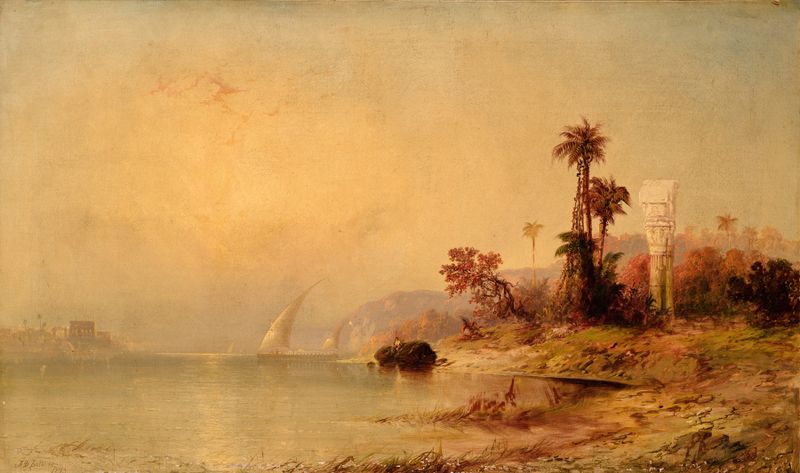
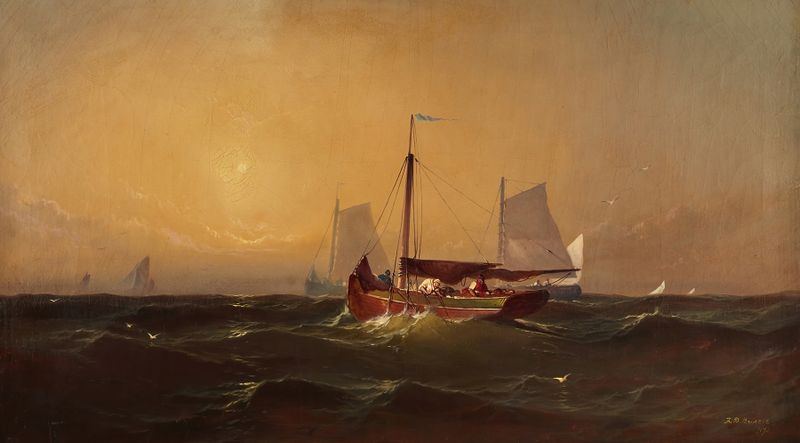
What if silence could speak through light? In the stillness of a moment captured on canvas, the essence of nostalgia lingers, whispering tales of time gone by. Look to the center of the painting, where gentle waves ripple beneath a fading sun. The soft blues and greens create a tranquil sea, while splashes of coral and gold reflect a sunset that seems to sigh. Notice how the brushwork varies — the smooth strokes of the water contrast with the textured surface of the rocky shoreline, drawing your gaze toward the horizon, where the sky embraces the sea in a tender farewell. Delve deeper into the interplay of light and shadow.
The luminous glow that bathes the scene evokes a bittersweet yearning, perhaps for a moment lost to the past. The solitary boat, almost ghostlike, suggests isolation, while its direction hints at the promise of new horizons. Each detail, from the wispy clouds to the faint outline of distant land, captures the fleeting nature of time, crafting a poignant reminder of both stillness and the relentless march forward. Franklin D.
Briscoe painted Marine Study between 1860 and 1900, during a period when American art was beginning to embrace Impressionism. Working primarily in coastal settings, he was inspired by the changing effects of light on water and sky. This painting reflects not only his technical prowess but also the broader cultural movement seeking to capture transient moments in harmony with nature's beauty.