Sea Scene with Boats — History & Facts
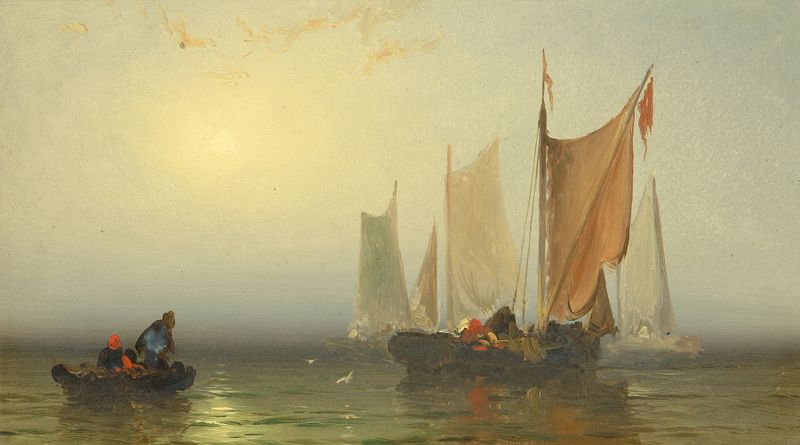
Can beauty exist without sorrow? In Sea Scene with Boats, Franklin D. Briscoe explores the delicate balance between tranquility and the underlying currents of unease that life often presents. Look to the left at the small fishing boats, their sails catching the gentle breeze as if racing toward the horizon. Notice the interplay of light and shadow across the water's surface, where the sun glimmers like scattered diamonds, inviting yet elusive.
The palette of soft blues and warm whites envelops the scene, creating a serene atmosphere that contrasts with the dark, rolling clouds gathering in the distance, hinting at impending change. As you delve deeper, observe the figures aboard the boats, their faces obscured yet expressive in their postures. They embody hope and labor, representing the resilience of humanity against nature's whims. The juxtaposition of the calm sea with the stormy sky foreshadows the fragility of this moment, a reminder that joy is often laced with uncertainty.
The vibrant colors speak to life's beauty, while the looming shadows evoke a sense of foreboding—an eternal dance of light and dark. Briscoe painted this evocative scene in 1873, during a period of transition in American art, as the Hudson River School's influence waned and a more modern approach began to emerge. Working in Gloucester, Massachusetts, he captured not only the beauty of the coastal landscape but also reflected on the nature of human existence amid an ever-changing world, making this artwork a poignant statement of its time.