Maritime pines at the villa Pamphilj — History & Facts
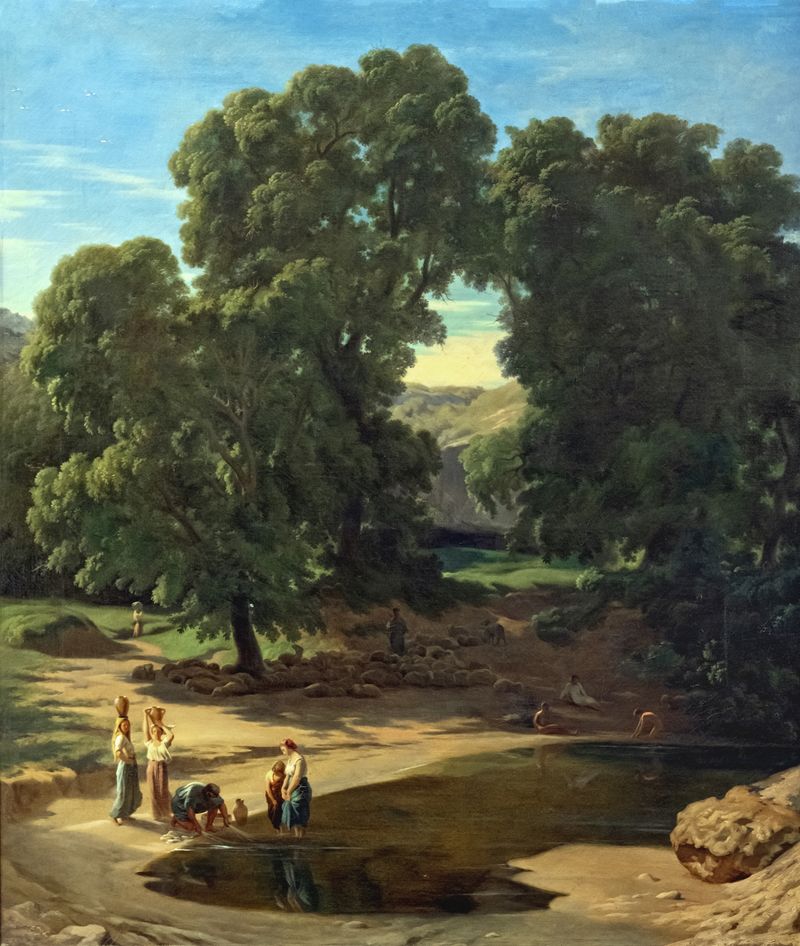
In the stillness of Maritime pines at the villa Pamphilj, an exquisite balance unfolds between nature and the architecture of tranquility. This painting invites the viewer to ponder the serene coexistence of the towering pines and the gentle embrace of the villa, whispering secrets of a moment forever held in time. Look to the left at the majestic pines, their dark green needles contrasting sharply with the soft blues of the sky. The light filters through the branches, casting delicate shadows that dance upon the ground.
Notice how Flandrin employs meticulous brushwork, creating a textured interplay of leaves and bark that draws your eye upward. The villa, nestled quietly in the backdrop, exudes an aura of permanence, its earth tones grounding the composition while the pines reach for the heavens, symbolizing the balance between the transient and the enduring. The emotional tensions in this scene lie in its duality. The pines represent resilience, standing tall despite the passage of time, while the villa embodies human fragility, its walls weathered yet steadfast.
The painting speaks to the harmony that exists in nature, where life and architecture coexist, each enhancing the beauty of the other. The overall composition balances light and shadow, evoking a sense of calm, yet igniting curiosity about the stories shared beneath those ancient trees. In 1837, while working on this piece in Italy, Flandrin was deeply involved in Romanticism, a movement that sought to express the sublime in nature. The era was marked by an exploration of emotion and individuality, and the artist was honing his style, blending classical themes with the emotional resonance of the landscape.
This painting not only reflects his artistic evolution but also captures a moment in time when nature was revered as a source of inspiration and introspection.