Market Day in Torroella — History & Facts
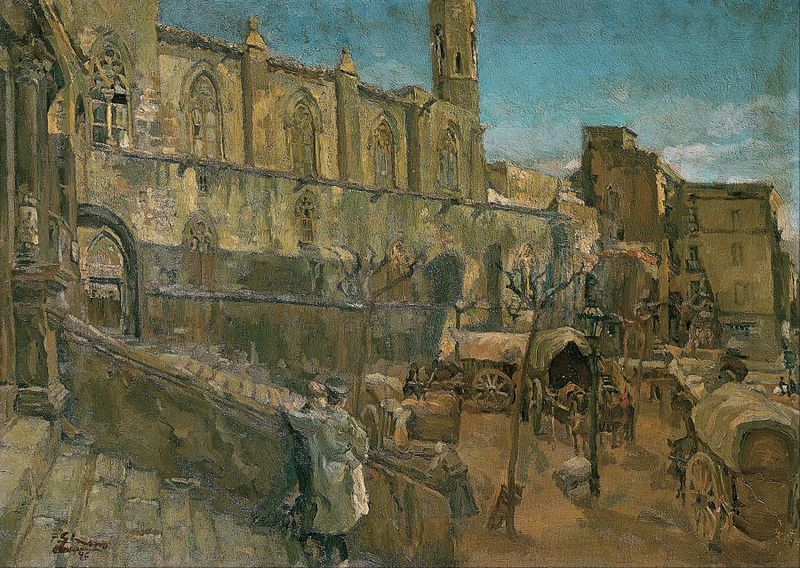
What secret hides in the quiet of the canvas? Beneath the vibrant colors and bustling figures, an innocence shines through, whispering the stories of lives intertwined in a single moment of time. Look to the left at the young girl, her playful gesture inviting you into the scene. The warm sun bathes the market in golden light, illuminating the rich textures of fruits and vegetables that spill from wooden crates. The composition draws your eye to the lively interplay between the vendors and customers, each face etched with character, yet softly blurred as if caught in a dream.
Notice how the gentle strokes convey movement, creating an atmosphere of anticipation in the air while the azure sky serves as a serene backdrop. Beneath the vibrant facade, deeper meanings unfold. The contrast between the bustling market and the solitary figure of the young girl evokes a sense of innocence amid life's chaos. The way she clutches a flower seems to hint at fleeting moments of joy, a reminder of the simplicity of childhood amidst the complexities of adult life.
Additionally, the varied expressions of those around her reflect the tensions of their realities, each person with burdens yet united in this shared experience. In 1918, when Market Day in Torroella was painted, Francesc Gimeno was immersed in a post-war Europe, grappling with the echoes of conflict and change. Living in Barcelona, he sought to capture the essence of everyday life, reflecting both the joy and struggles of the people. This work represents a pivotal moment in his career, as he embraced a vibrant palette and expressive forms, moving toward a style that would resonate with the burgeoning modernist movement.