Market in Lviv — History & Facts
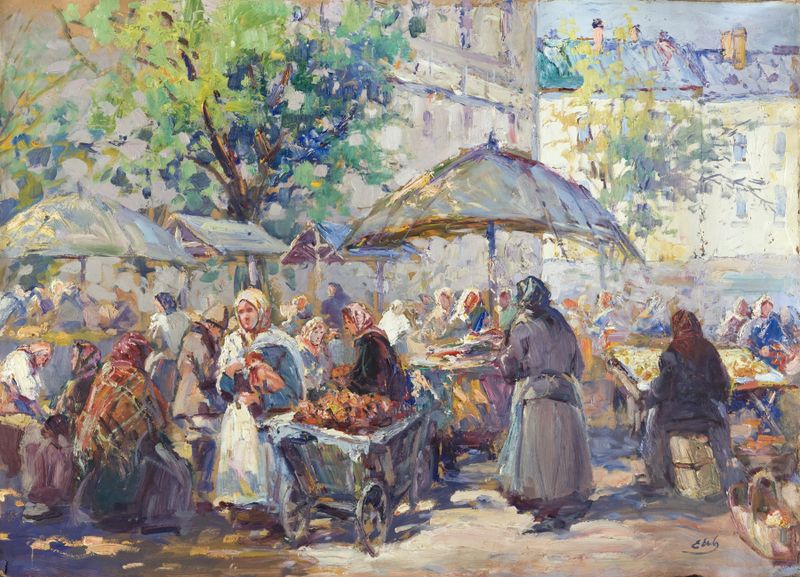
Could beauty survive in a century of chaos? This question echoes in the heart of a world where trust wavers and betrayal lurks in shadows. It compels us to reflect on how fragile yet resilient our connections to art and each other can be. Look to the center of the composition, where an array of market stalls bursts into life, vibrant colors clashing and harmonizing with the surrounding architecture. The artist employs a rich palette of reds and yellows, imbuing the scene with warmth that belies the underlying tensions in the atmosphere.
Notice how the figures of vendors and shoppers are intertwined, their gestures dynamic yet restrained, capturing a moment of communal interaction amidst the uncertainty of their lives. Delve deeper into the expressions on the faces, each telling its own story of hope, resilience, or perhaps quiet despair. The juxtaposition of the lively marketplace against the looming presence of historical architecture hints at a past filled with betrayal and loss. Each stall, laden with produce, symbolizes not just nourishment but the persistence of life and culture even in dire circumstances.
The light that spills over the scene feels almost like a balm, yet it casts long shadows, reminding us of the fragility of trust. Erno Erb created this work during a tumultuous period in European art, navigating the shifting tides of post-World War II sentiment. Although the exact date remains uncertain, he was active in the mid-20th century, a time marked by both artistic experimentation and the echoes of societal upheaval. As he painted, the world around him grappled with the scars of conflict, and the marketplace served as a microcosm of life’s resilience amidst chaos.