Marksmen in Merano — History & Facts
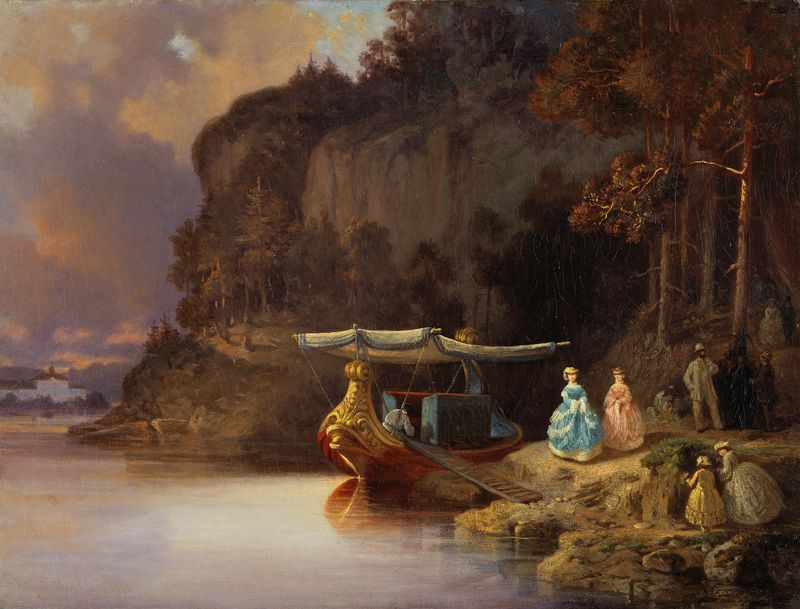
When did color learn to lie? In a world awash with vibrant hues, one can only wonder if the palette speaks truths or conceals deeper layers of meaning. Look to the center of the canvas where figures stand poised, guns slung across their shoulders, their expressions a mixture of determination and unease. Notice how the deep greens of the landscape cradle their forms, contrasting with the stark whites of their shirts, which almost glow under the soft sunlight. The dramatic interplay of light and shadow heightens the tension, guiding the viewer's gaze toward the figures who seem engaged in a collective, silent conversation. In these moments, hope dances amid the uncertainty.
The marksmen embody a duality—their readiness for action interspersed with the weight of potential consequences. The lush backdrop, almost idyllic, hints at a world untouched by conflict, yet their presence injects an undercurrent of foreboding. Each figure’s stance and expression tell a story of anticipation, suggesting a longing for peace amidst the ever-present threat of chaos. Created in 1862, this piece captures a pivotal moment in Johan Christoffer Boklund’s artistic journey, likely painted during a time of growing unrest in Europe.
As the artist grappled with the complexities of nationalism and identity, Marksmen in Merano reflects not only the socio-political climate of his era but also reveals Boklund’s evolving mastery of color and composition, marking a significant step in his exploration of thematic depth within landscape painting.