
Matterhorn vom Riffelsee — History & Facts
In Matterhorn vom Riffelsee, the viewer is invited into a world of ethereal beauty and serene contemplation, where nature reveals its majestic truths in a silent embrace. Look to the center of the canvas, where the Matterhorn looms, its iconic peak piercing the sky. Notice how the artist uses soft pastels and delicate brushwork to capture the reflection in the calm waters of the Riffelsee, a mirror that doubles the mountain’s grandeur. The subtle interplay of light and shadow creates a sense of depth, drawing the eye into the tranquil stillness that envelops the scene.
The crisp blues and whites contrast beautifully with hints of green, evoking a sense of peace and reverence. Behind this picturesque view lies a deeper emotional tension. The mirror-like water symbolizes introspection, as if the mountain’s might is urging the viewer to reflect on their own journey. The delicate balance between the robust mountain and its fragile reflection highlights the duality of strength and vulnerability in nature.
This duality invites contemplation, urging us to explore our own inner landscapes as we stand before the unyielding peak. In 1928, while creating this piece, Hans Maurus was immersed in the world of post-impressionism, a movement that sought to capture emotion through color and form. This was a time of change in Europe, as the echoes of the Great War lingered, and artists sought solace in nature’s timelessness. Maurus’s choice to depict the Matterhorn reflects a yearning for stability and beauty amidst a world still recovering from conflict.
More Artworks by Hans Maurus
Browse all →
Obergrainau mit Zugspitze und Waxenstein
Hans Maurus

Matterhorn und Riffelsee
Hans Maurus
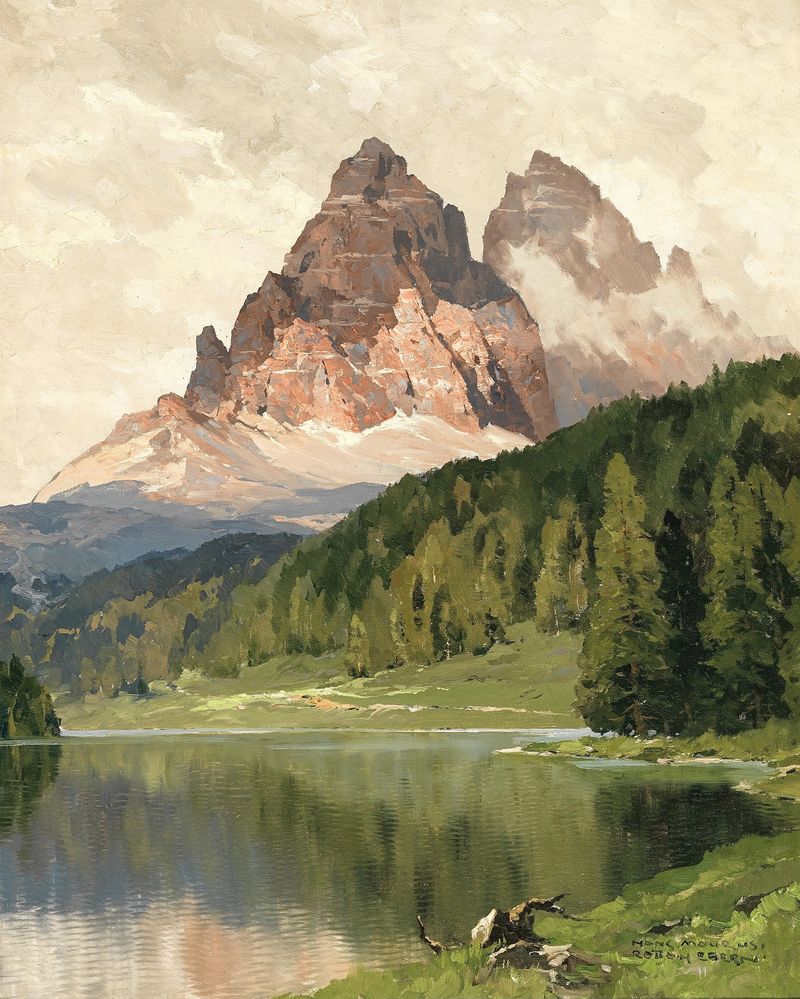
Lake Misurina with Tre Cime di Lavaredo
Hans Maurus

Matterhorn und Riffelsee..
Hans Maurus
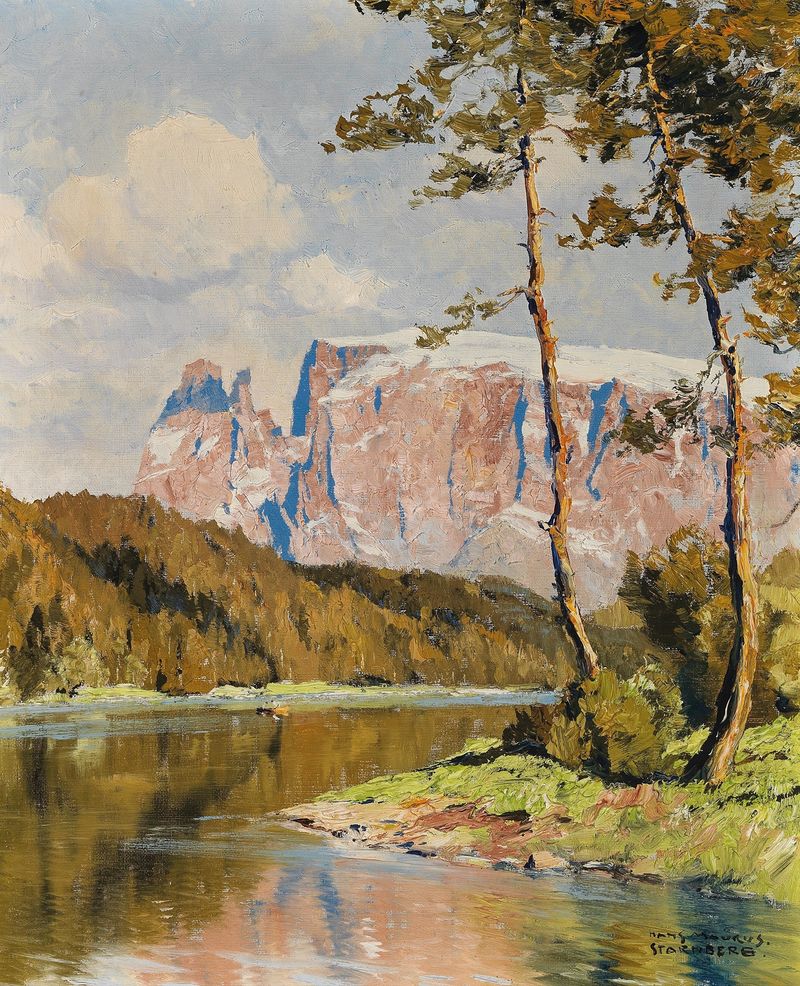
Costalovarasee mit Schlern
Hans Maurus

Blick auf die Bischofsmütze von Filzmoos
Hans Maurus
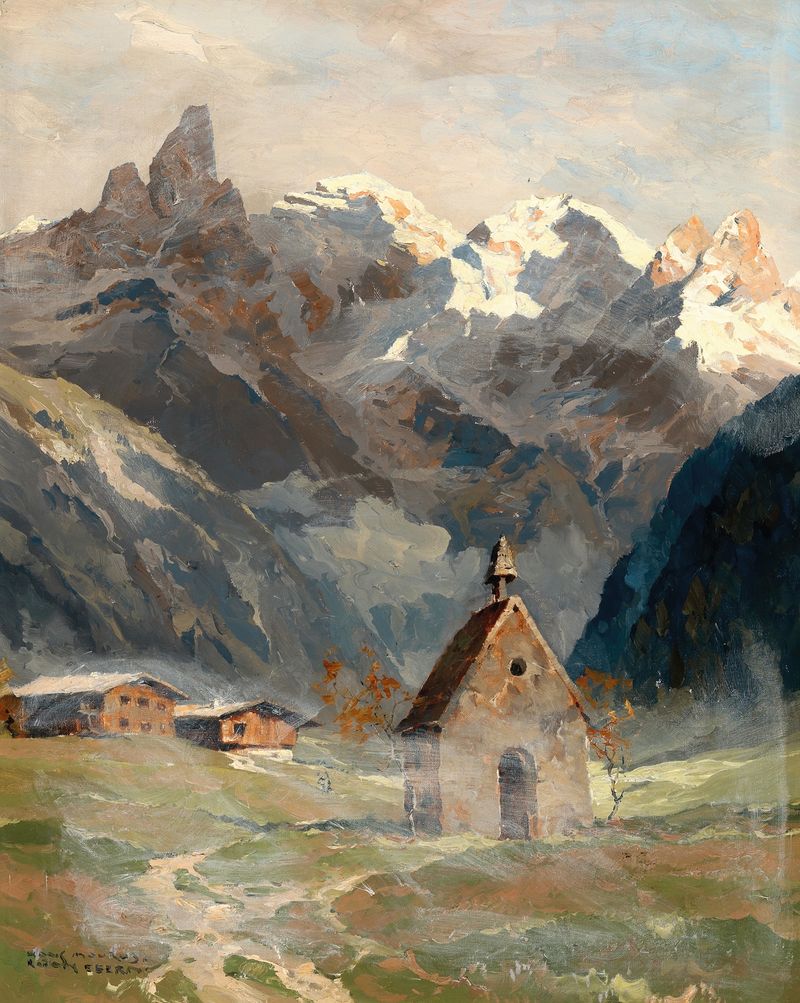
Einödshof
Hans Maurus

San Lugano near Bolzano
Hans Maurus

The Seiser Alm in South Tyrol
Hans Maurus





