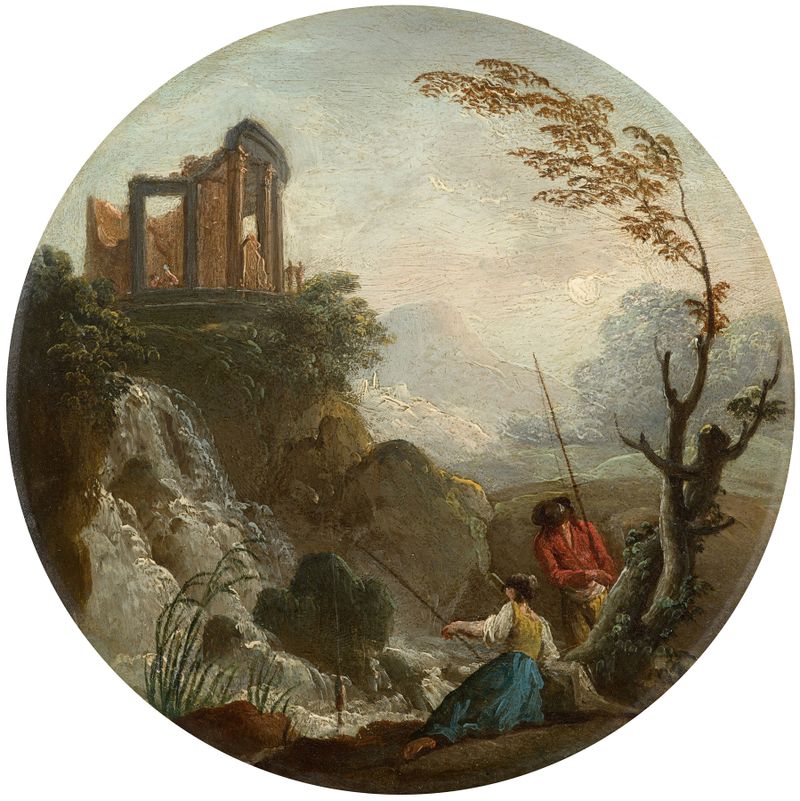
Mediterranean port bustling with Levantine fishermen and merchants in the morning — History & Facts
What if beauty was never meant to be finished? In the vibrant chaos of life, where faith and commerce intertwine, we find the essence of existence itself. Look to the foreground, where fishermen, their figures robust and animated, engage in their morning rituals. Notice the multitude of colors: warm ochres and deep blues collide in a symphony that dances across the canvas. The way the light breaks over the scene, illuminating the fishermen's weathered faces and the glistening nets, invites you to step closer and immerse yourself in their world.
Each brushstroke perfectly captures the movement of the water, ensuring that the scene feels alive, as though one could hear the gentle lapping of waves and the shouts of merchants filling the air. Amid the bustling activity lies an undercurrent of faith, a belief in the daily rhythm of life. The fishermen’s confident postures reflect a trust in nature’s bounty, while merchants exchange goods, representing the interconnectedness of communities. Yet, a subtle contrast emerges in the chaotic crowd; the serenity of the horizon whispers of distant lands and untold stories, reminding us that beauty is often found in the balance between stability and uncertainty. Created in 1761, this work emerged during a period of great change in the art world, particularly in France.
Charles-François Lacroix painted this piece amidst the Enlightenment, a time when society was exploring reason and empirical evidence, yet still deeply rooted in tradition and faith. His attention to detail and the lively portrayal of the port reflect both his personal commitment to realism and the broader cultural shifts of his time, capturing a moment of connection that transcends the canvas.