
Mellom byger — History & Facts
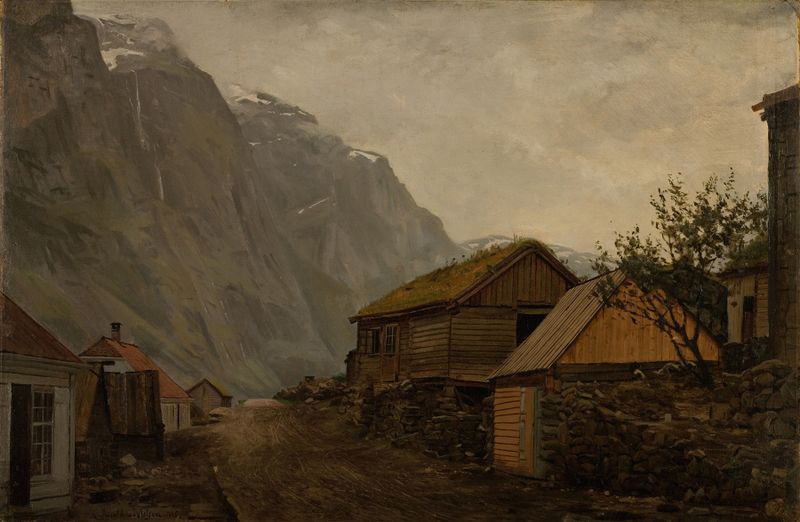
When did color learn to lie? In the heart of Mellom byger, melancholy seeps through each brushstroke, whispering secrets of the human experience. Direct your gaze to the left, where the painter's palette reveals a symphony of muted blues and grays, conjuring an atmosphere heavy with the weight of impending rain. Notice how the soft, impressionistic strokes create a dreamlike haze that envelops the landscape, beckoning you into a world both beautiful and forlorn. The horizon blurs, merging earth and sky, while delicate wisps of white paint suggest the fleeting nature of light, casting an ethereal glow over the scene. The interplay of light and shadow evokes a sense of transience, reflecting the tension between hope and despair.
Trees stand solemnly, their branches reaching out like arms yearning for connection, yet tethered by their own isolation. In the distance, a solitary figure wanders, capturing the essence of existential solitude, as the billowing clouds loom ominously, hinting at the emotional storms hidden within. Completed in 1894, this work emerged during a transformative period in Norwegian art, as Amaldus Nielsen sought to express the profound emotions stirred by nature. Living in a turbulent era marked by a growing national identity, he navigated the delicate balance between Impressionism and a burgeoning Norwegian Romanticism, capturing the unspoken dialogues between man and the sublime landscape.
This painting stands as a poignant reflection of his life and the artistic currents of his time.
More Artworks by Amaldus Nielsen
Browse all →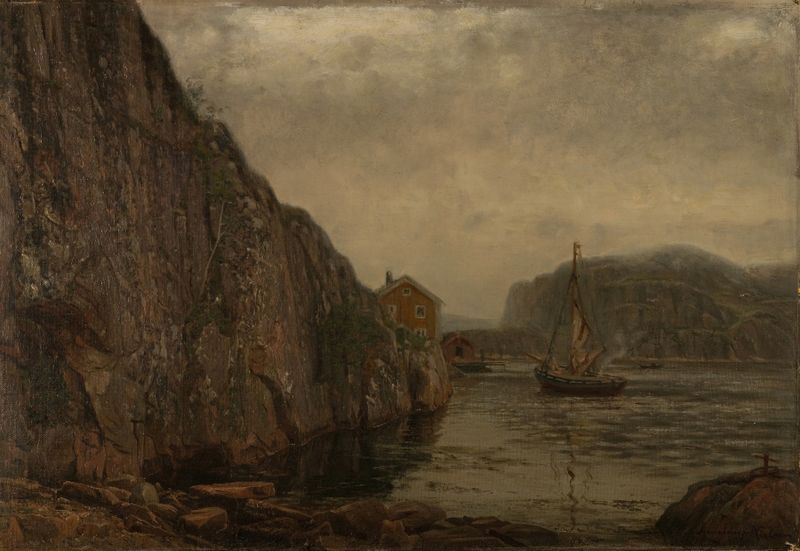
Skjærgård, Ny-Hellesund
Amaldus Nielsen
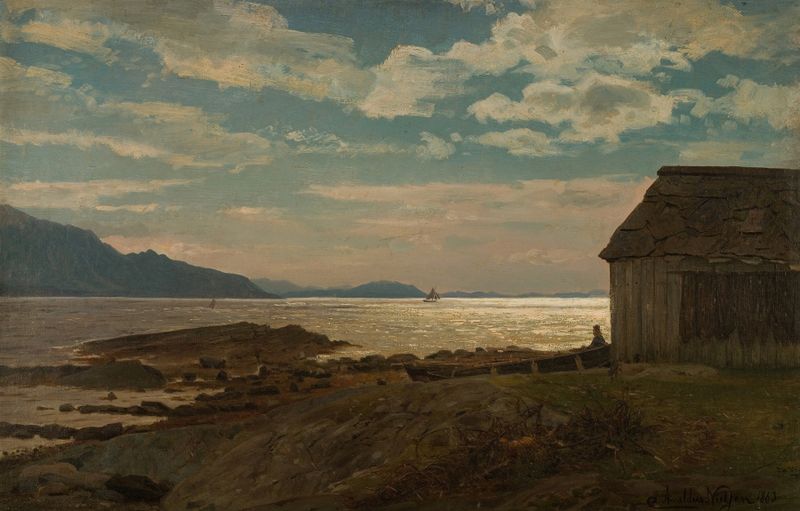
Fra Ølvestranden, Hardanger
Amaldus Nielsen
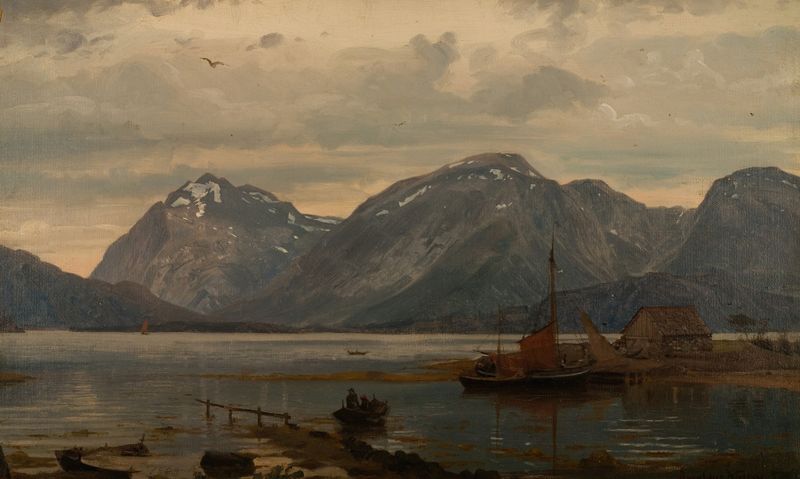
Fra Englafjellene, Hardanger
Amaldus Nielsen
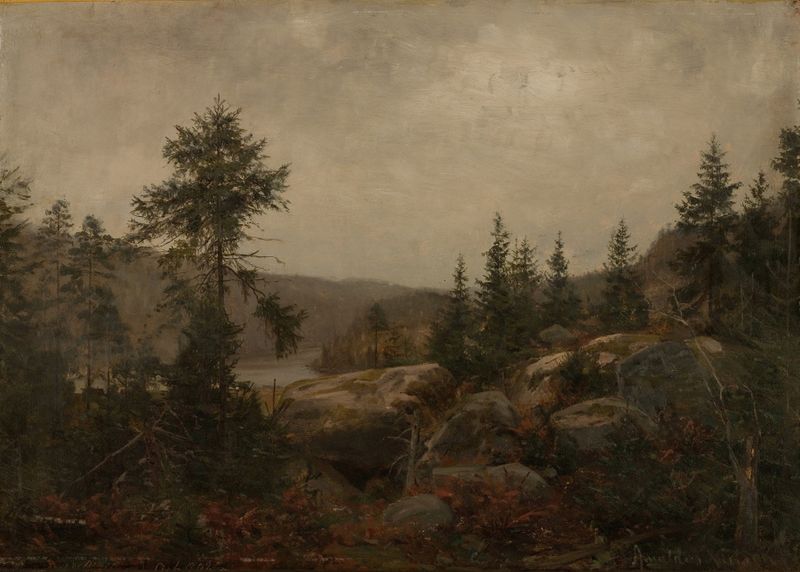
Duskregn . Gården Foss, Mandalselven
Amaldus Nielsen
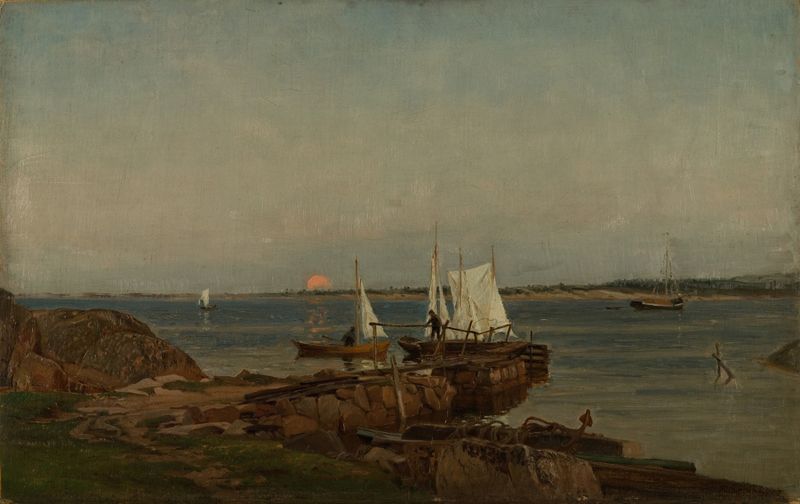
Sommernatt, Hvaler
Amaldus Nielsen
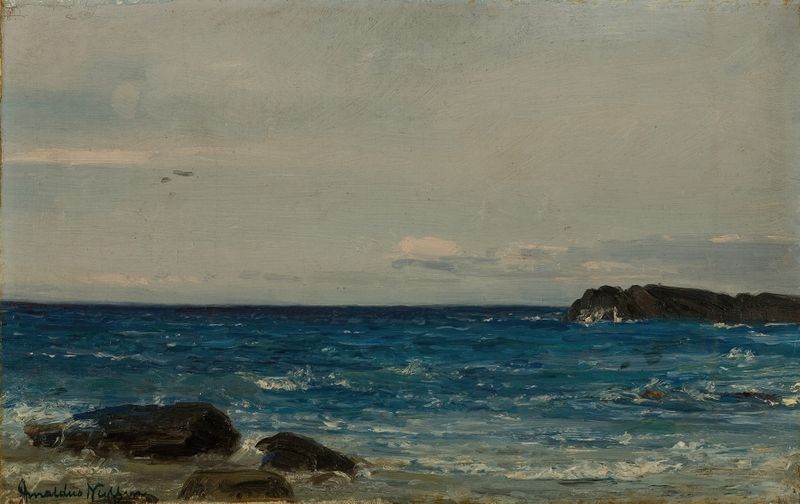
Fra Jæren
Amaldus Nielsen
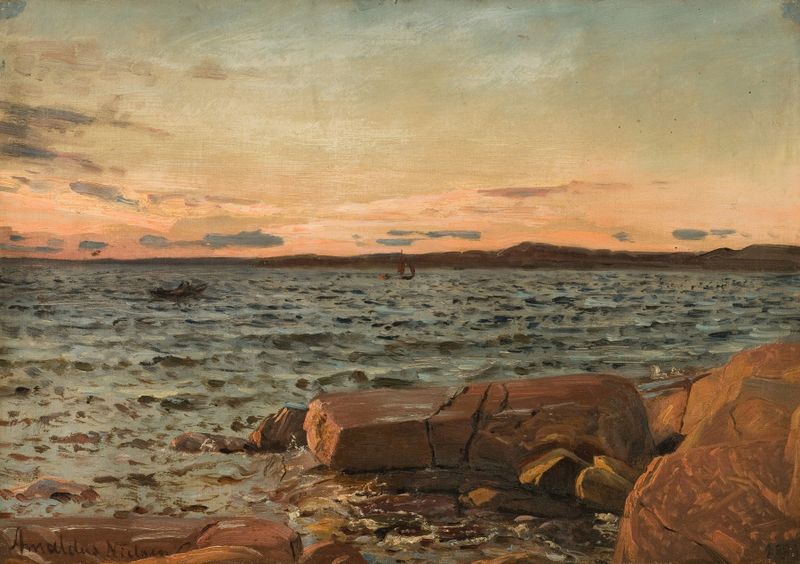
Solgangsvind, Hvaløene
Amaldus Nielsen
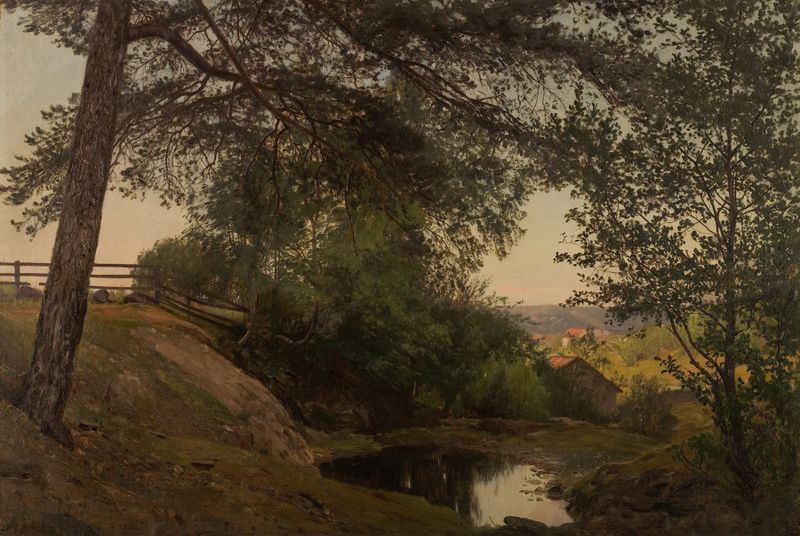
Mellom trærne. Lervik, Stord
Amaldus Nielsen

Båtbyggeri, Lillesand
Amaldus Nielsen
Regnstemning, Gudvangen
Amaldus Nielsen





