Milking Time — History & Facts
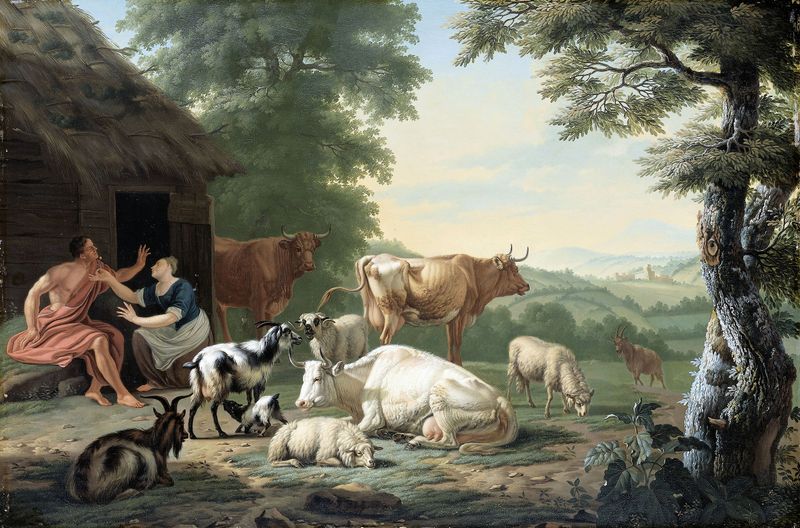
Can paint confess what words never could? In Milking Time, this query unfurls, inviting contemplation of the delicate balance between labor and tranquility. Look to the left at the farmer's steady hands, cradling the teats of the cow, each gesture a testament to years of practice and care. Notice how the soft, golden light spills across the scene, illuminating the faces of both man and beast in warm hues that blend seamlessly, suggesting a connection that transcends mere duty. The background, draped in gentle greens and browns, wraps the figures in nature’s embrace, allowing a moment of stillness amidst the rhythmic routine of rural life. Hidden meanings pulse beneath the surface—consider the contrasting emotions of serenity and vigilance, as the farmer’s concentrated gaze meets the placid eyes of the cow.
This interaction speaks to a deeper narrative of harmony in labor, where each participant plays a role in the cycle of sustenance. The gentle curve of the cow’s body mirrors the farmer's posture, creating a visual echo that suggests a profound relationship built on trust and necessity. Jan van Gool created Milking Time during the early 18th century, a period when the Dutch Golden Age was giving way to new artistic expressions. Working primarily in The Netherlands, he sought to capture the essence of rural life, responding to a world that was increasingly turning towards urbanization.
Van Gool’s portrayal of agrarian themes reflects both the nostalgia for simpler times and the acknowledgment of an agrarian society's enduring significance.