
Mill along a River — History & Facts
In a world perpetually in motion, the fragile beauty of stillness often speaks volumes about the passage of time. It is within this delicate balance that art finds its voice, hinting at the transience of existence. Look to the left at the soft ripples of the river, where light dances across the water’s surface, creating a shimmering path that draws the eye toward the distant mill. Notice how Zeuner’s palette melds earthy tones with gentle pastels, evoking a serene harmony between nature and humanity.
The balance of shadow and illumination casts an inviting glow, inviting the viewer to linger in this tranquil moment. Amidst the idyllic landscape, there lies a subtle tension — the juxtaposition of the vibrant life surrounding the mill and the solitary structure itself. This contrast serves as a reminder of the delicate relationship between man and nature, suggesting that while we build and thrive, we remain vulnerable to the forces around us. Small details, like the grazing cows and the lush trees, highlight this interconnectedness, emphasizing both the beauty and fragility of life. Created between 1770 and 1814, the artist painted this work during a time of significant change in Europe, where industrialization began to reshape landscapes and ways of life.
Zeuner, immersed in the Romantic movement, focused on nature's beauty while grappling with the encroaching modernity. This piece captures that tension, reflecting an era caught between reverence for the natural world and the transformations brought by human endeavor.
More Artworks by Jonas Zeuner
Browse all →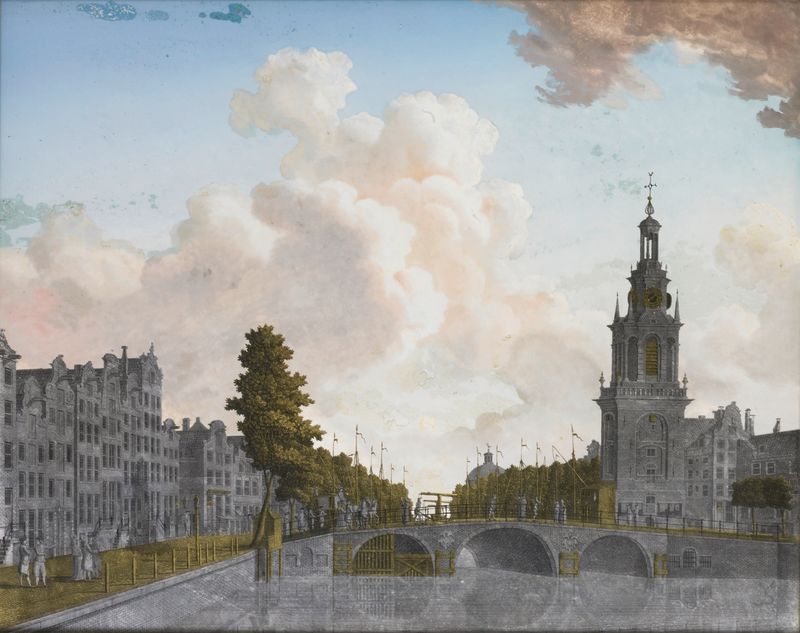
View of the Tower called Jan Roodenpoortstoren and the Singel Canal in Amsterdam
Jonas Zeuner
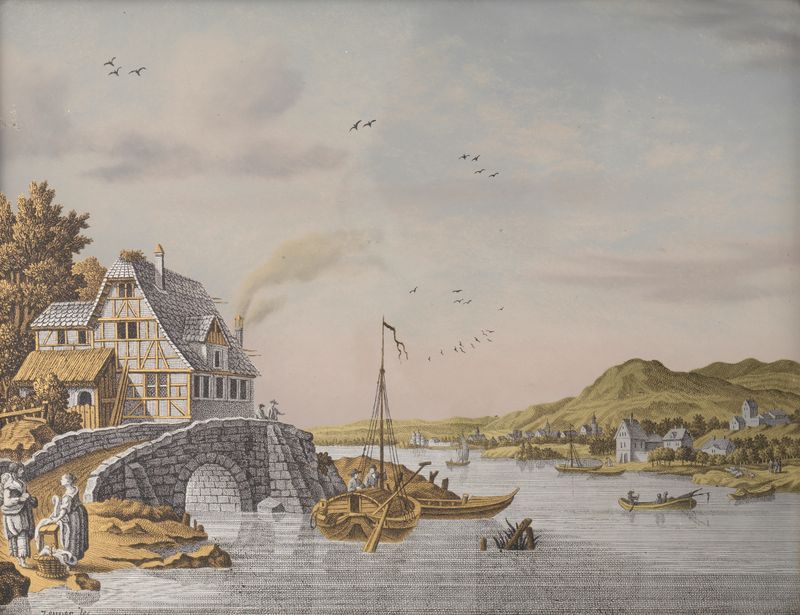
Houses along a River
Jonas Zeuner
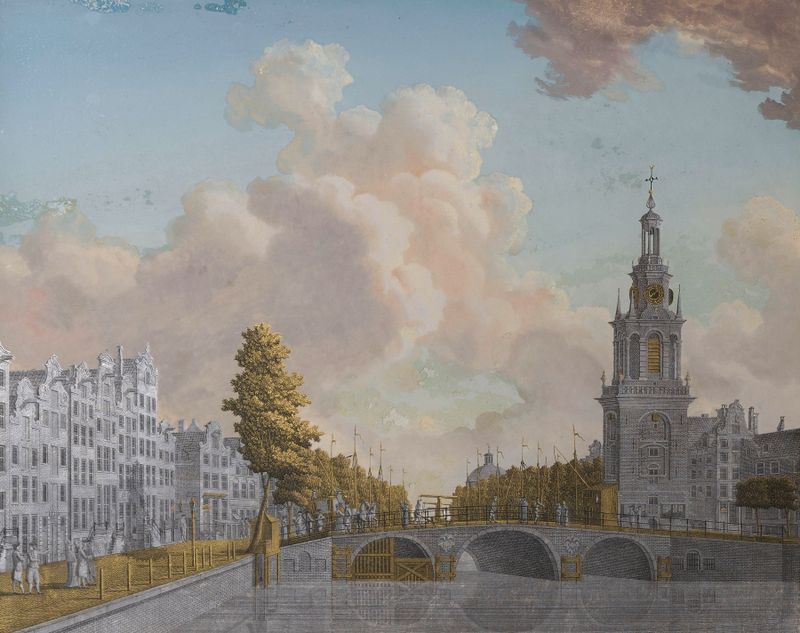
View of the Tower called Jan Roodenpoortstoren and the Singel Canal in Amsterdam
Jonas Zeuner
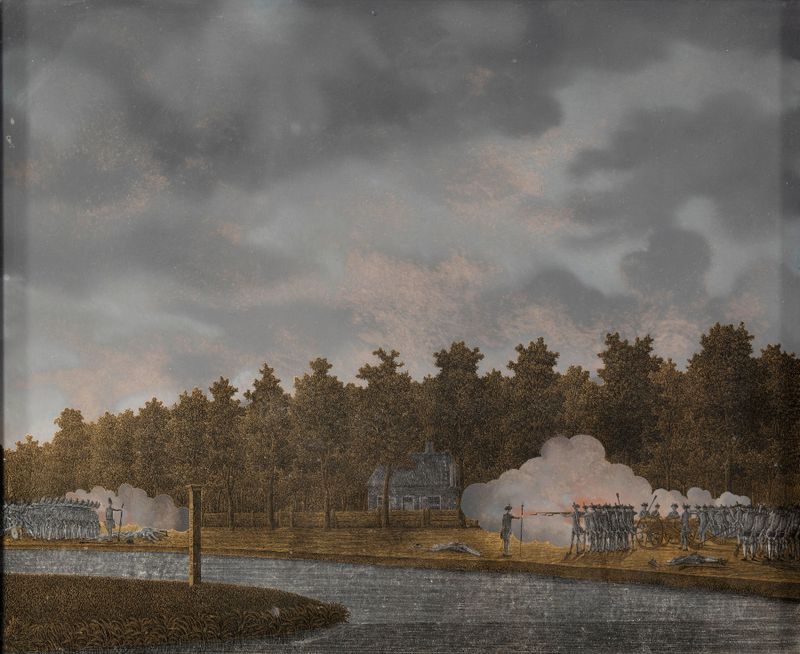
Exchange of Fire on the Vaartse Rijn near Jutphaas
Jonas Zeuner
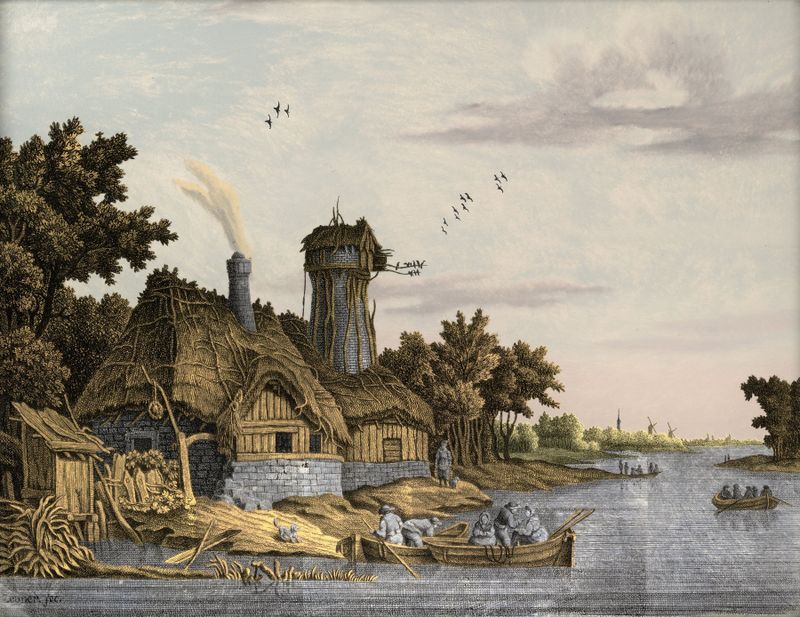
Mill along a River
Jonas Zeuner
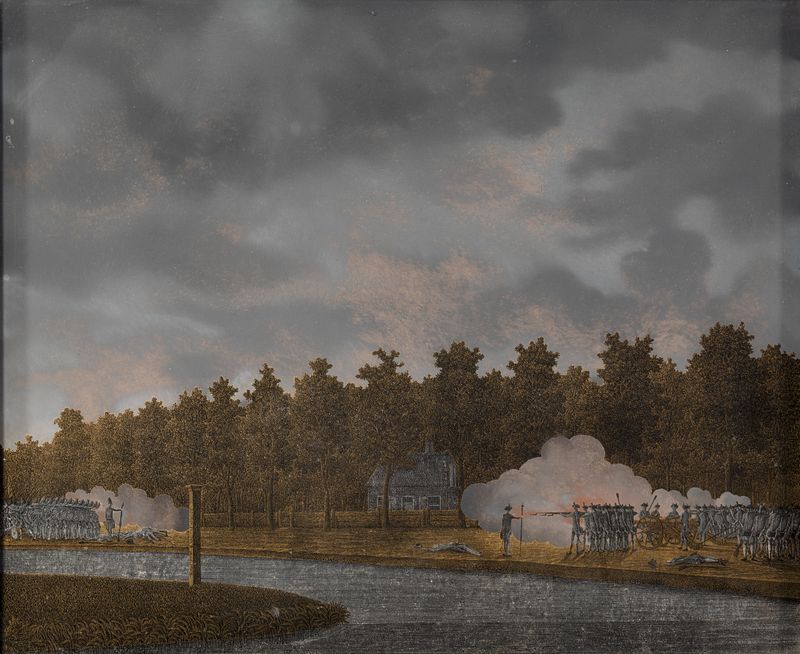
Exchange of Fire on the Vaartse Rijn near Jutphaas
Jonas Zeuner
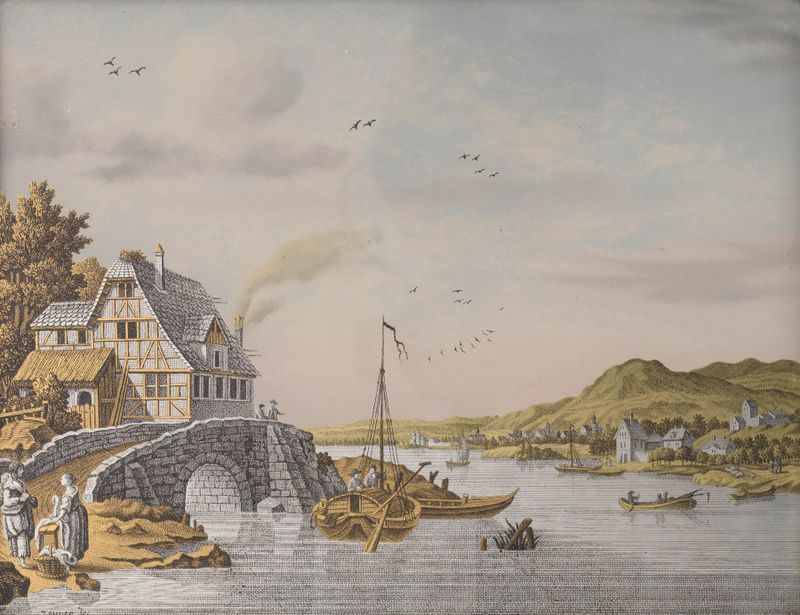
Houses along a River
Jonas Zeuner





