
Minakuchi — History & Facts
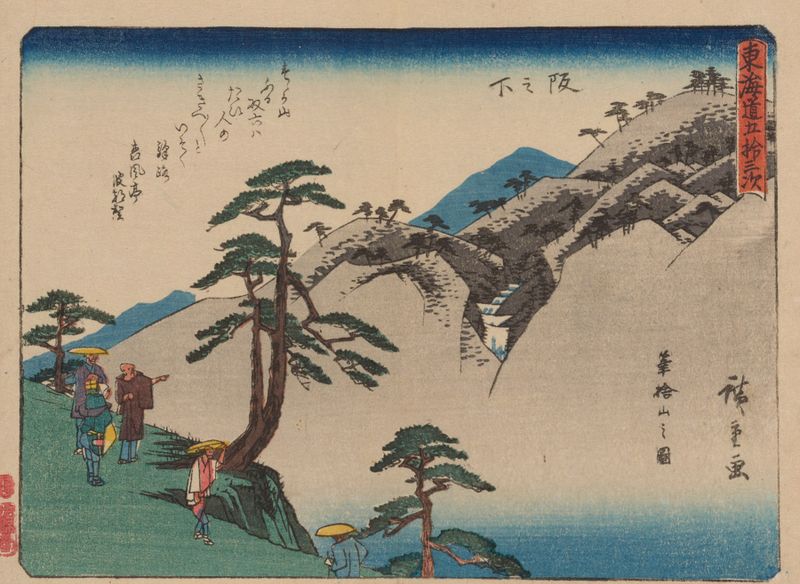
What if silence could speak through light? In Minakuchi, the ethereal play of illumination transforms a serene landscape into a divine meditation, inviting viewers to engage with nature’s quiet majesty. Look to the left at the gentle sweep of the hills, where soft, muted greens and blues cradle the deep indigo sky. Notice how the delicate brushwork captures the movement of clouds, their wispy forms echoing the tranquil waters below. The composition draws our gaze to the horizon, where the interplay of light and shadow creates a harmonious balance, evoking a sense of serenity.
Every stroke seems to whisper the beauty of simplicity, revealing Hiroshige’s masterful technique in depicting landscapes infused with a spiritual essence. The horizontal line of the water mirrors the sky, suggesting a seamless connection between heaven and earth. In this stillness, there lies a tension: the beauty of the landscape contrasts with the fleeting nature of life, hinting at the transient quality of existence. The figures in the foreground, though small and unobtrusive, embody a reverence for nature that resonates deeply with the viewer, urging us to reflect on our own place within this grand tableau. During 1855, Hiroshige painted Minakuchi while living in Edo, a period marked by a growing fascination with the natural world amidst urban expansion in Japan.
As he explored landscapes, his work began to reflect a yearning for simplicity and tranquility in an increasingly complex society. This painting emerges from a time when ukiyo-e was flourishing, capturing the essence of life and landscape with a profound spiritual sensitivity.
More Artworks by Utagawa Hiroshige
Browse all →
Sudden Shower over Shin Ohashi Bridge and Atake (Ohashi Atake no yudachi), from the series "One Hundred Famous Views of Edo (Meisho Edo hyakkei)"
Utagawa Hiroshige
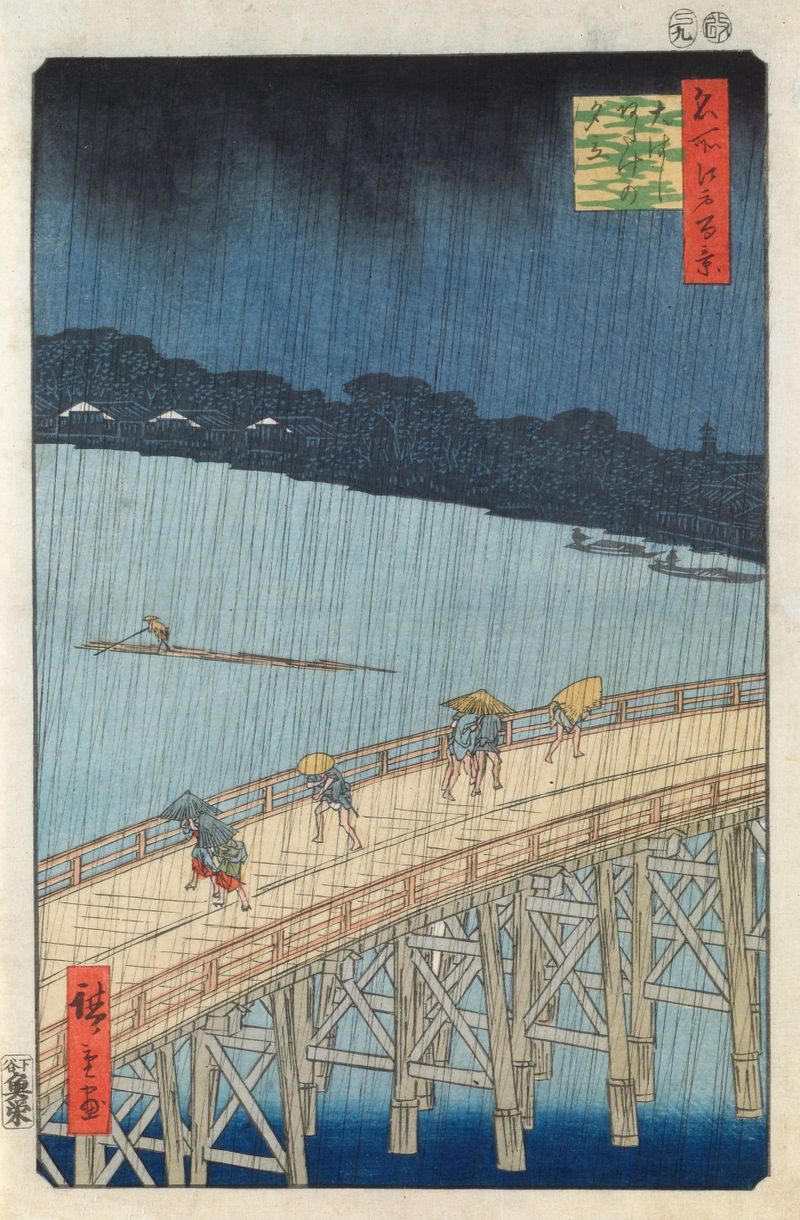
Sudden Shower Over Ohashi Bridge and Atake
Utagawa Hiroshige
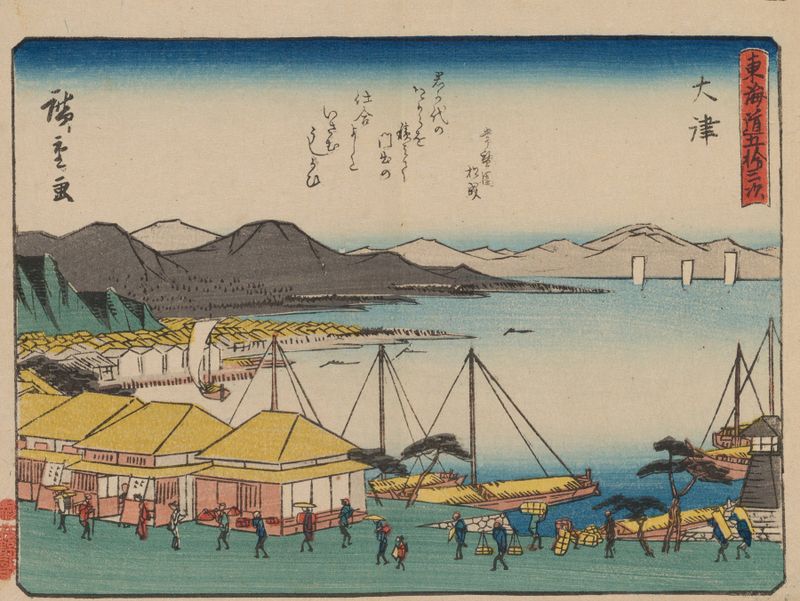
Tokaido gojusantsugi, Pl.54
Utagawa Hiroshige
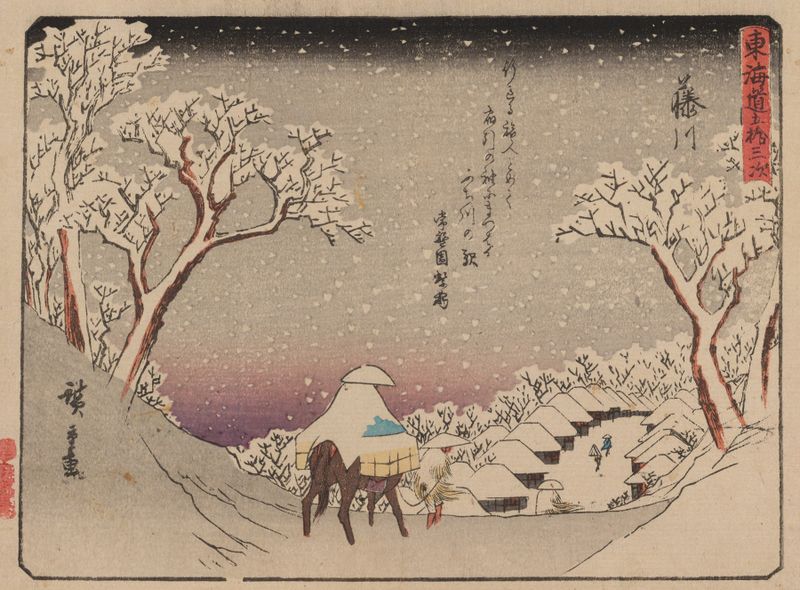
Tokaido gojusantsugi, Pl.38
Utagawa Hiroshige
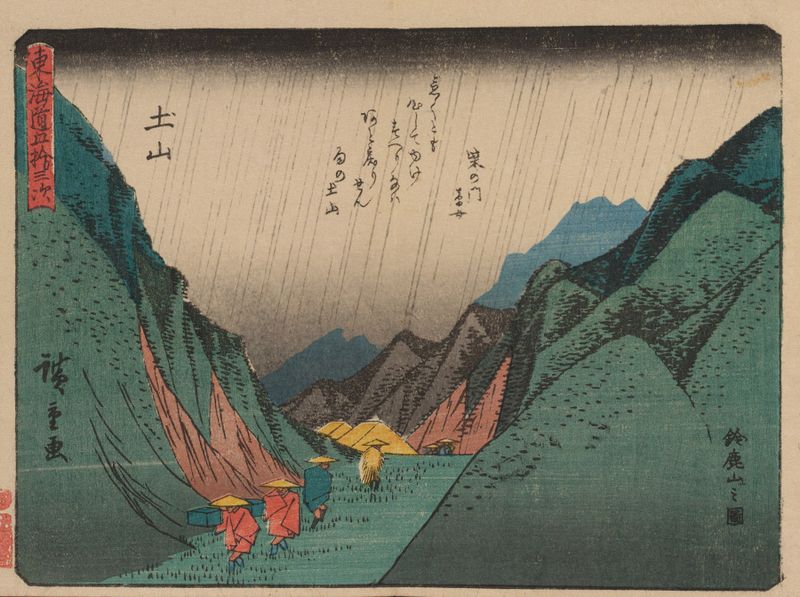
Tokaido gojusantsugi, Pl.50
Utagawa Hiroshige
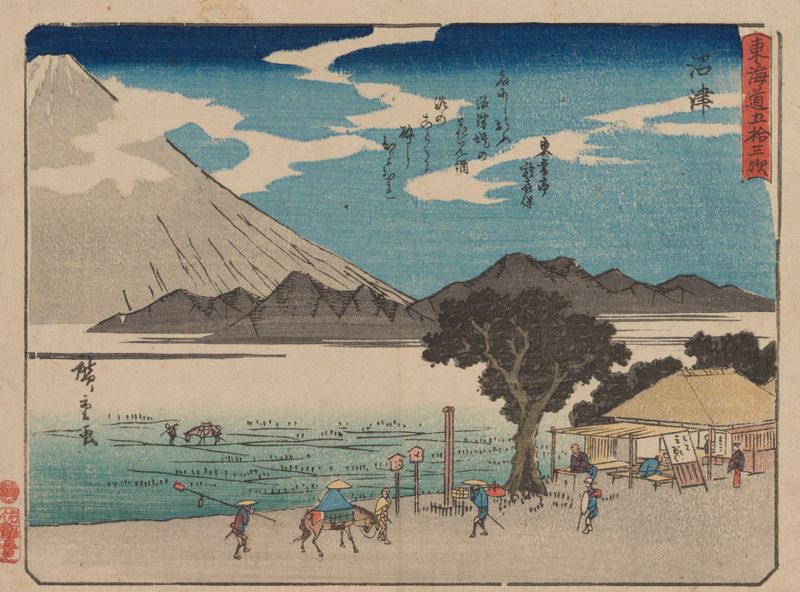
Tokaido gojusantsugi, Pl.13
Utagawa Hiroshige
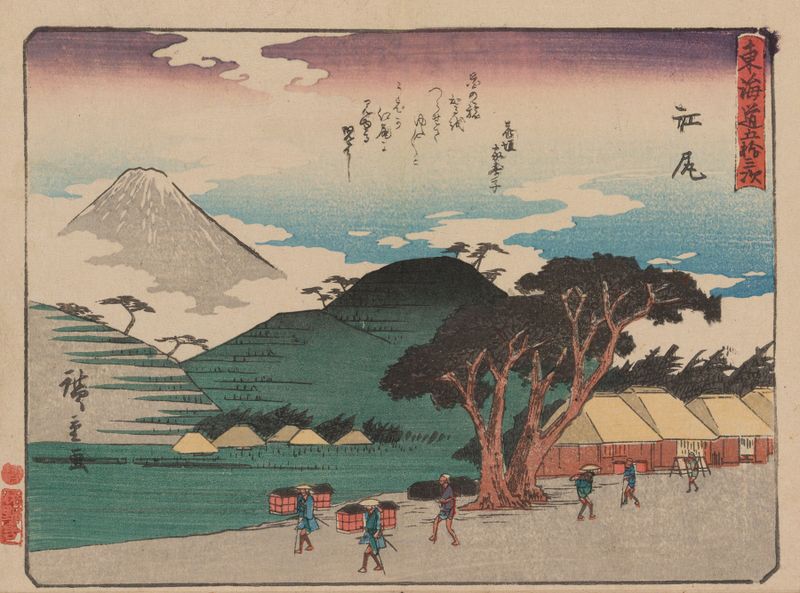
Tokaido gojusantsugi, Pl.19
Utagawa Hiroshige
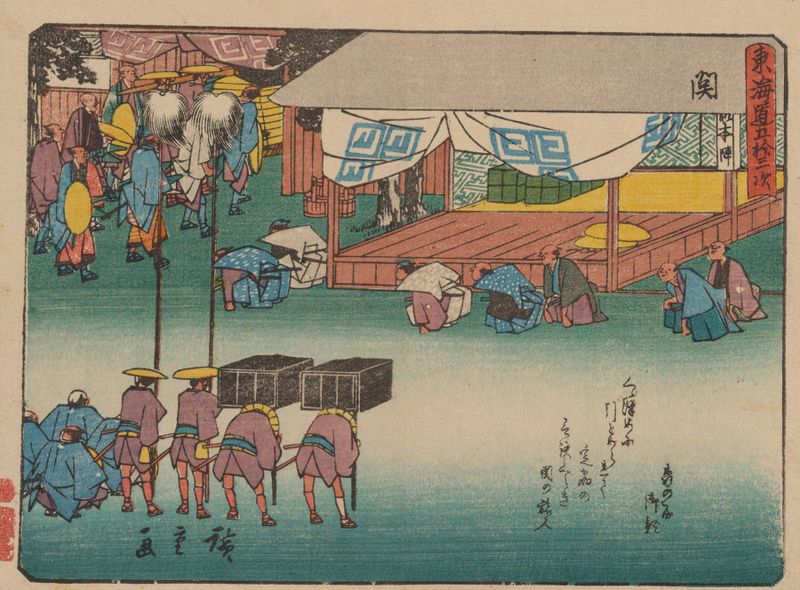
Tokaido gojusantsugi, Pl.48
Utagawa Hiroshige
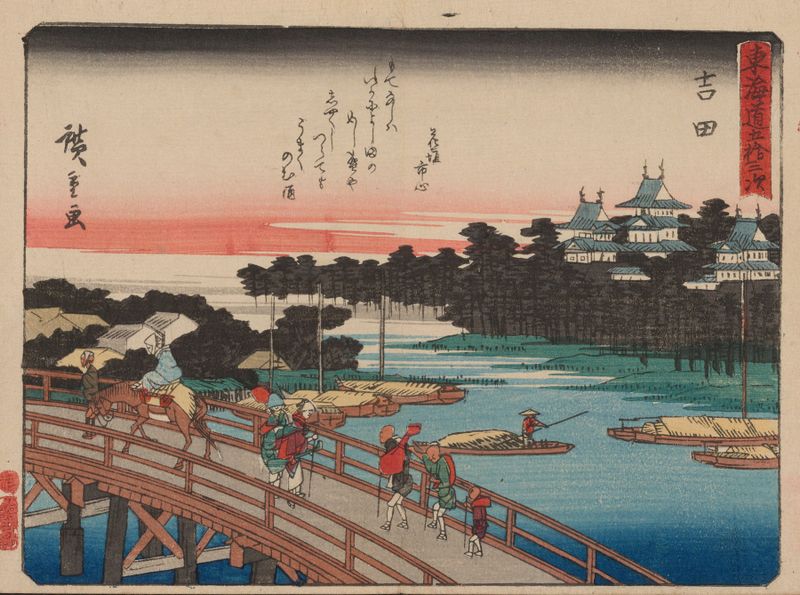
Tokaido gojusantsugi, Pl.35
Utagawa Hiroshige
Tokaido gojusantsugi, Pl.49
Utagawa Hiroshige





