Minas De Real Del Monte, Hidalgo — History & Facts
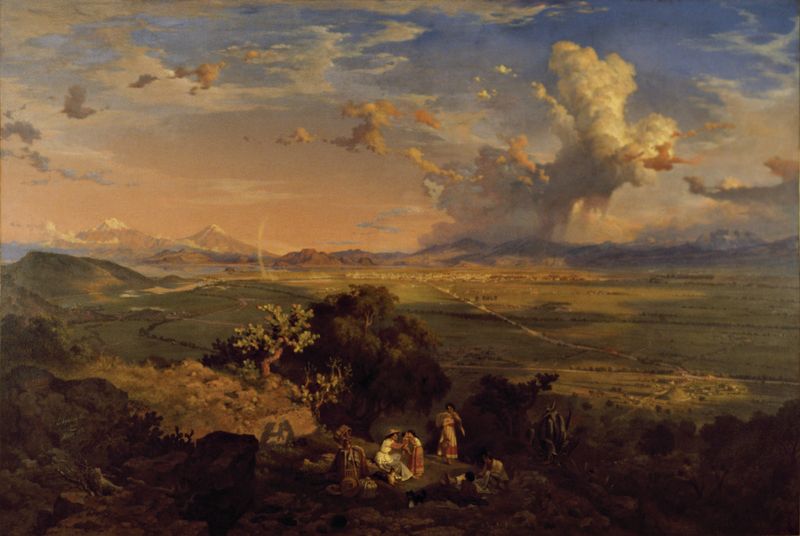
What secret hides in the quiet of the canvas? Beneath the stillness of Minas De Real Del Monte, Hidalgo, an undercurrent of movement pulses, whispering of lives intertwined with the land. Look to the left, where the rugged mountains loom majestically, their contours softened by a delicate glaze of pastel hues. Notice how the sunlight spills over the edges, casting long shadows across the foreground, where miners toil with resolute grace. The painter’s meticulous brushwork creates a rhythmic dance of color and form, drawing the eye to the interplay between the human figures and the natural landscape, suggesting a harmonious yet strenuous existence. The piece captures a poignant contrast between the serene beauty of the highlands and the laborious toil of the miners.
Each stroke echoes the tension between nature and industry, revealing the struggles faced by those who extract treasures from the earth. The vibrant greens and soft blues of the scenery juxtapose with the muted earth tones of the miners’ attire, symbolizing the dichotomy of life in this remote locale—a place where dreams of prosperity meet the harsh reality of labor. Eugenio Landesio painted this work in 1857, during a period marked by the burgeoning awareness of natural beauty intertwined with the rise of industry in Mexico. This era was transformative for the art world, as landscapes became a significant genre, reflecting both the romantic ideals and the realities of modern life.
Landesio, influenced by his experiences in Italy and later in Mexico, sought to capture both the majesty of the landscape and the resilience of its people, leaving a lasting impression on the art historical narrative.