Italian Landscape — History & Facts
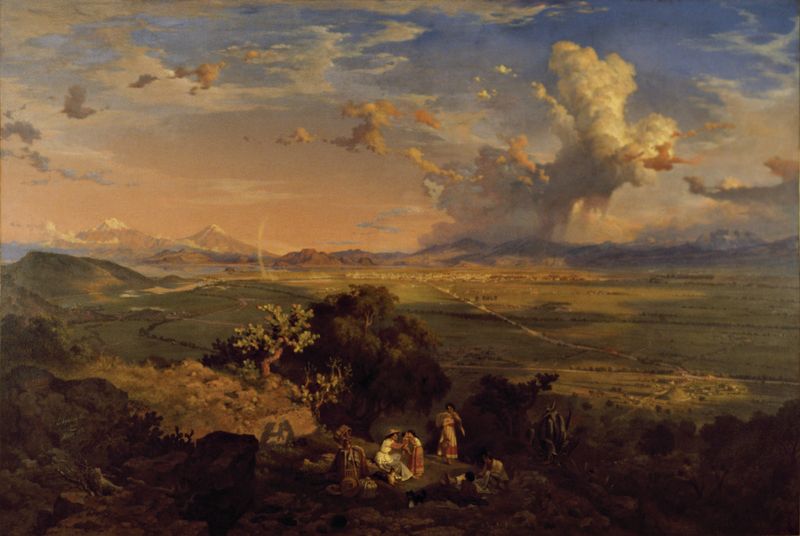
Did the painter know this moment would outlive them? The ephemeral beauty of nature, captured on canvas, invites contemplation about transience and permanence. Look closely at the foreground, where delicate wildflowers burst forth in soft purples and yellows, providing a vivid contrast against the earth-toned hills. Notice how the sunlight bathes the landscape, illuminating the rolling terrain and creating a sense of depth that draws the viewer’s gaze toward the horizon. The brushwork is both precise and fluid, revealing a masterful understanding of light and shadow while evoking a serene, almost dreamlike quality. Within this idyllic scene lies a poignant juxtaposition.
The vibrant blooms, so full of life, stand in stark contrast to the looming mountains in the background, suggesting the fragility of beauty against the passage of time. A tranquil river winds its way through the composition, symbolizing the relentless flow of existence, while the distant clouds hint at storms yet to come. This interplay between vitality and vulnerability speaks to a universal truth: all lovely moments are inherently fleeting. In 1838, during a period of artistic exploration and Romanticism, the creator of this landscape sought to capture the essence of the Italian countryside.
Working in his native Italy, Landesio was influenced by the movements of his time, striving to blend realism with emotional depth. As he painted, Europe was undergoing significant social and political changes, yet the artist found solace and inspiration in the natural world, encapsulating a moment that resonates with viewers even today.