Mondaufgang auf Hiddensoe — History & Facts
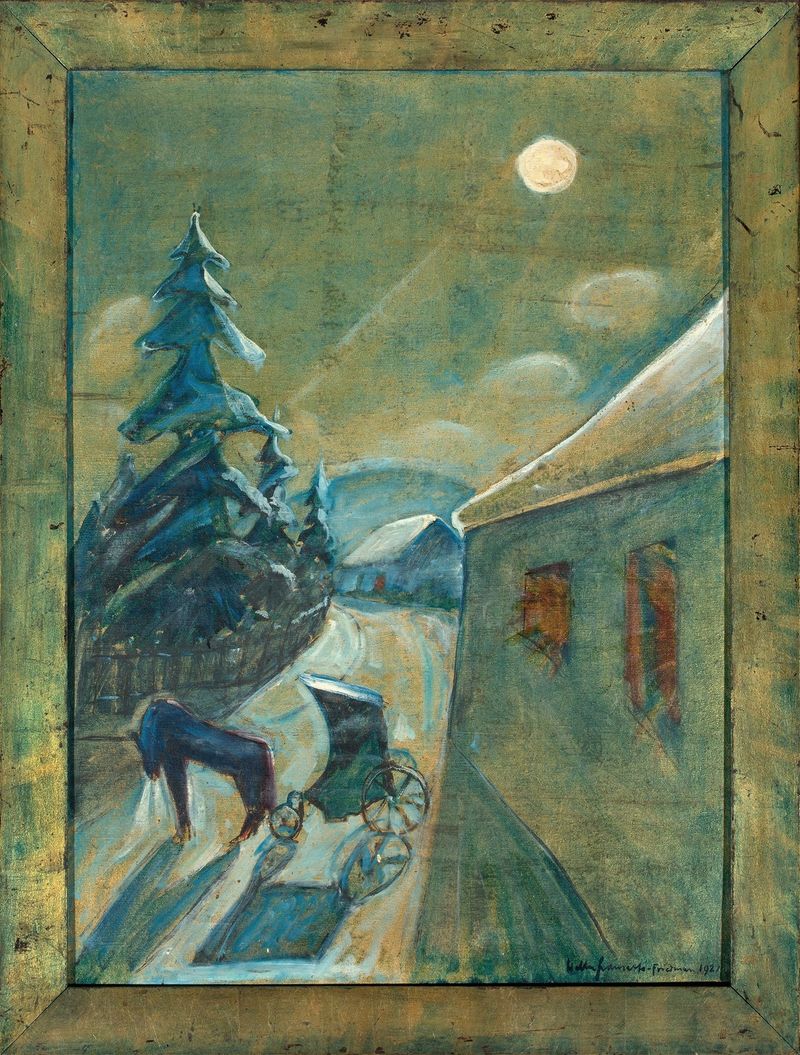
It holds a mirror to our innermost feelings, inviting us to delve into the depths of our own illumination and darkness. What stories do the delicate strokes of light and shadow whisper to us? Look to the upper half of the canvas, where hues of pale blues and muted golds converge under an ethereal moon. Notice how the soft light diffuses, creating a tranquil yet haunting atmosphere that envelops the landscape.
The undulating waves below reflect the celestial glow, while the horizon appears almost dreamlike, blurring the line between the sea and sky. The brushwork is both precise and fluid, suggesting a balance between nature’s chaos and its serenity. As you explore the scene further, consider the contrasts at play — the calmness of the lunar light against the dark depths of the water, the stillness of the moment juxtaposed with the inherent movement of the waves. Each brushstroke seems to hold a conversation about solitude and introspection, evoking a sense of yearning that transcends the physical realm.
The composition invites viewers to confront their own reflections, reminding us of the complexities of human emotion intertwined with the natural world. Created in 1922, this painting emerged during a period of profound change for Walter Gramatté. Living in Germany during the aftermath of World War I, he grappled with personal turmoil and the shifting landscape of contemporary art. This work encapsulates the artist's exploration of expressionism, as he sought to capture both the beauty and melancholy of existence through his unique lens.