Mondlandschaft mit Pferd — History & Facts
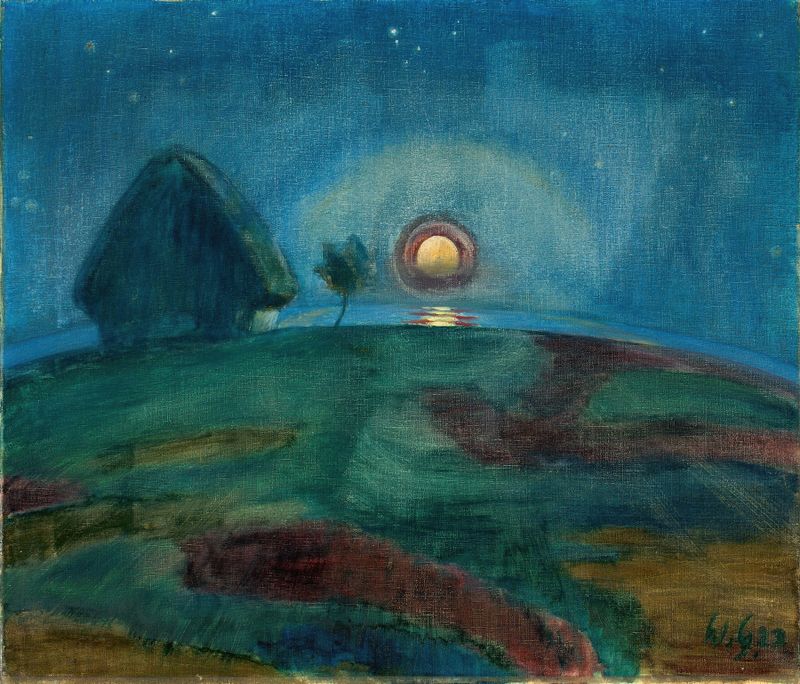
Can paint confess what words never could? In Mondlandschaft mit Pferd, silence envelops the scene, inviting introspection and a profound sense of solitude. Look to the center of the canvas, where the silhouette of a solitary horse stands against a haunting moonlit landscape. The dark, muted colors contrast with the ethereal glow of the moon, suggesting a world both familiar and otherworldly. Notice how the horse, seemingly rooted in place, gazes into the void, embodying a stillness that echoes the depths of emotion.
The brushwork is deliberate yet loose, allowing the background to whisper rather than shout, enhancing the painting’s meditative quality. Delve deeper into the contrasts of the piece: the tension between light and shadow, solitude and the vastness of the universe. The moon looms large, a celestial guardian that casts its soft light, yet creates an isolating atmosphere around the horse. The surrounding landscape appears desolate, evoking themes of introspection and existential reflection, hinting at the fragility of existence amidst the infinite.
This duality speaks to the viewer's own experience of silence — both comforting and unsettling. In 1921, Walter Gramatté painted Mondlandschaft mit Pferd during a tumultuous period in Germany's post-World War I landscape. He was deeply influenced by the psychological upheaval of the era, mingling personal struggles with broader societal themes. During this time, Gramatté sought to express the complexities of human experience through his work, grappling with the silence that often accompanies profound emotion, a theme that resonates powerfully in this haunting piece.