
Monument To Nicholas I, St Isaac’s Square — History & Facts
Is this a mirror — or a memory? The Monument To Nicholas I captures the awe of history, inviting viewers to reflect on the weight of legacy and the passage of time. Look to the soaring figure at the center, a commanding presence clothed in regal attire. Notice how the light dances across the bronze, highlighting the intricate details of the uniform while casting shadows that deepen the sense of reverence. Surrounding the monument, the square stretches wide, drawing the eye to the architectural frameworks that cradle the scene, each element meticulously placed to enhance the grandeur of the statue itself. Within this composition lies a conversation between power and vulnerability.
The monument's stance, both proud and contemplative, suggests a dialogue about the burdens of leadership and the fleeting nature of glory. The contrasting textures of the polished bronze and the rough stone of the pedestal evoke the resilience against the wear of time, reminding us that memories, like monuments, are shaped by both triumph and tragedy. The figures in the background, almost ghostly, serve as silent witnesses to history, highlighting a profound emotional tension between the past and the present. In 1857, Charlemagne was engaged in an era marked by political change and artistic evolution in Russia.
Living in St. Petersburg, he created this monumental work amidst a society grappling with the legacy of its emperors while being influenced by the neoclassical movement, which sought to commemorate historical figures with both grandeur and gravitas. This artwork emerged as a testament to the enduring impact of those in power, even as the world around them continued to change.
More Artworks by Iosef Iosefovich Charlemagne
Browse all →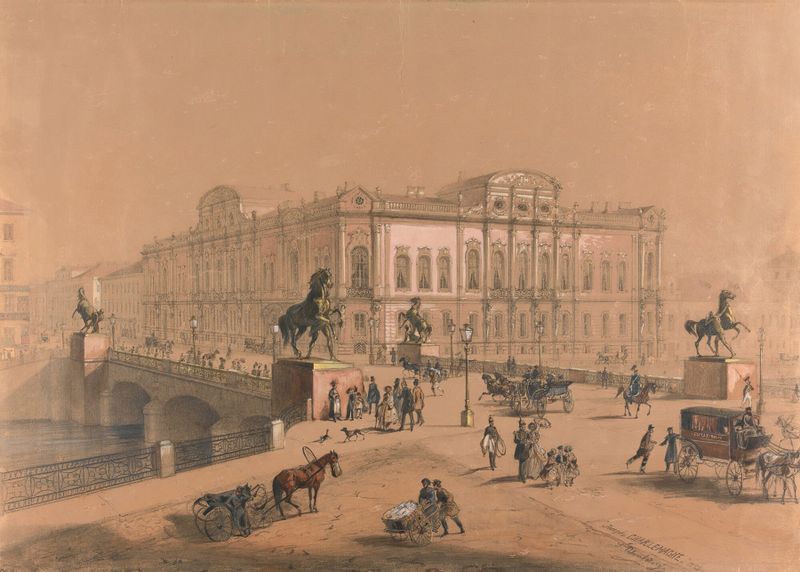
More Historical Art
Browse all →
The Night Watch Militia Company of District II under the Command of Captain Frans Banninck Cocq
Rembrandt van Rijn

Lincoln Memorial
Henry Bacon

The Third of May 1808
Francisco de Goya

Isaac and Rebecca, Known as ‘The Jewish Bride’
Rembrandt van Rijn

The Charge of the Mamelukes (1814)
Francisco de Goya

De vier ruiters van de apocalyps
Albrecht Dürer