
Moon Spots in the Forest, Winter — History & Facts
The first thing that catches the eye in Moon Spots in the Forest, Winter is the way the painter has carved silence out of darkness. Pools of pale lunar light spill across the snow, their shapes irregular and almost spectral, as if the moon itself is wandering through the woods, pausing here and there to touch the earth. The trees, rendered in heavy, shadowed forms, seem to lean inward, their crowns closing around the clearing like a secret.
There is no path, no figure, nothing to break the hush but the brushwork itself, which moves with a quiet certainty from foreground to the distant, luminous patches. The palette is stripped to the essentials: blue-greys, black, and the cold white of snow, all working together to conjure a night that is both watchful and strangely welcoming. Works like this, painted between 1898 and 1908, belong to a moment when Russian landscape painters were turning away from grand vistas and heroic narratives, seeking instead the poetry of light and atmosphere. Arkhip Ivanovich Kuindzhi was renowned for his experiments with illumination, often painting the same scene at different hours to capture the moods of dusk, dawn, and moonrise.
While little is recorded about this particular painting’s journey, its presence in The Yorck Project’s vast digital collection speaks to a wider hunger for rediscovering such quiet marvels. In an age when industrial progress was reshaping the Russian countryside, paintings like this offered viewers a pause—a chance to stand still and let the night work its quiet magic. Let your eyes linger on those moonlit patches; they are the true subject of the scene.
More Artworks by Arkhip Ivanovich Kuindzhi

Red Sunset on the Dnieper
Arkhip Ivanovich Kuindzhi
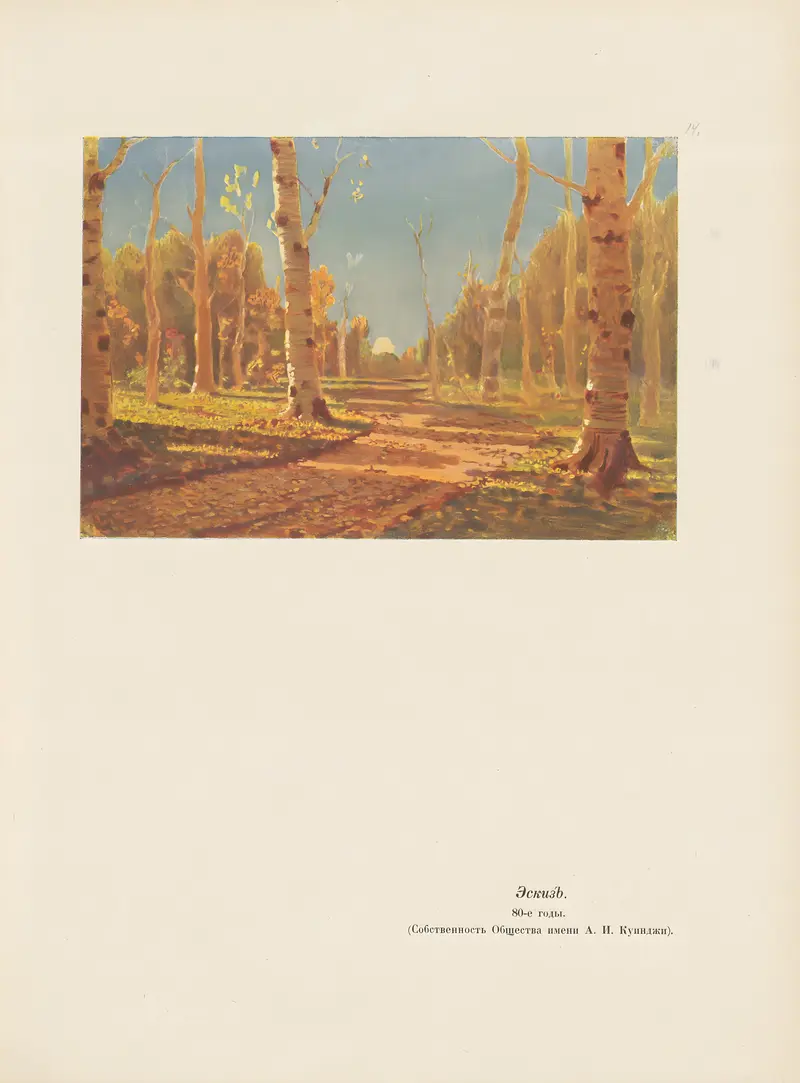
A. I. Kuindž Pl.09
Arkhip Ivanovich Kuindzhi
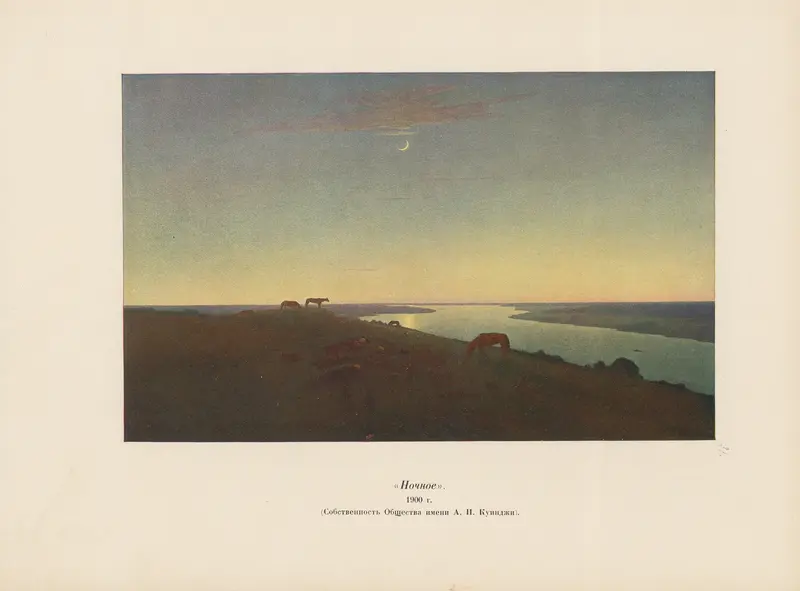
A. I. Kuindž Pl.26
Arkhip Ivanovich Kuindzhi
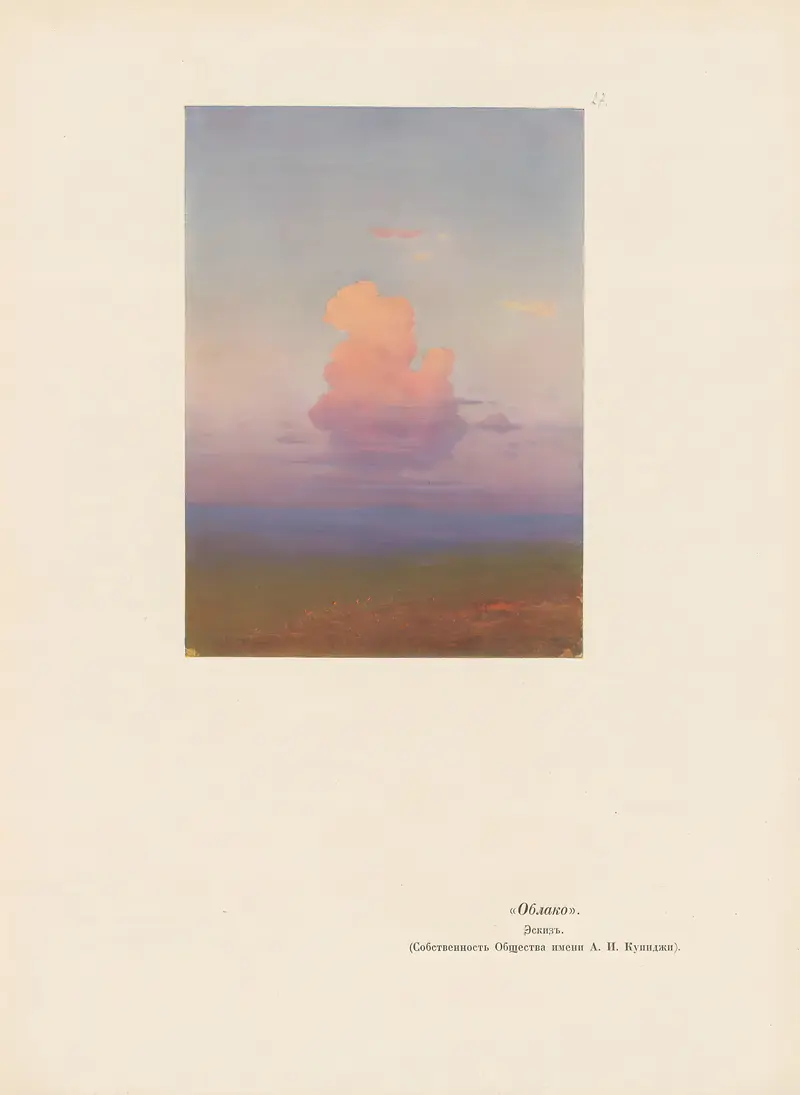
A. I. Kuindž Pl.22
Arkhip Ivanovich Kuindzhi
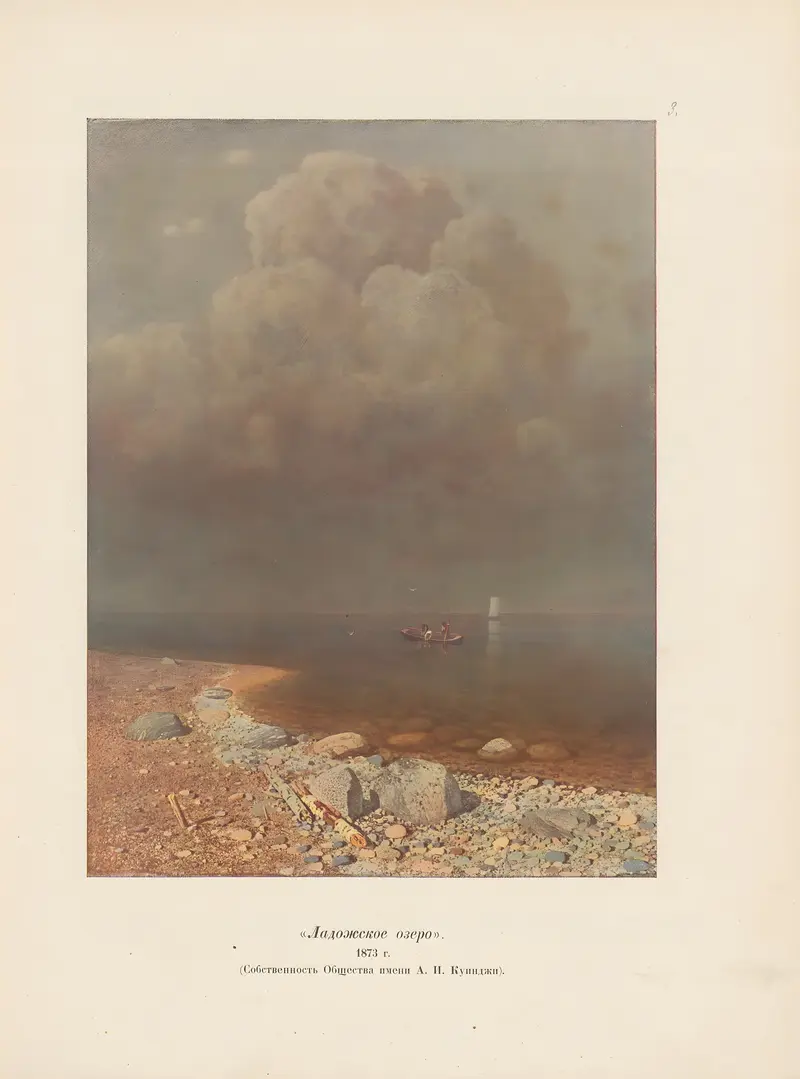
A. I. Kuindž Pl.01
Arkhip Ivanovich Kuindzhi
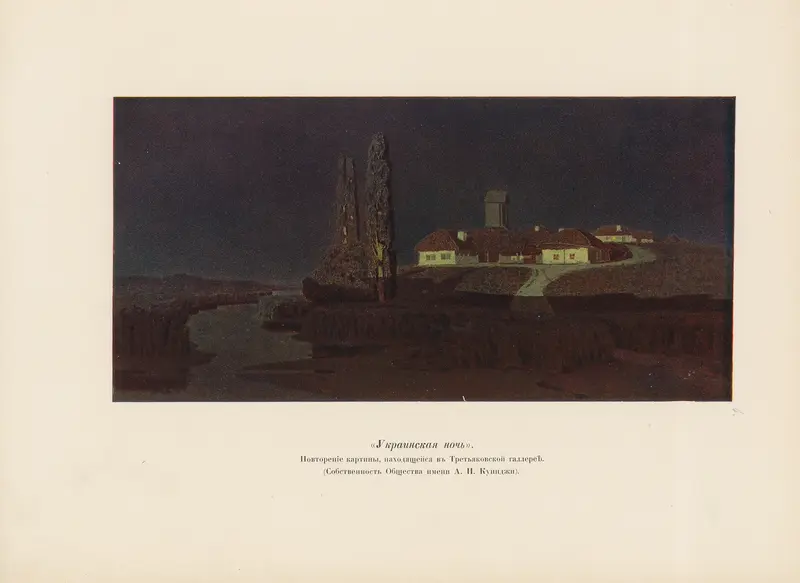
A. I. Kuindž Pl.03
Arkhip Ivanovich Kuindzhi
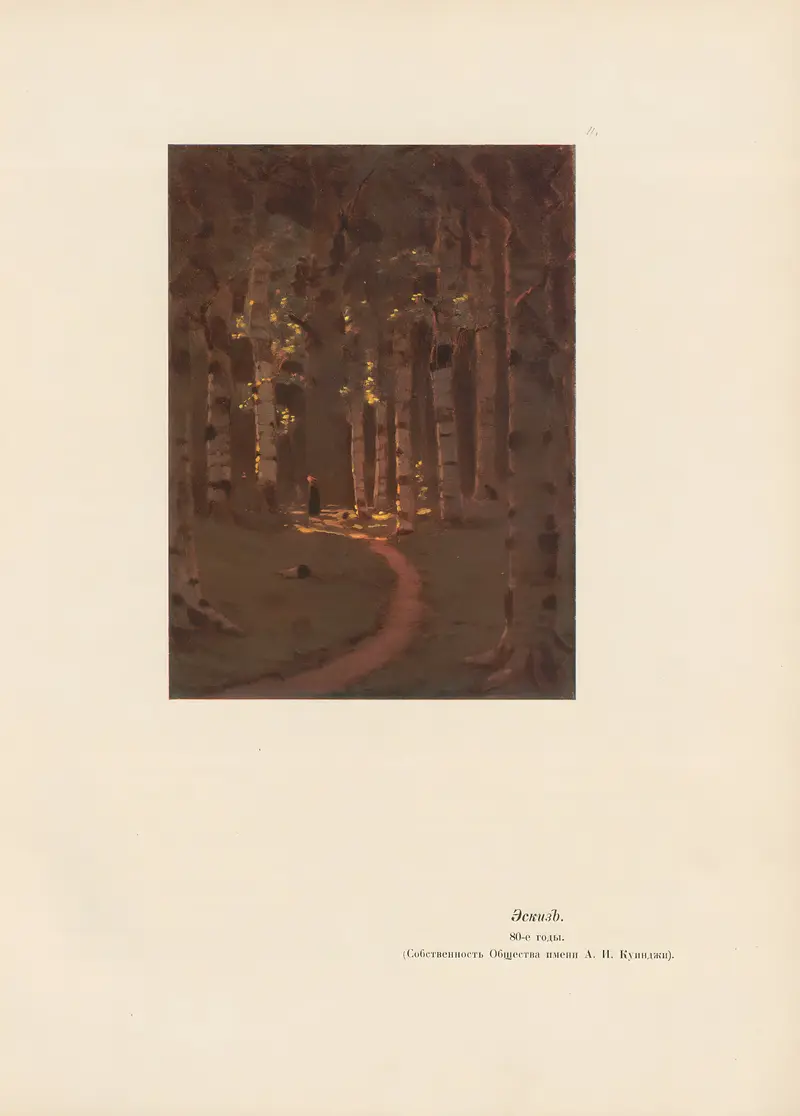
A. I. Kuindž Pl.06
Arkhip Ivanovich Kuindzhi
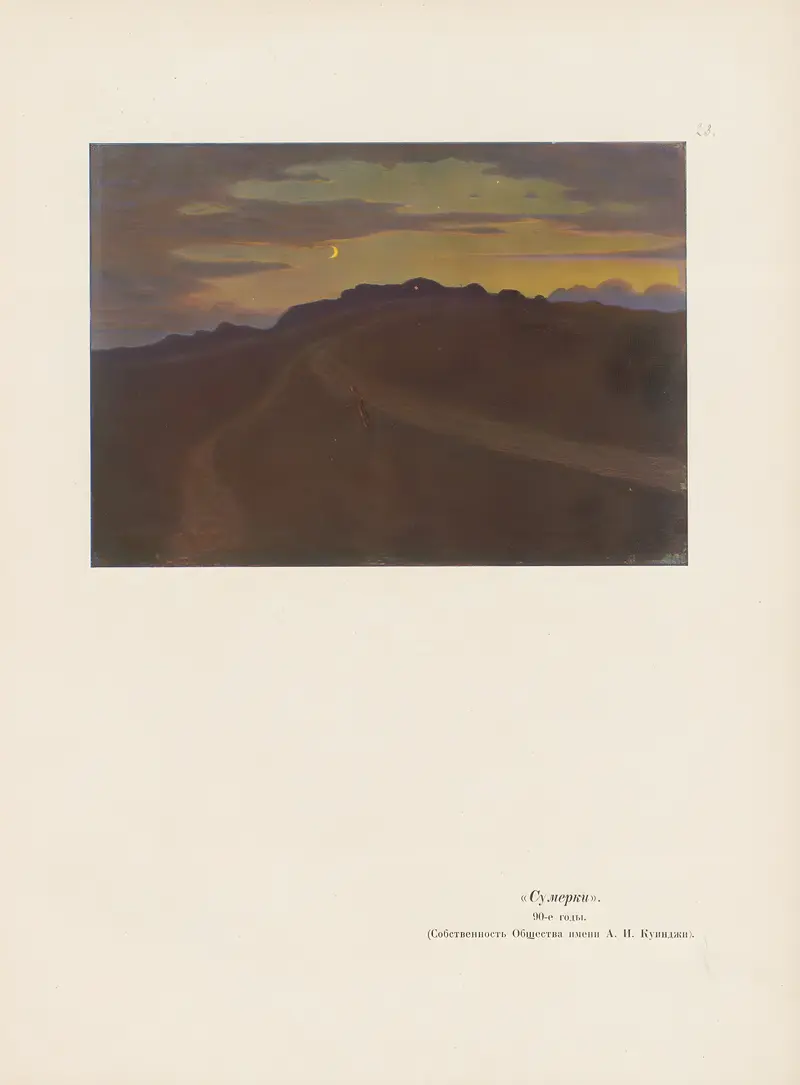
A. I. Kuindž Pl.18
Arkhip Ivanovich Kuindzhi
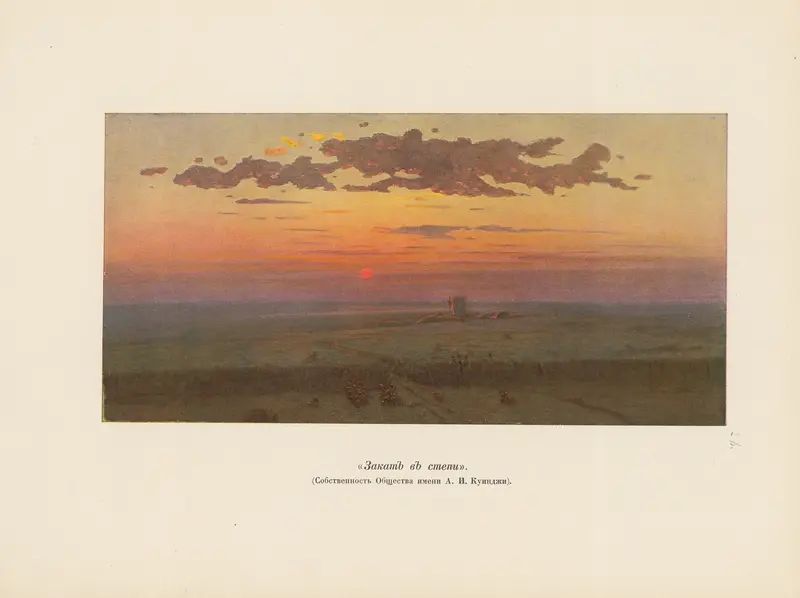
A. I. Kuindž Pl.21
Arkhip Ivanovich Kuindzhi

A. I. Kuindž Pl.12
Arkhip Ivanovich Kuindzhi
More Landscape Art

The Starry Night
Vincent van Gogh

View of Delft
Johannes Vermeer

Water Lilies
Claude Monet

The Grand Canal, Venice, looking north-west from the Ca' Corner to the Ca' Contarini degli Scrigni, with the campanile of Santa Maria della Carità
Canaletto

Windsor Castle
Canaletto

The Grand Canal looking North-East from the Palazzo Dolfin-Manin to the Rialto Bridge
Canaletto