Moonlit coastal scene — History & Facts
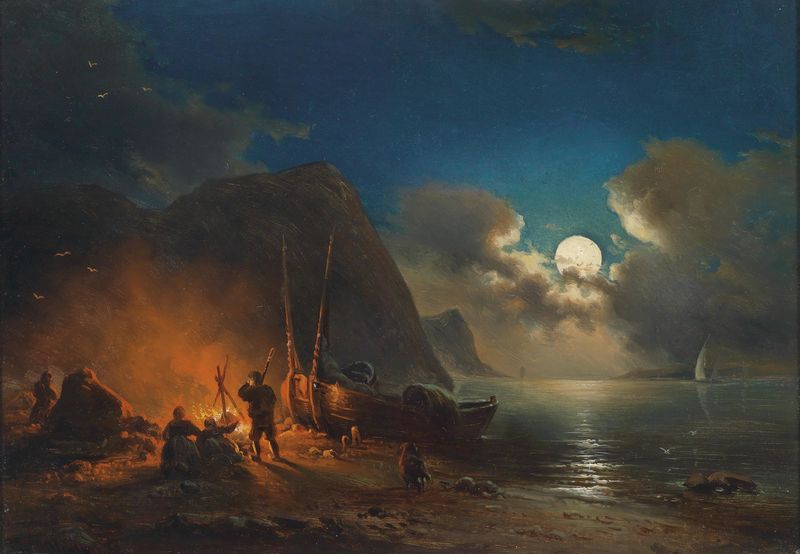
What if beauty was never meant to be finished? In a world where innocence dances on the edge of dusk, the ethereal glow of a moonlit coastal scene beckons us to linger in its embrace. Look to the horizon where the deep indigo sea meets the delicate shimmer of silver light. The moon, a luminous sentinel, casts its reflection upon the water, creating a path of shimmering possibility. Notice how the silken brush strokes blend together, suggesting gentle waves and a tranquil shore, while the dark silhouettes of distant cliffs frame this peaceful tableau.
Each hue—from the soft blues to the rich blacks—invites contemplation, revealing Castell's deft manipulation of color to evoke a sense of serenity. Delve deeper into the painting’s quiet contrasts: the calmness of the water juxtaposed with the looming presence of the cliffs, symbolizing the tension between innocence and the unknown. The moonlight, representing clarity, illuminates the scene but casts long shadows, hinting at the complexities of life that lie beyond this peaceful moment. This delicate balance elicits a sense of nostalgia, evoking memories of simpler times, while simultaneously confronting the viewer with the inexorable passage of time. Created during a period of artistic evolution, Castell painted this work in his native Germany, likely in the late 18th century when Romanticism was beginning to emerge.
Surrounded by the backdrop of changing philosophies and a burgeoning appreciation for nature, Castell’s serene coastal scene reflects both the tranquility of the natural world and the romantic ideal of innocence, capturing a fleeting moment that speaks to the human experience.