Romantisches Lagerfeuer Im Mondschein — History & Facts
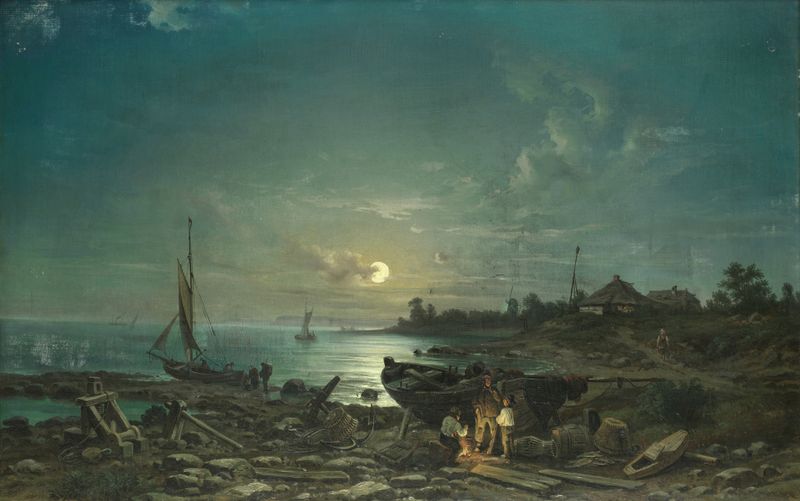
When did color learn to lie? Shadows dance around the flickering light of a campfire, casting silhouettes that blur the line between reality and illusion, warmth and cold. Look to the center, where the fire's glow ignites the faces of the figures gathered in intimate conversation. The soft reds and oranges of the flames contrast sharply against the deep blues and blacks of the surrounding night, drawing the eye and inviting an exploration of the enveloping darkness. Notice how the artist's adept use of chiaroscuro beckons the viewer into this serene yet mysterious gathering, each character's expression illuminated by the soft flicker of the firelight. Delve deeper into the scene, and you may observe the way each figure is framed by shadow, hinting at untold stories and emotions.
The elongated silhouettes evoke a sense of nostalgia and longing, suggesting that beneath the conviviality lies an inherent solitude. The juxtaposition of light and dark serves not only as a stylistic choice but also as a metaphor for the duality of human experience—joy intermingled with melancholy. In 1850, Johann Anton Castell painted this piece during a time of burgeoning romantic sentiment in Europe. Living in Germany, Castell was influenced by the Romantic movement, which emphasized emotion, nature, and the sublime.
This painting reflects the era’s fascination with nature's beauty and the human connection to it, capturing a moment that resonates with intimacy and depth amidst the broader cultural shifts of his time.