
Moonlit Landscape with Lake and Ruined Abbey — History & Facts
A glowing moon commands the scene, its light poured lavishly across the water and stone as if to stitch together the living and the ruined. The eye is drawn first to the luminous path on the lake, a silver ribbon pulling us toward the horizon, then to the silent drama between the two small figures at the water’s edge—fishermen, perhaps, or wanderers caught in the spell of the night. To the right, the skeletal remains of an abbey rise, their arch still tracing a memory of faith against the sky.
Every shadow and highlight is carefully weighed: the trees lean in, the clouds gather, and the ancient stones seem to drink in the moonlight, holding secrets from centuries past. The palette is restrained, all ochres and umbers, heightening the sense of quiet and the hush that descends with nightfall. This is the world of late eighteenth- and early nineteenth-century British landscape painting, where artists like Abraham Pether became known for their fascination with moonlit scenes. Such pictures were prized by collectors for their blend of the picturesque and the mysterious—a taste shaped by the era’s growing appetite for the natural world’s drama and the ruins of history.
The ruined abbey, a favorite motif, spoke to a culture haunted by the passage of time and the romance of decay. Today, this work is held in the Art UK collection, its date and medium unrecorded, a reminder of how many such paintings survive as quiet witnesses to changing tastes and vanished patrons. The moon still shines here, inviting us to linger and let our eyes adjust to its gentle, searching light.
More Artworks by Abraham Pether

Sunset over a rural landscape
Abraham Pether
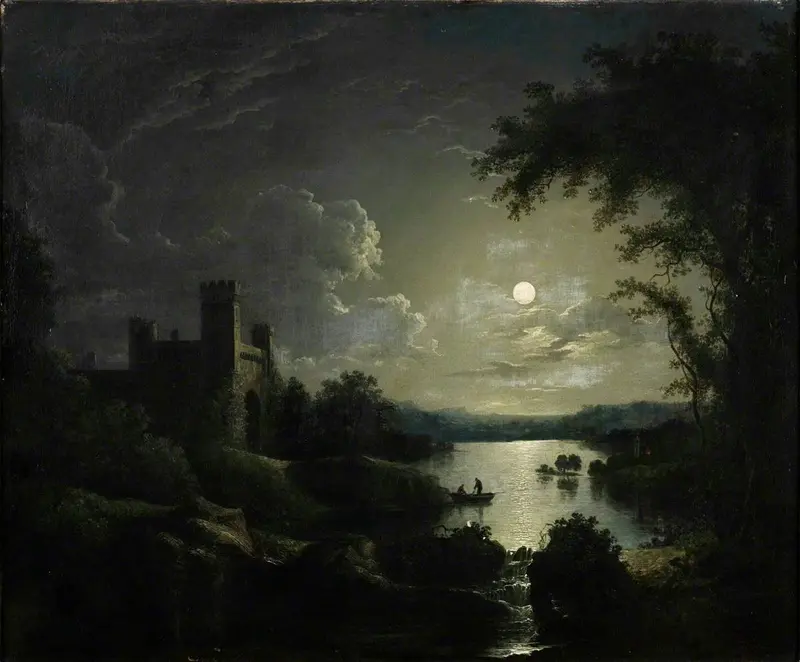
A Castle and Lake by Moonlight
Abraham Pether
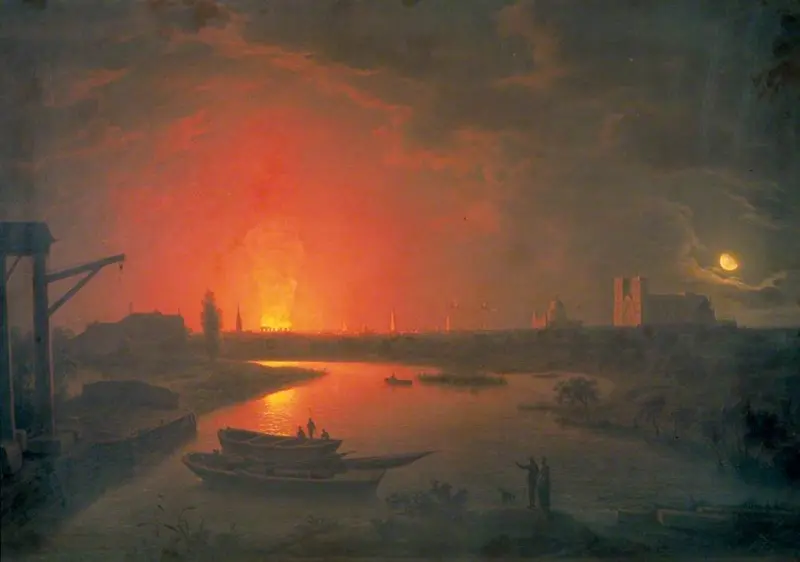
Old Drury Lane Theatre on Fire, London, 24 February
Abraham Pether
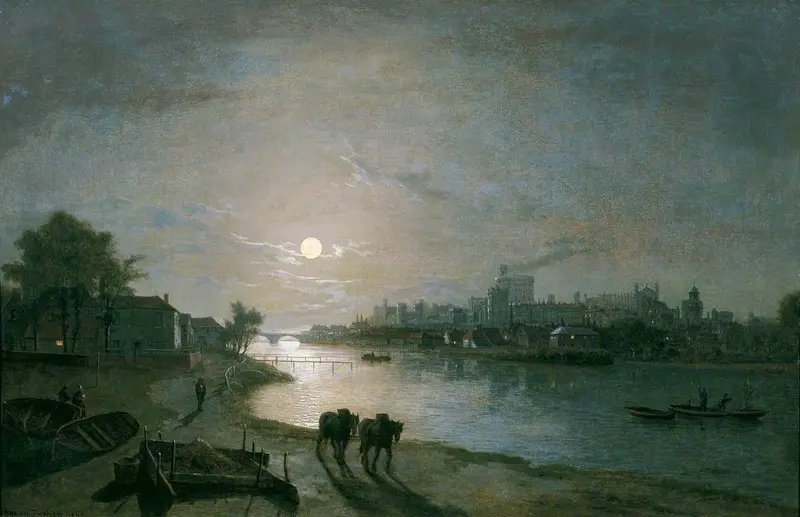
Windsor Castle by Moonlight
Abraham Pether
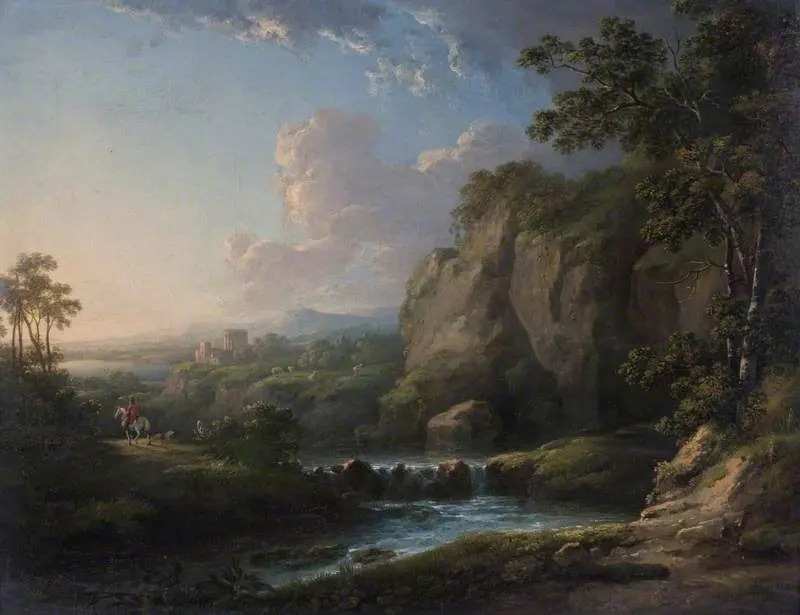
Wooded Landscape
Abraham Pether
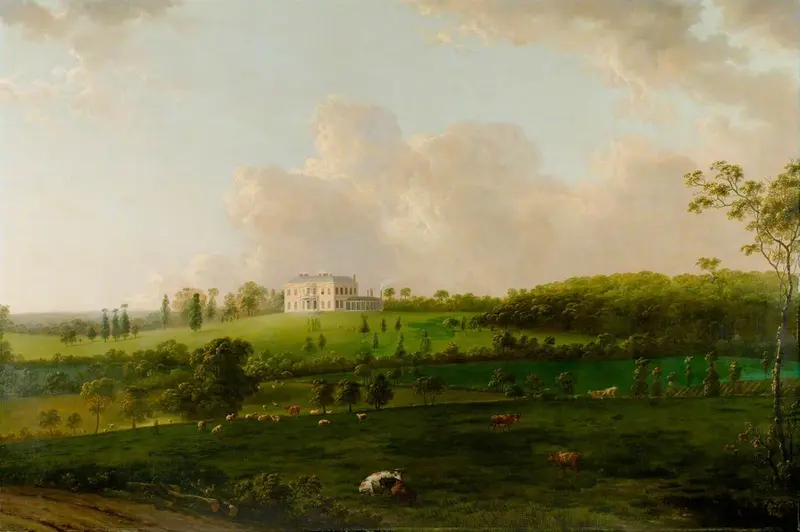
Claybury Hall, Essex
Abraham Pether
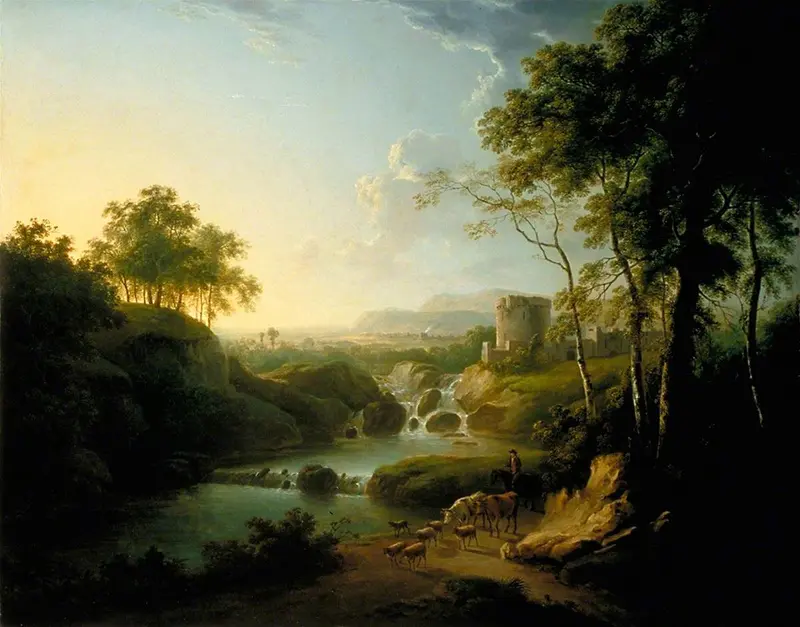
Landscape
Abraham Pether
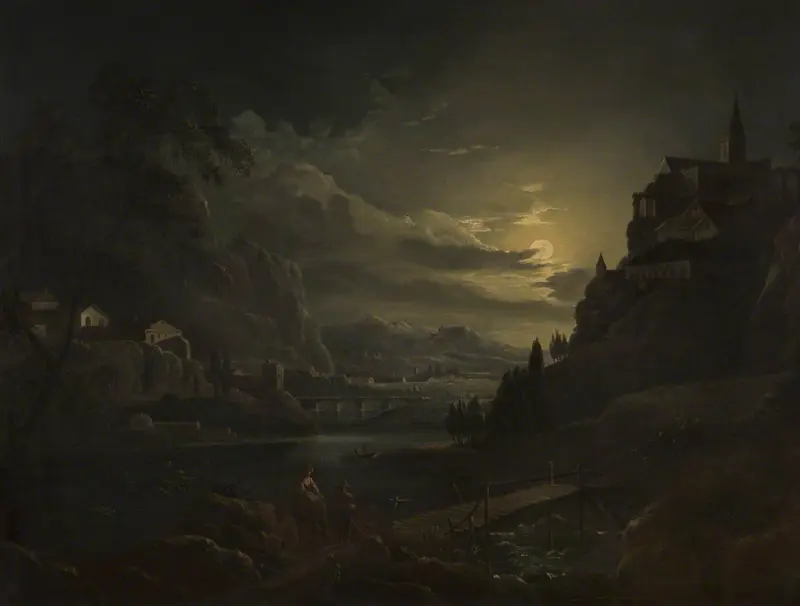
Classical Landscape by Moonlight
Abraham Pether
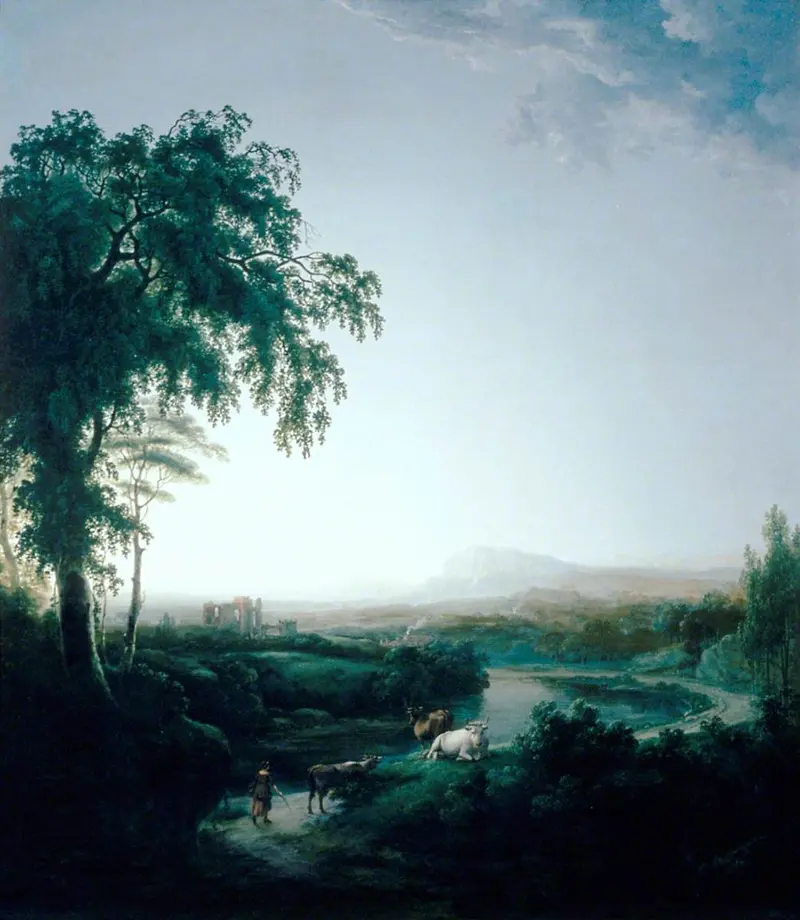
Landscape with River and Cows at Dusk
Abraham Pether
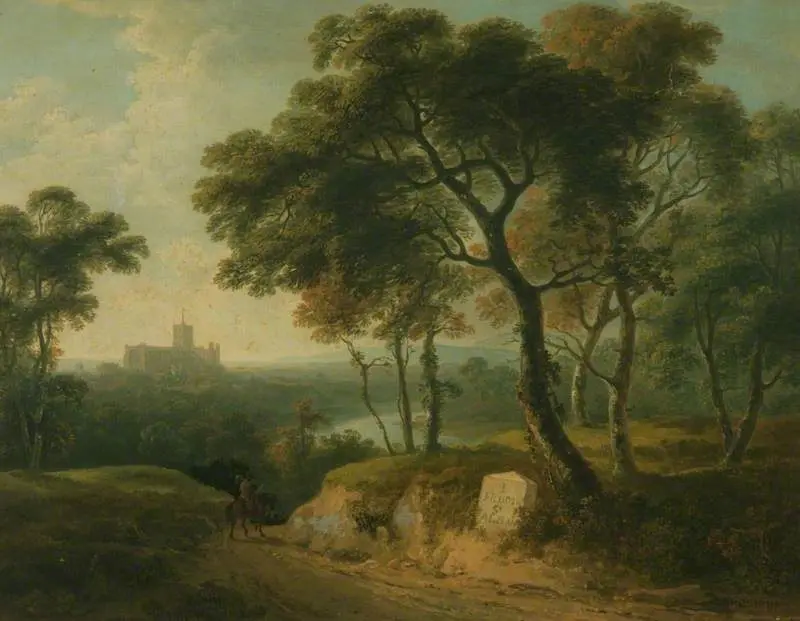
St Albans Abbey, Hertfordshire
Abraham Pether
More Landscape Art

The Starry Night
Vincent van Gogh

View of Delft
Johannes Vermeer

Water Lilies
Claude Monet

The Grand Canal, Venice, looking north-west from the Ca' Corner to the Ca' Contarini degli Scrigni, with the campanile of Santa Maria della Carità
Canaletto

Windsor Castle
Canaletto

The Grand Canal looking North-East from the Palazzo Dolfin-Manin to the Rialto Bridge
Canaletto