Moonrise — History & Facts
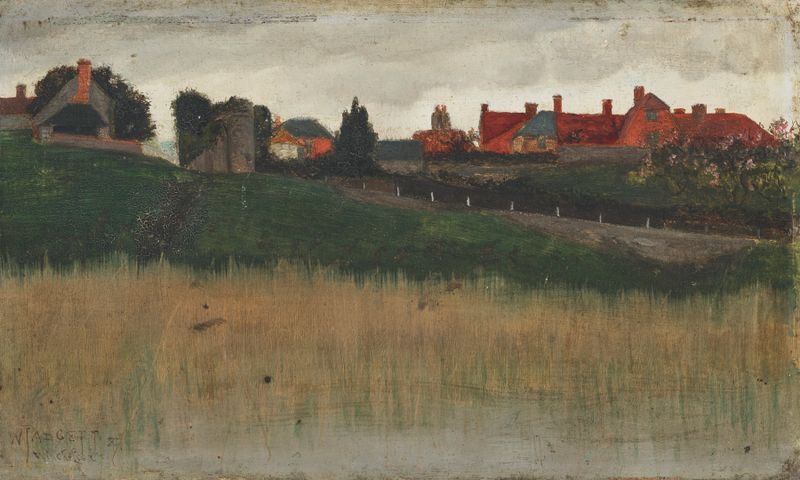
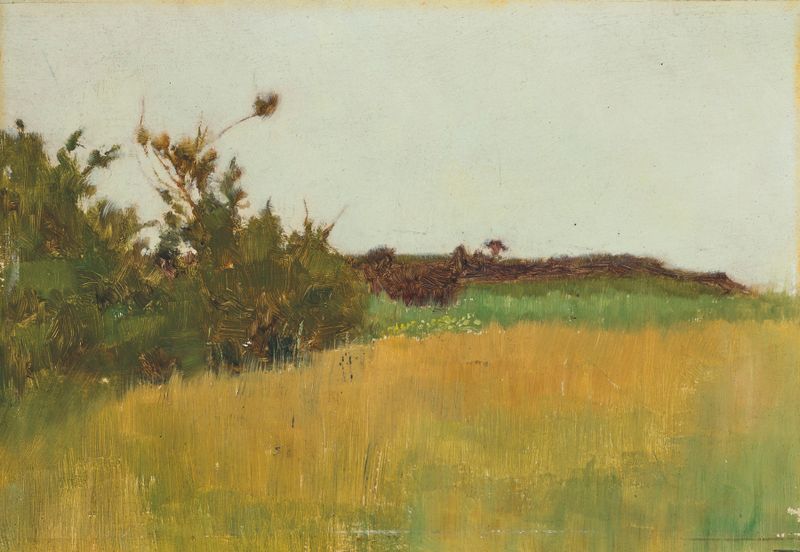
Can beauty exist without sorrow? In the haunting tranquility of twilight, a delicate balance hangs suspended between the celestial and the terrestrial, where every shimmering star whispers of transience and fate. Focus on the ethereal glow that emanates from the moon, casting its silver light across a tranquil landscape. The soft hues of blues and purples evoke a sense of calm, while the subtle brushstrokes capture the fleeting moments of dusk. Look closely at the interplay of shadow and light; the way the darkened ground contrasts against the glowing sky illustrates the profound relationship between hope and despair, the acknowledgment of life’s fragility. Hidden beneath this serene surface lies a poignant exploration of mortality.
The moon, a timeless symbol of cycles, reminds us of life’s inevitable passage—each phase a testament to beauty intertwined with loss. The stillness of the scene invites introspection, urging the viewer to contemplate their connection to the universe and the impermanence of existence. The delicate balance between light and dark serves as a metaphor for the duality of joy and sorrow, an eternal dance that defines our human experience. William Padgett created this work during a time of personal introspection, reflecting on life and the natural world around him.
The precise date remains unknown, but his artistic journey corresponds with a broader movement that sought to capture the sublime beauty of nature in the late 19th century. In an era marked by rapid change and uncertainty, Padgett’s art stands as a serene reminder of the beauty inherent in life's fleeting moments.