A meadow — History & Facts
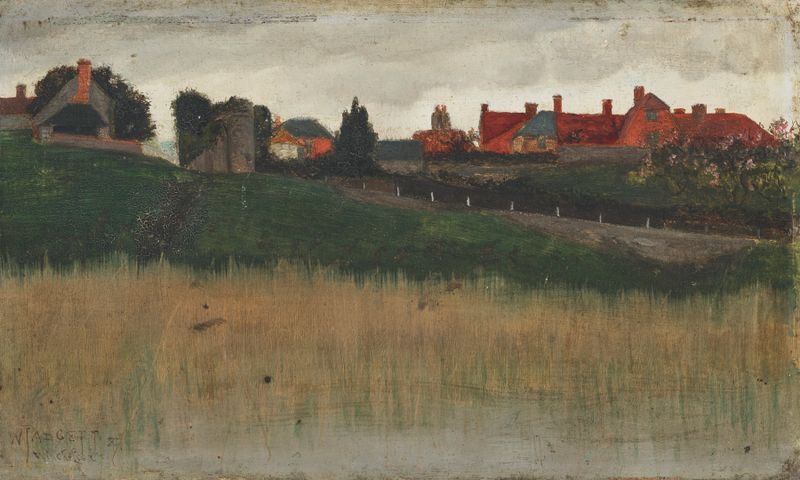
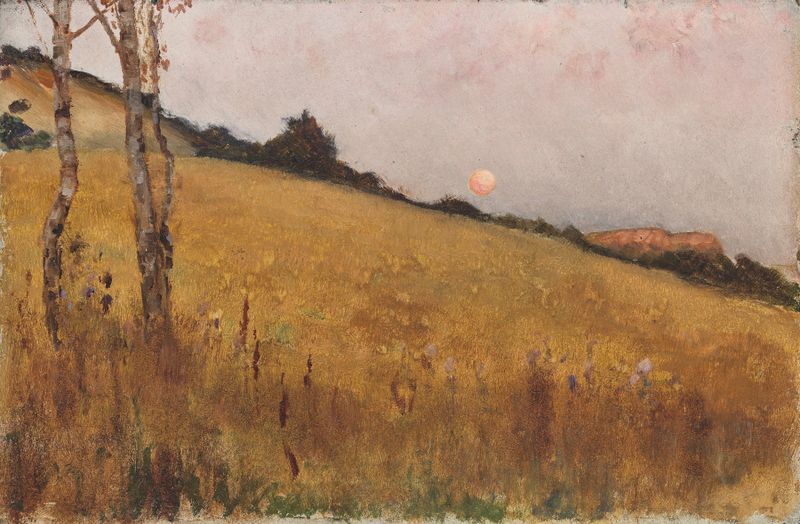
In the gentle sway of grass and the soft rustle of leaves, one encounters not just nature, but the secrets it holds. Look to the center where the sun-kissed meadow unfurls, a tapestry of greens and golds, softly inviting yet concealing. The brushwork dances lightly, suggesting a warm breeze, while darker strokes in the foreground hint at shadows lurking beneath the surface. Observe how the light spills across the canvas, illuminating patches of wildflowers, yet casting deeper hues along the edges—a subtle whisper of a story untold. Yet, beneath this tranquil façade lies an undercurrent of tension, where the idyllic landscape may betray its beauty.
The stark contrast between the vibrant colors and the shadows suggests an emotional dissonance, a promise of peace intertwined with secrets of past betrayals. Each blade of grass and bloom carries the weight of memories, evoking feelings of nostalgia that are both comforting and unsettling. The artist created this piece during a time of introspection, possibly reflecting on personal experiences that echoed the complexities of human emotion. While the exact date remains unknown, it was likely influenced by the broader artistic movements of its time, where landscapes were explored not only for their beauty but as vessels for deeper narratives.
This painting stands as a testament to Padgett's understanding of the duality of nature, revealing both its allure and its hidden depths.