
Moorland with carriage — History & Facts
Can paint confess what words never could? In Moorland with Carriage, longing weaves through the expansive landscape, revealing layers of human emotion beneath the tranquil surface. Look to the left at the rolling, gentle hills, bathed in soft greens and browns. The carriage, a solitary figure amidst nature, anchors the composition, leading the viewer’s eye toward the horizon. Notice how the light dances across the landscape, illuminating the textured brushstrokes that evoke a sense of depth and distance, suggesting both separation and connection.
The muted palette invokes nostalgia, a yearning for simpler times or lost moments. Deeper still, the contrast between the vibrant earth and the somber sky hints at a tension between hope and despair. The carriage, seemingly abandoned on its journey, symbolizes both the passage of time and the unresolved dreams of its occupants. Each stroke serves as a reminder of the fleeting nature of existence, whispering secrets of what once was and what could never be. Carl Fredrik Hill painted this work in 1878 while living in France, grappling with his mental health and a growing sense of isolation.
During this period, he was influenced by both Impressionism and the realities of his own struggles, capturing not just a landscape but the emotional landscape of his own life. The painting reflects a transitional moment in art, where personal expression began to intertwine with the traditional views of nature, marking a significant evolution in the artistic dialogue of the time.
More Artworks by Carl Fredrik Hill
Browse all →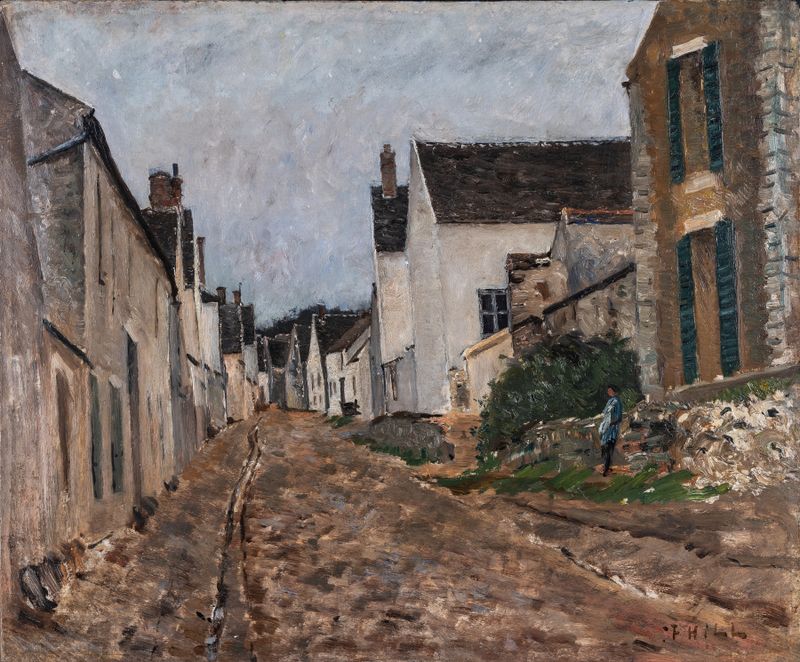
French Village Street, Montigny
Carl Fredrik Hill

The Tree and the River III (The Seine at Bois-le-Roi)
Carl Fredrik Hill
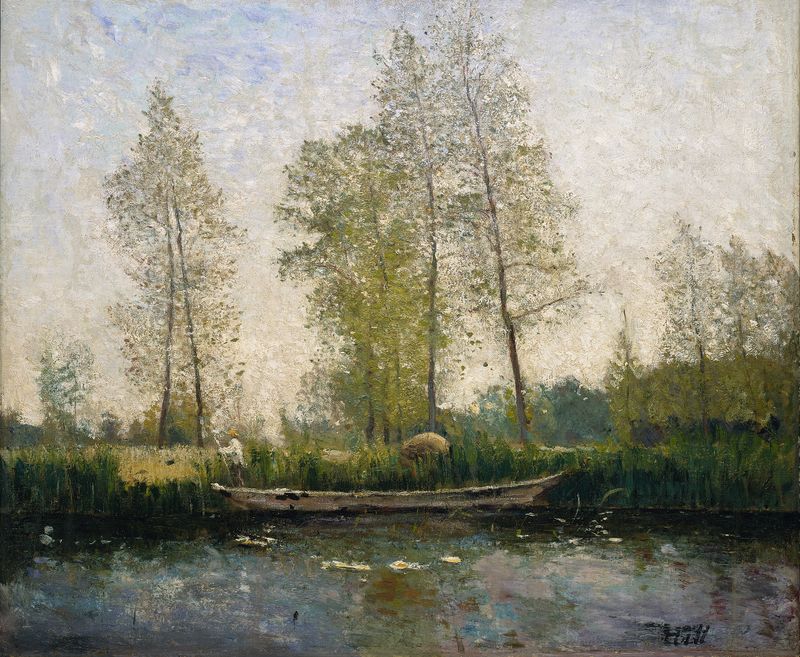
Seine. Motif from St Germain
Carl Fredrik Hill
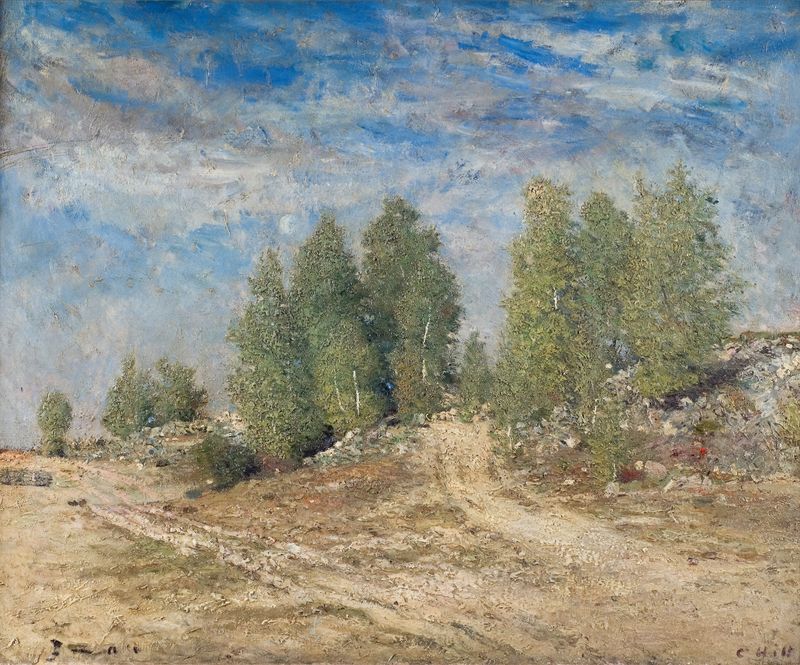
Gravel Slope
Carl Fredrik Hill
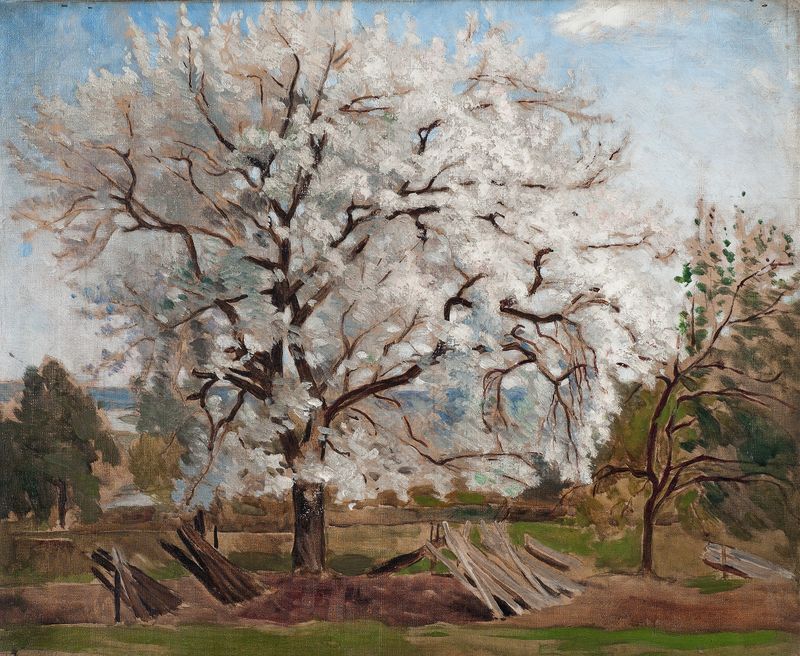
Apple Tree in Blossom
Carl Fredrik Hill
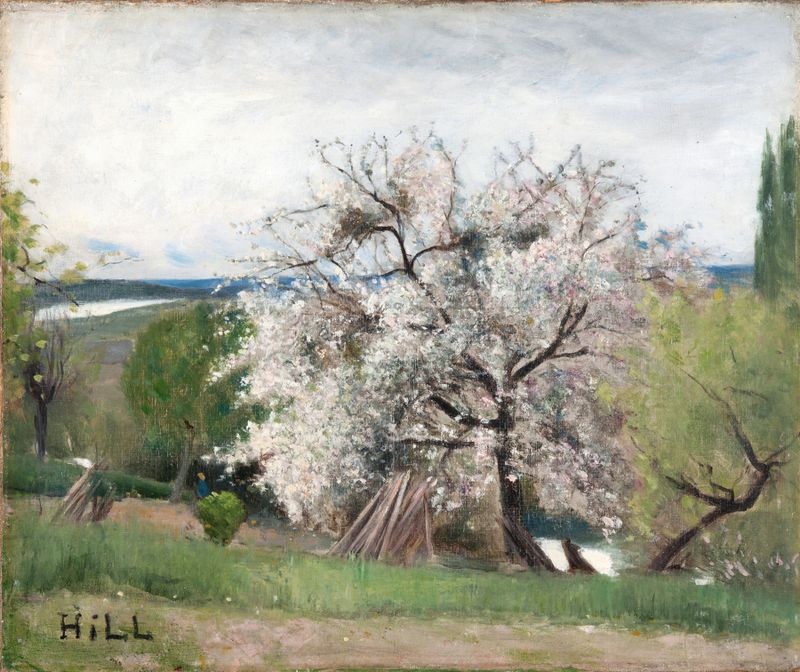
Fruit Tree in Blossom, Bois-le-Roi
Carl Fredrik Hill
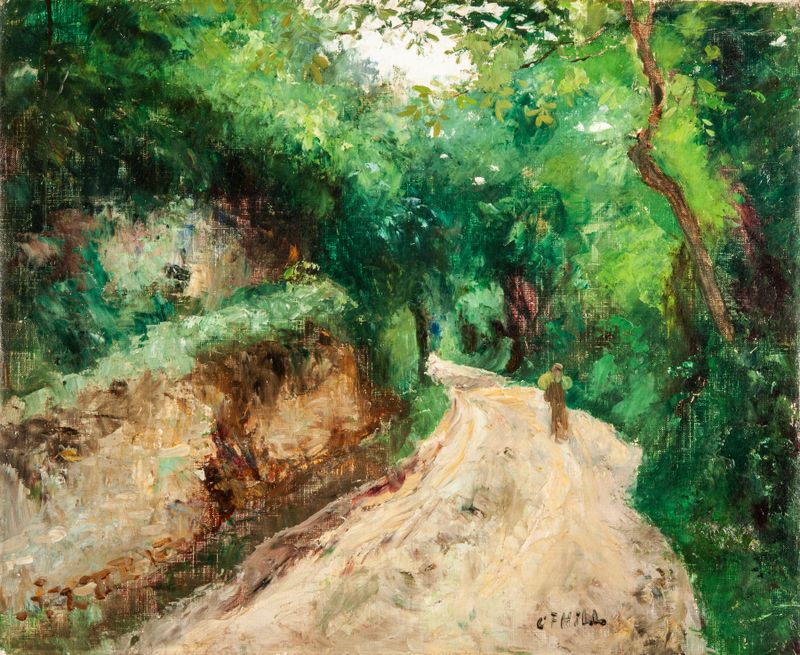
Hollow Road, Fountainebleau
Carl Fredrik Hill
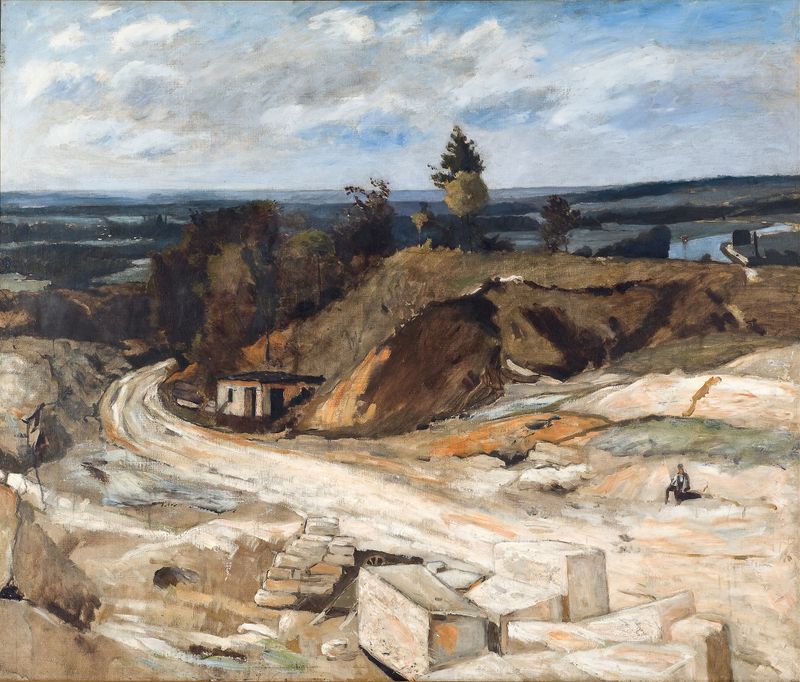
Stonequarry by the River Oise II
Carl Fredrik Hill
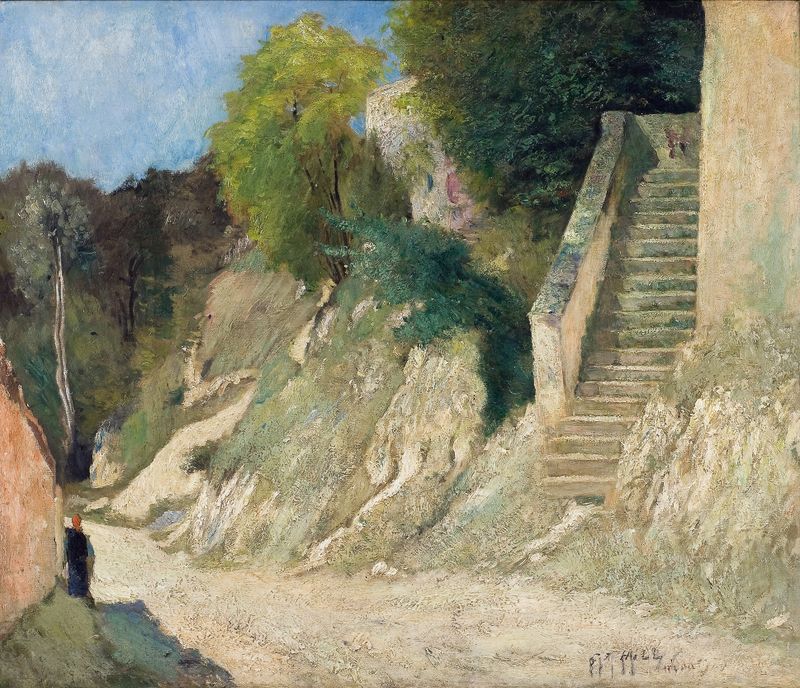
A Steep Ascent in Montigny-sur-Loing
Carl Fredrik Hill
The Beach at Luc
Carl Fredrik Hill





