Moorlandschaft in Abendstimmung — History & Facts
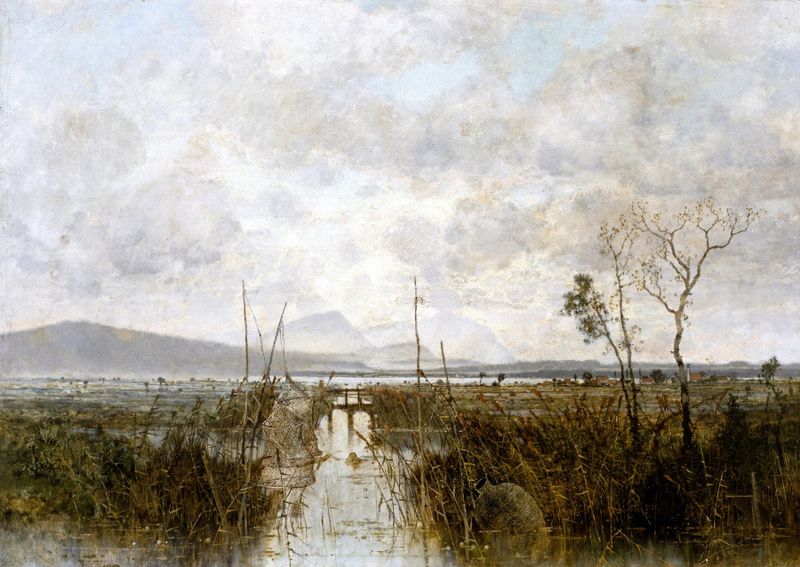
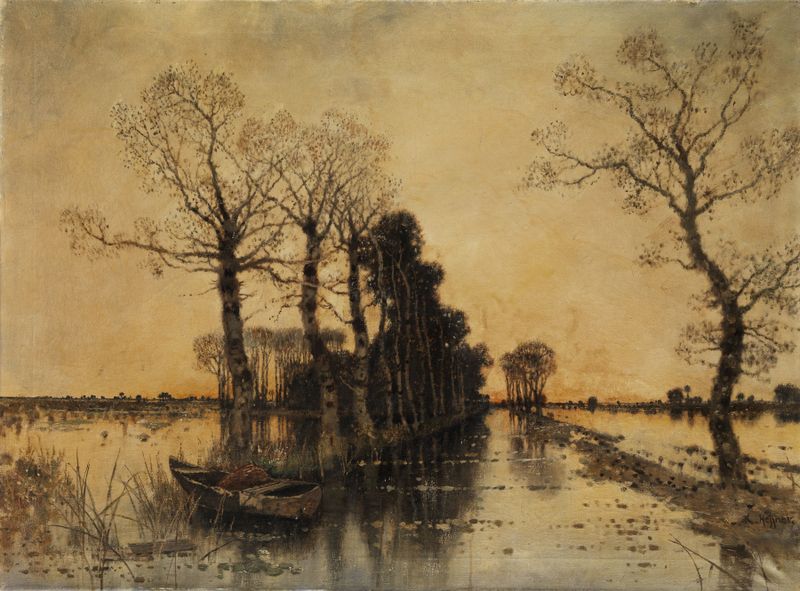
What secret hides in the quiet of the canvas? In the stillness of Moorlandschaft in Abendstimmung, a palpable tension lingers, echoing the madness of solitude — a place where the mind can wander too far, and silence can whisper dark thoughts. Look to the horizon first, where the fading sun casts a golden hue across the moorland. Notice how the brushstrokes dance with vibrant yellows and deep blues, evoking both tranquility and unease. The undulating grasses sway gently beneath this ethereal light, while shadows stretch ominously, suggesting the encroachment of night.
The composition draws you in, guiding your gaze through the sweeping landscape, each element carefully placed to convey a haunting beauty that invites contemplation. Delve deeper into the scene — the quiet water reflects not just the sky but perhaps the inner turmoil of the artist’s psyche. The contrast between light and dark throughout the painting subtly hints at an emotional duality; the serene exterior belies the chaos that may reside beneath. The blending of colors, particularly where the light meets the shadow, evokes a sense of madness, as if the landscape itself is caught in a moment of surrender to the night. Created during an uncertain time in the late 19th century, the work reflects Karl Heffner's struggle as a lesser-known figure in a transitionary period of art.
Living in Germany, Heffner faced challenges in finding recognition amidst the dominant movements of impressionism and realism. This painting, absent a specific date, embodies a moment of introspection, capturing both the beauty of nature and the fragile state of the artist's mind.