Moorlandschaft mit überschwemmter Allee — History & Facts
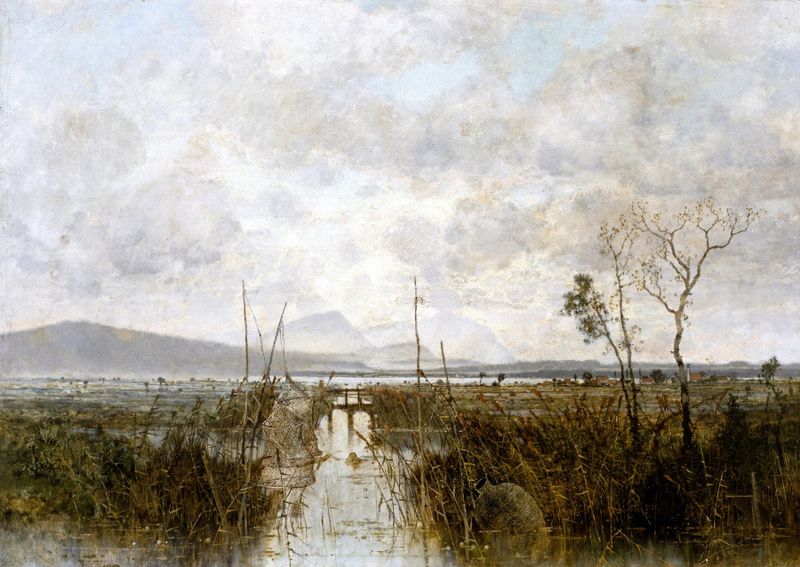
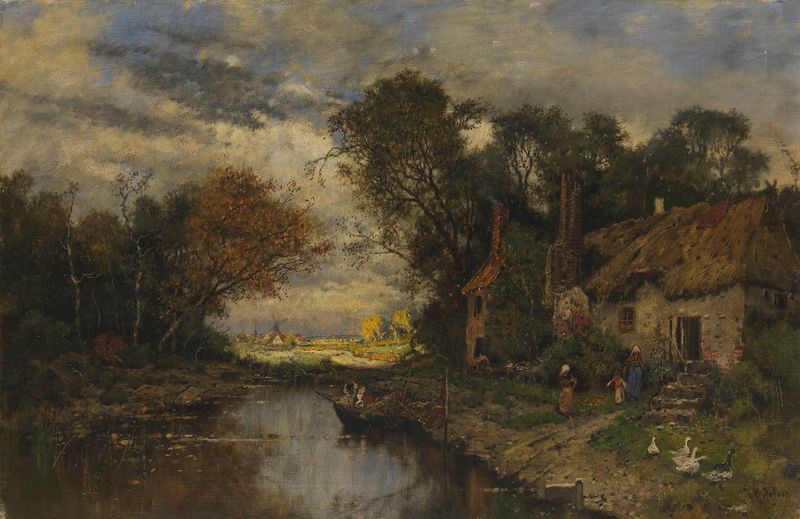
Can paint confess what words never could? In the stillness of a moment captured, time stretches across the canvas, whispering secrets of the landscape that words often fail to convey. Look to the center, where a meandering path is swallowed by shimmering waters, reflecting a muted sky. Notice the delicate brushwork that defines the overhanging trees, their limbs heavy with mist, creating a frame that leads the eye deeper into the scene. The color palette, a symphony of soft greens and browns interspersed with patches of somber gray, evokes an ethereal quality that invites quiet contemplation. This artwork thrives on contrasts—the serenity of the flooded path juxtaposed against the potential for tumult that a stormy sky suggests.
The water, calm yet ominous, appears to hold memories of time long past, while the looming branches symbolize the passage and permanence of nature. It is as if each droplet of paint carries an echo of history, urging the viewer to reflect on the relationship between the fleeting moment and the eternal landscape. Created during an undefined period of his life, the artist embraced a naturalistic approach that resonated with the Romantic movement. In this era of artistic exploration, Heffner sought to convey the profound connection between humanity and the environment, navigating the complexities of emotion through serene, reflective scenes like this one.
The tumult of the world around him was mirrored in the tranquility of his landscapes, allowing him to capture not just the visual, but the emotional essence of time itself.