Fischreusen im Uferbereich eines Sees — History & Facts
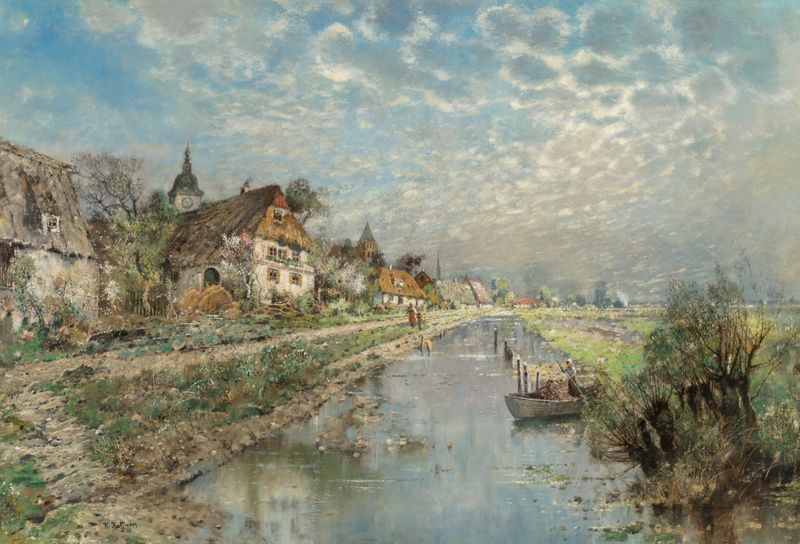
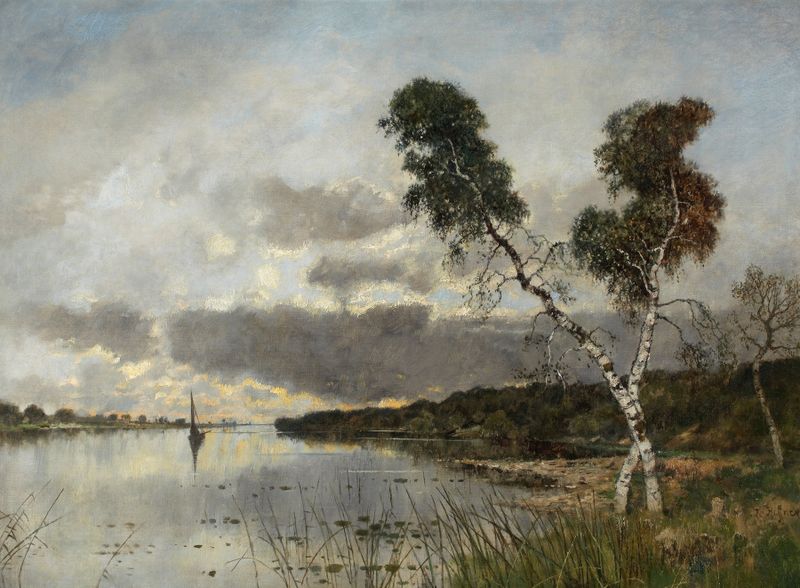
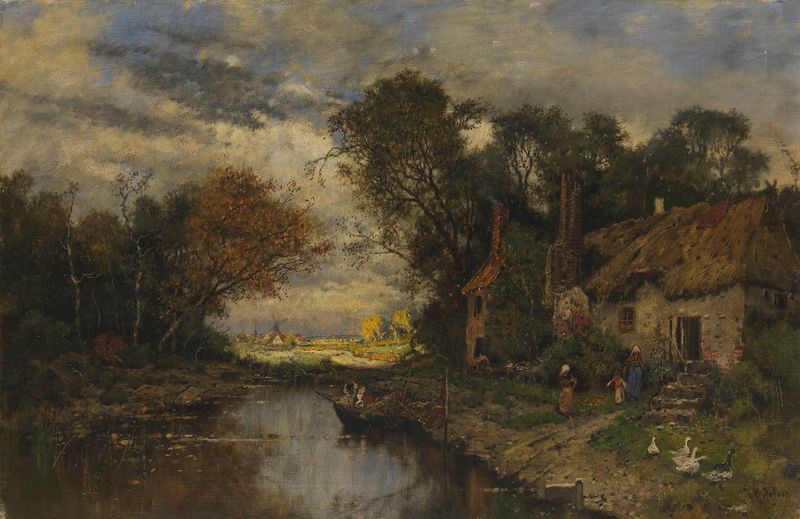
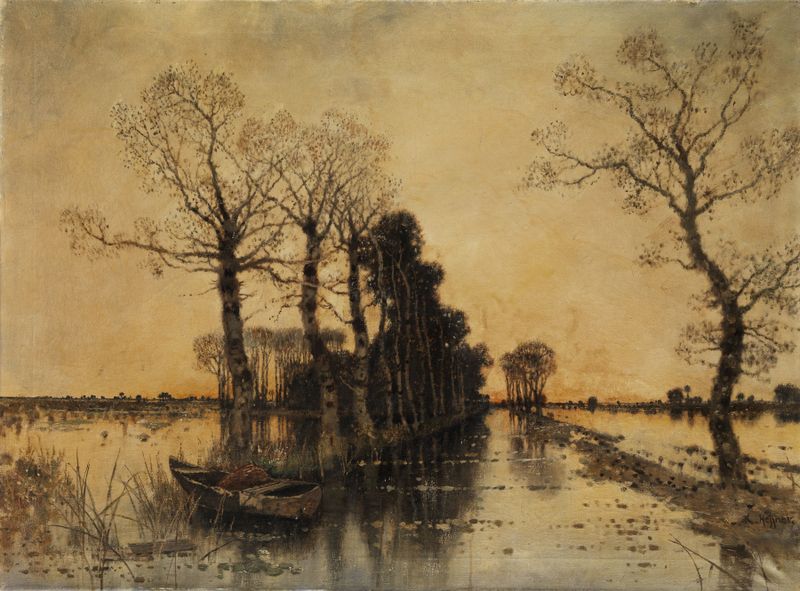
When did color learn to lie? In the depths of our perceptions, hues twist the truth, ensnaring us in an obsessive dance between reality and illusion. Focus on the shimmering surface of the water, where light dappled by the trees creates a kaleidoscope of greens and blues, inviting you to lose yourself. Notice the delicate way the fishing baskets are arranged along the shore, their subtle textures contrasting with the smooth fluidity of the lake. The composition balances stillness and tension, as the vibrant colors breathe life into the otherwise serene environment, hinting at an underlying narrative that captures the viewer’s imagination. The fishing baskets, seemingly mundane, represent both the promise and burden of obsession—the pursuit of abundance that can wane as swiftly as the setting sun.
Their positioning along the water’s edge suggests a fleeting connection between nature and man, while the reflections ripple outward, symbolizing the impact of human endeavor on the landscape. Each brushstroke carries a sense of longing, drawing us into a deeper contemplation of our own obsessions and the fleeting nature of fulfillment. Created during an uncertain period in the late 19th century, the artist worked at a time when naturalism reigned in the art world. Karl Heffner found inspiration in the rural landscapes that surrounded him, offering a glimpse into the intimate relationship between humanity and nature.
Amidst the changing tides of artistic movements, his exploration captured a distinct longing for connection and beauty, revealing an artist in tune with the complexities of existence.