Morif from the Low Tatras — History & Facts
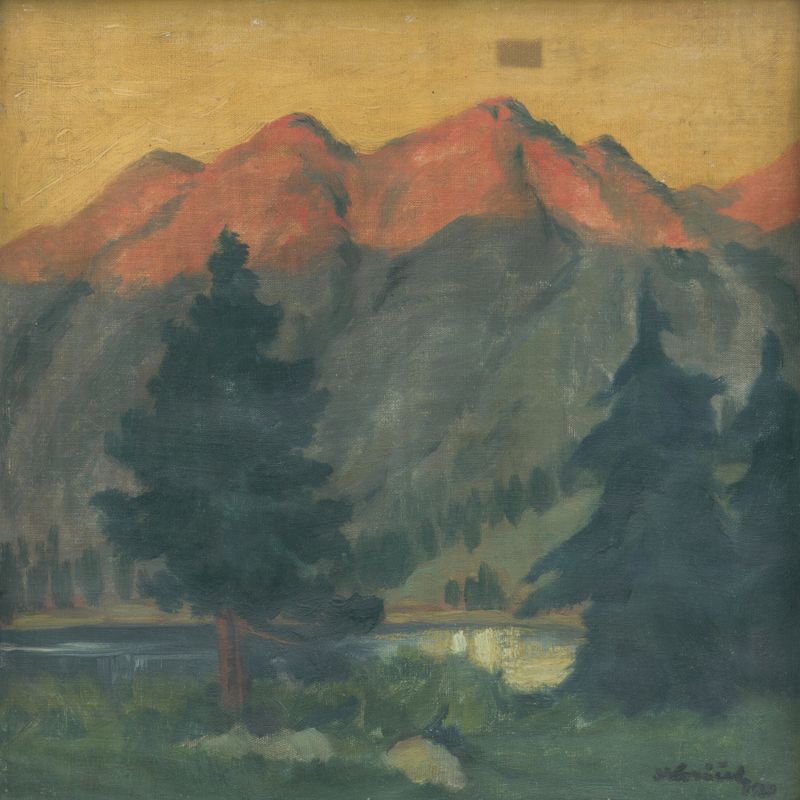
This poignant reflection sparks our gaze into the intricate illusions conjured by Kováčik’s brush. In Morif from the Low Tatras, the landscape transforms into a realm where reality blurs with the ethereal, challenging our perception of what is true and what is imagined. Look to the left at the sweeping contours of the mountains, their jagged peaks softened by a hazy twilight. Notice how the interplay of blues and greens creates a lush tapestry that draws the eye deeper into the painting.
The delicate strokes depict the foliage with an almost dreamlike quality, as if the trees are whispering secrets. Kováčik employs a muted palette punctuated by sudden bursts of light, illuminating specific areas while leaving others cloaked in shadow, inviting contemplation of the visible and the unseen. Hidden beneath the serene surface lies an emotional tension between solitude and the vibrancy of life. The mist enveloping the mountains evokes a sense of mystery, as though the viewer is privy to a world that thrives just beyond grasp.
Each brushstroke conveys a longing for connection amid isolation, reminding us of our intrinsic desire to belong. This work, while grounded in a tangible landscape, emerges as a metaphor for the dreams and illusions we chase in our lives. In 1926, Kováčik created this piece while living in Czechoslovakia, a country undergoing significant social and political changes. The post-World War I era was marked by a renewed exploration of national identity and artistic expression.
Amidst these transformations, the artist found inspiration in the natural beauty of his homeland, allowing this radiant landscape to serve as both a refuge and a canvas for his creative vision.