Západ slnka — History & Facts
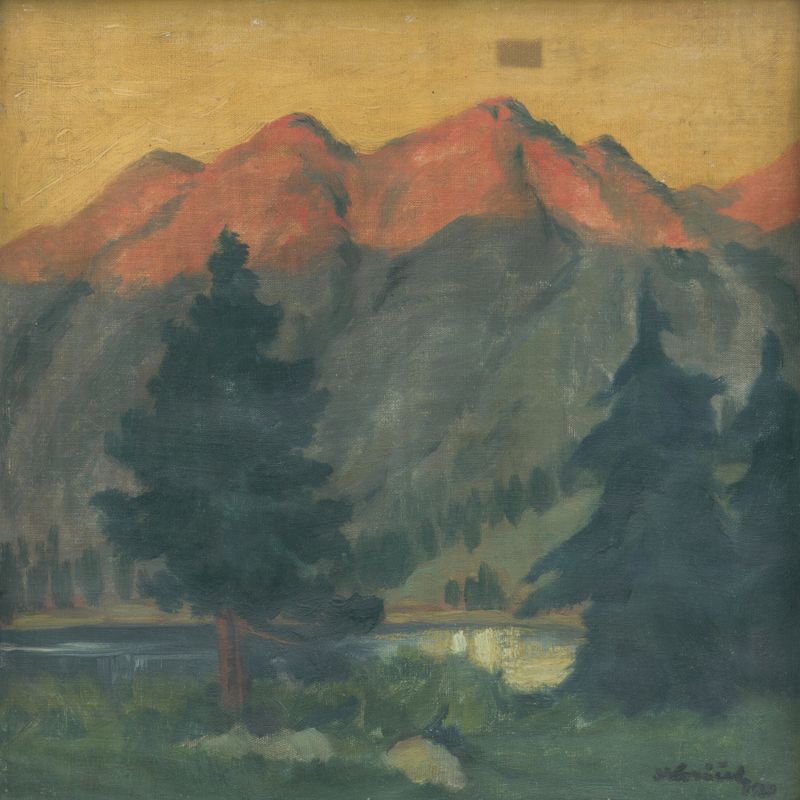
Can paint confess what words never could? In Západ slnka, the ethereal gradient of twilight spills across the canvas, suggesting a metamorphosis that words struggle to articulate. Look to the center, where the sun hangs low, casting a warm golden hue that bleeds into shades of purple and deep blue. This vertical expanse draws the eye upward, creating a sense of transcendence. The brushstrokes, swift and fluid, evoke movement, mirroring the fleeting nature of dusk.
Shadows dance across the landscape, and the horizon pulses with an emotional intensity that beckons deeper reflection. Here, the interplay of light and shadow reveals a world caught between day and night, symbolizing transformation. The sun’s descent can be seen as a metaphor for change, beckoning viewers to contemplate life’s cycles. The tranquil foreground, rich with earthy tones, contrasts dramatically with the vibrant sky, reinforcing the tension between the known and the unknown that lies ahead. Andrej Kováčik painted Západ slnka in 1923 during a time of personal and artistic evolution.
Living in a post-war Europe, he was deeply influenced by the shifting tides of existential thought and modernist experimentation. This period marked a departure from traditional realism, as artists embraced abstraction and emotive expression, shaping the trajectory of art in the decades to come.