Morning on the Coast — History & Facts
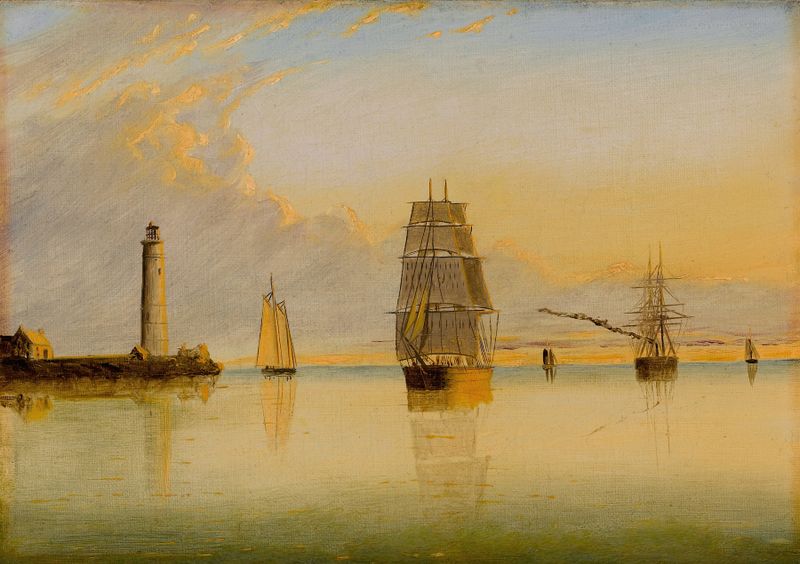
The resplendent glow of dawn hugs the horizon, yet beneath the shimmering surface, a deep longing stirs. Focus first on the soft hues of the sky, where gentle pastels blend seamlessly into one another, creating a celestial canvas that beckons the viewer’s gaze. Notice how the light gracefully falls upon the waves, their frothy edges catching the early sunlight, while the distant cliffs loom in shadow, a reminder of nature's duality. With sweeping brushstrokes, the artist captures both the serenity and the tumult of the coastline, creating a moment suspended between tranquility and restless yearning. Delve deeper into the contrasting elements present.
The delicate balance between light and shadow embodies the tension of morning awakening—a time when dreams linger yet life begins anew. The golden reflections on the water symbolize hope and possibility, while the dark cliffs herald the unknown, inviting contemplation of both beauty and despair. Each element is painted with intention, reflecting the artist's inner conflicts and the bittersweet nature of existence. Clement Drew painted Morning on the Coast in 1880 during a period marked by a growing interest in capturing the sublime aspects of nature.
At this time, he navigated a personal journey through both artistic aspiration and the evolving landscape of American art, where the Romantic ideals were giving way to new, impressionistic influences. His work reflects a deep connection to the coastlines of New England, where he sought to convey the raw, emotional experience of nature’s beauty intertwined with a sense of longing.