
Morning star — History & Facts
Who listens when art speaks of silence? In the delicate stillness of Morning Star, a whisper of revolution lingers in every brushstroke, inviting contemplation and challenge. Look to the center of the canvas where light breaks through, illuminating a figure cloaked in shadows, standing at the precipice of dawn. The surrounding landscape is awash in muted hues—soft greys and pale blues that suggest both serenity and unrest. Notice how the artist employs a subtle gradient in the sky, transitioning from a deep indigo night to the first blush of morning.
This interplay of light and shadow creates a tension that draws the eye and stirs the heart. At first glance, the solitary figure might seem passive, yet the clenched fist and turned head suggest an inner turmoil, a readiness to act amidst the quietude. The contrast between the calm, expansive backdrop and the tightly-focused figure speaks to the duality of hope and despair that resonates in times of change. Each stroke underscores the notion that every dawn is not just a new beginning but a call to awaken and resist complacency. Józef Szermentowski painted Morning Star in 1874, a period marked by political upheaval and social reform in Europe.
Living in Poland during a time of national struggle, his work reflects both personal and collective unrest. The artist's commitment to capturing the spirit of his time is evident, as he navigated a world caught between the old and the new, embodying the silent cries of a society on the verge of transformation.
More Artworks by Józef Szermentowski
Browse all →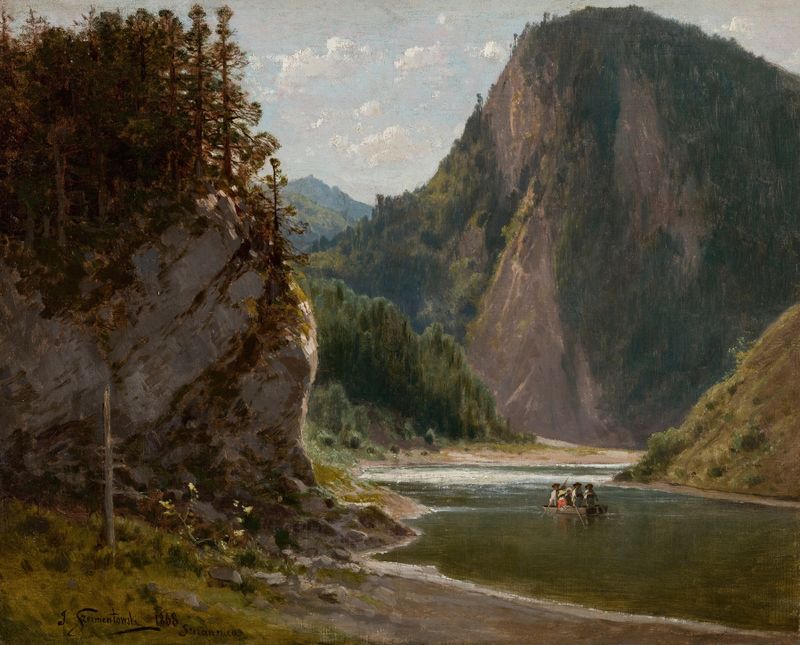
The Dunajec River in the Pieniny Mountains
Józef Szermentowski

View of Sandomierz from the Vistula River
Józef Szermentowski

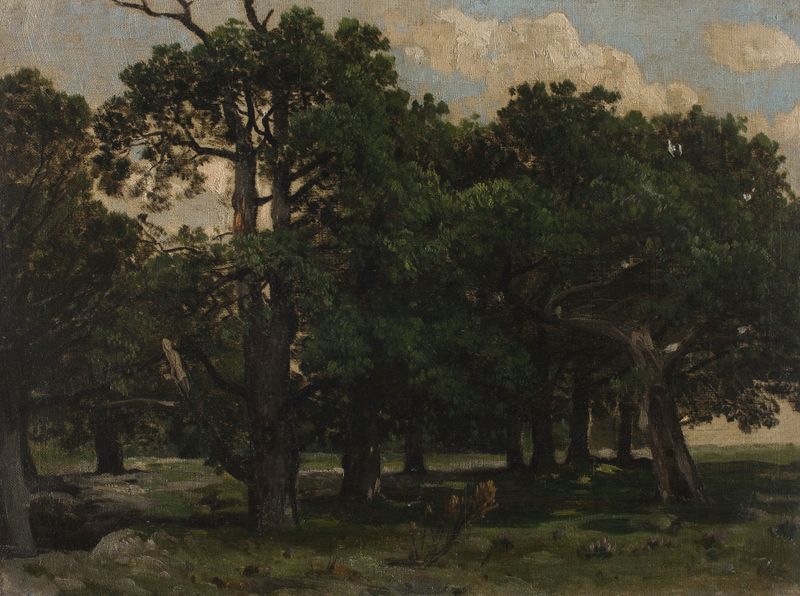
Oak forest
Józef Szermentowski

Forest
Józef Szermentowski
Pines
Józef Szermentowski

Landscape with Cows at a Watering-Place
Józef Szermentowski

Volhynian Village
Józef Szermentowski
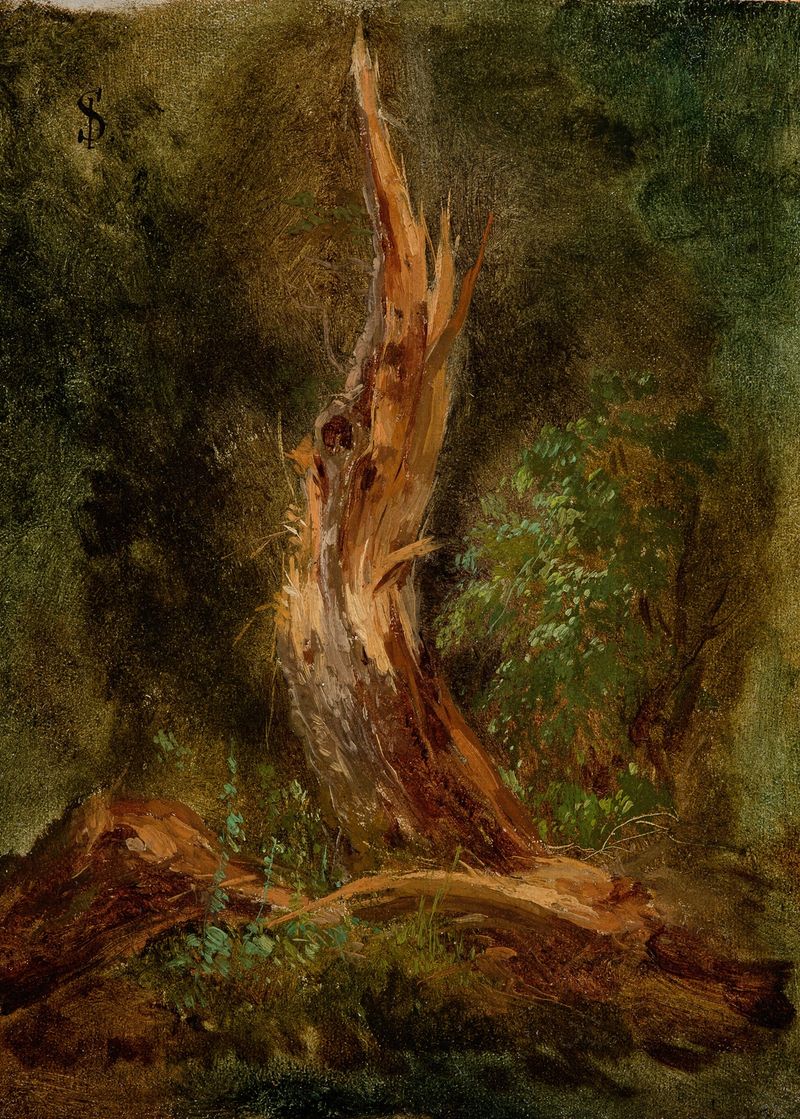
Volhynian Forest
Józef Szermentowski

Forest edge
Józef Szermentowski

Peasant funeral
Józef Szermentowski





