Motiv aus Voloska bei Abbazia — History & Facts
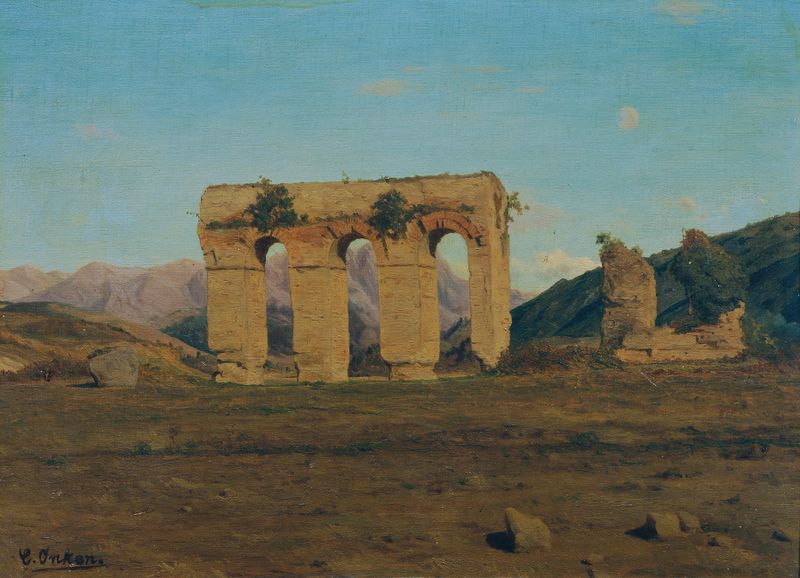
Can beauty exist without sorrow? In the delicate balance of nature’s palette, every vibrant hue carries the weight of its own truth. Look to the foreground, where a sun-dappled path meanders through a lush landscape, inviting the viewer into a serene world. Notice how the warm golden tones of the earth contrast with the deep greens of the foliage, creating a visual harmony that evokes both calmness and longing. The painting’s composition encourages the eye to wander through layers of detail, from the gently swaying grasses to the distant hints of rolling hills bathed in soft light. Within the serene beauty lies a subtle tension between the idyllic setting and the notion of fleeting moments.
The painter’s choice to depict a tranquil scene prompts reflection on the passage of time and the ephemeral nature of happiness. Small details, such as the wisps of clouds and the stillness of the water, suggest a moment caught in suspension, offering a glimpse into the deeper existential questions that accompany our experiences of beauty. Carl Eduard Onken painted this work during a period marked by the rise of realism in the late 19th century. Living in Europe, he was deeply influenced by the artistic movements that sought to capture the authentic essence of landscapes and everyday life.
During this time, artists were increasingly interested in exploring the interplay between nature and human emotion, aiming to convey the richness of truth within their creations.