Mount Egmont — History & Facts
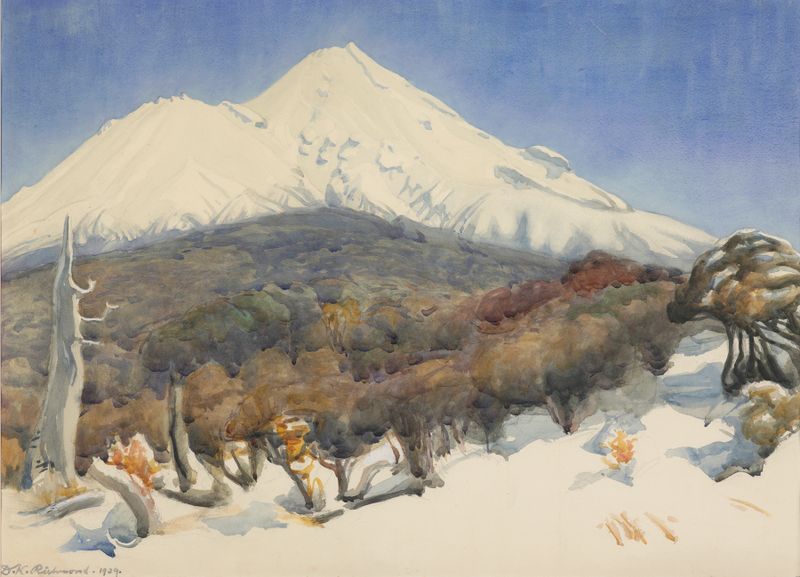
What if beauty was never meant to be finished? In Mount Egmont, the viewer is drawn into a world where perfection dances on the edge of fear and uncertainty, highlighting nature's raw power and fragility. Look to the foreground, where the lush, undulating hills extend gracefully, leading the eye toward the majestic volcano that dominates the canvas. Notice how the vibrant greens of the vegetation contrast sharply with the cool blues and whites of the distant mountain. The brushwork reveals an energetic tumult, with loose strokes suggesting both the vitality of the landscape and a hint of instability lurking beneath the surface, inviting contemplation. The interplay of light and shadow creates a tension that speaks to the transient nature of beauty.
The soft illumination on the mountain suggests an ethereal quality, as if capturing a moment just before the light fades. In the background, ominous clouds loom, hinting at the potential for chaos in what might seem a serene scene. This juxtaposition underscores a deeper narrative of fear—that nature, while breathtaking, possesses a volatile spirit that is always a heartbeat away from upheaval. In 1929, Dorothy Richmond painted this piece during a time when the art world was embracing modernist ideals and shifting perspectives.
Living in New Zealand, she was immersed in a landscape both breathtaking and formidable, reflecting her own struggles with the representation of natural beauty. It was an era marked by exploration and experimentation, and Richmond’s work stands as a testament to her quest to capture the sublime, straddling the line between admiration and trepidation.