Evening, York Bay — History & Facts
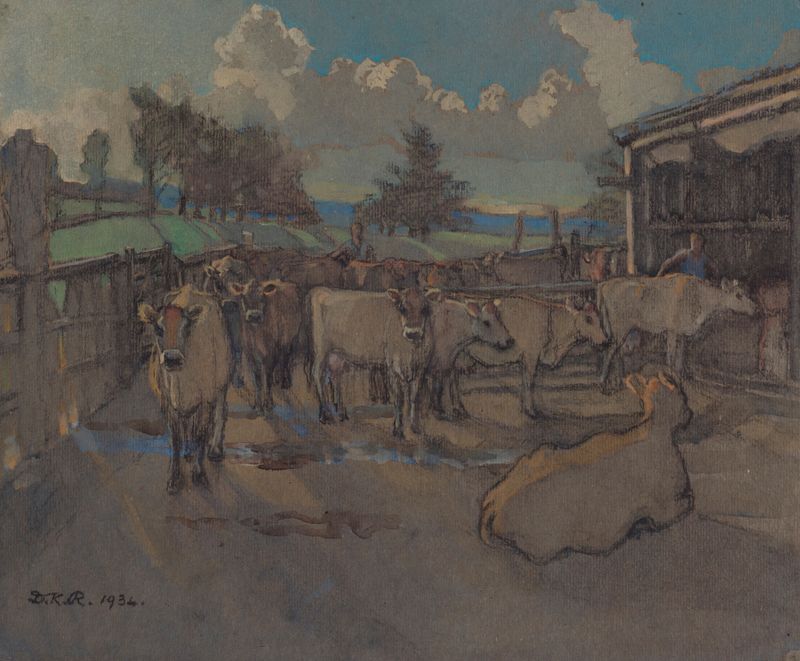
What secret hides in the quiet of the canvas? In Evening, York Bay, a serene twilight unfolds, capturing the delicate interplay between light and shadow—a moment suspended in time. First, look to the horizon where the sun dips below the waterline, casting a warm, golden hue that spreads like a whisper across the surface. Notice how the gentle waves shimmer with a myriad of reflections while the sky transitions to deep indigos and soft pinks. The composition draws your eye toward the small boats anchored at the bay's edge, their silhouettes outlined against the fading light, inviting you to contemplate the stillness embodied in their repose.
The brushwork is fluid yet precise, creating a sense of calm that envelops the viewer. Delve deeper into the painting's emotional layers, where innocence abides. The tranquil scene suggests a timelessness, evoking memories of childhood evenings spent beside the water, where dreams and reality intertwine. The figures, though small and distant, convey a sense of connection, perhaps hinting at shared whispers and the promise of adventure that lies just beyond the shore.
This juxtaposition of serenity and the anticipation of exploration resonates deeply, inviting viewers to reflect on the delicate nature of life's fleeting moments. In 1934, Dorothy Richmond painted this work during a period marked by both personal and artistic growth. Living in New Zealand, she was influenced by the natural landscape and her experiences in a changing world post-World War I. The era saw a burgeoning appreciation for the local environment, and Richmond's exploration of light and atmosphere in Evening, York Bay captures a profound connection to her surroundings, solidifying her place within the realm of New Zealand art.