The first seven of seventy, evening milking — History & Facts
Each stroke reveals the profound tensions of existence that often lay hidden beneath the surface. In the gentle twilight of life, an artist invites us to reflect on the void that exists in the spaces between human actions. Look to the center of the piece, where soft hues of dusk envelop a lone figure engaging in the serene task of milking. The muted tones of the surrounding landscape contrast with the warm glow emanating from the milking pail, drawing our eye immediately to this focal point of labor and care.
The painter's deft brushwork captures the intimacy of the moment, while the play of light and shadow hints at the encroaching night, evoking a sense of stillness and contemplation. Within this tranquil setting, deeper meanings emerge. The act of milking becomes a metaphor for nurturing and the cycles of life, suggesting an intrinsic connection between labor and sustenance. The solitude of the figure contrasts sharply with the vastness of the landscape, reflecting the inner void many experience even in moments of productivity.
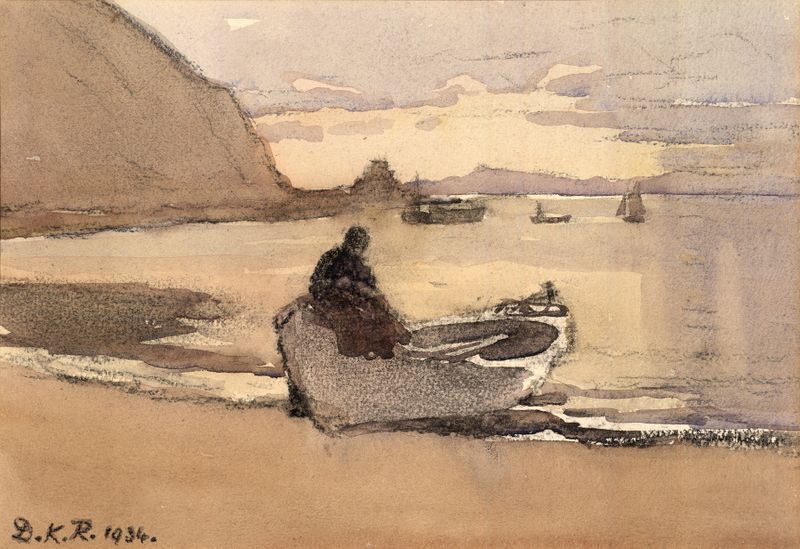
The viewer is left to ponder the quiet perseverance required to face such loneliness, and the untold stories woven into this evening ritual. In 1934, Dorothy Richmond painted this work during a time of personal and artistic exploration. As she navigated the challenges of the Great Depression, her art began to embody themes of resilience and quiet introspection. This was a period marked by her growing recognition as a folk painter, where she captured everyday life with empathy and precision, contributing to a broader narrative of American art during a tumultuous time.