Mount Ibuki in snow — History & Facts
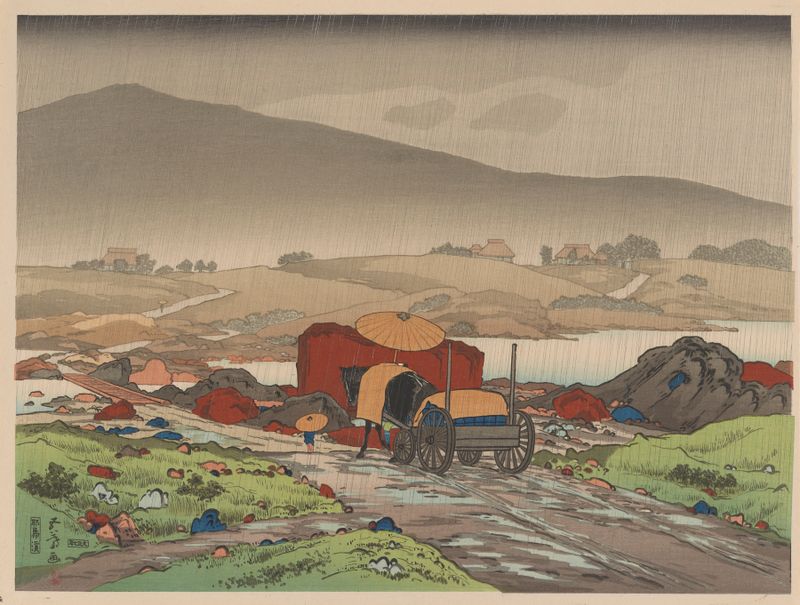
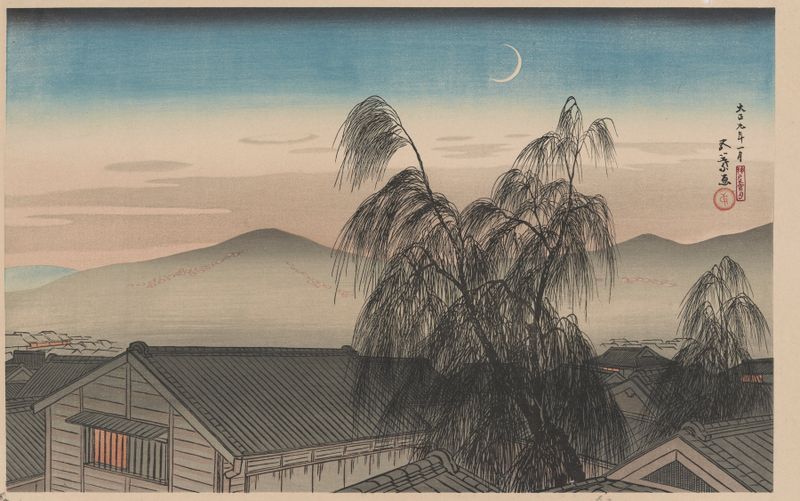
Where does light end, and longing begin? In the realm of landscape, the boundary feels both delicate and infinite, drawing us into a world where rebirth is painted in layers of white and blue. Look to the foreground of Mount Ibuki in snow, where a delicate blanket of snow covers the landscape, glistening under the soft embrace of winter light. Notice how the artist employs a subtle gradation of blues and whites, creating a serene atmosphere that invites contemplation. The mountain's silhouette rises majestically in the background, its peaks softened by a veil of mist, leading the viewer's eye upwards, as if beckoning them to explore the realm of dreams and possibilities. Beneath this tranquil exterior, a contrast emerges—the stillness of snow juxtaposed with the vibrant life that lies beneath.
The painting suggests the quiet promise of transformation, a reminder that even in the coldest of seasons, life stirs just beneath the surface. The gentle hues evoke a sense of nostalgia, prompting reflections on personal journeys and the cyclical nature of existence itself. Each brushstroke whispers tales of resilience, embodying the essence of rebirth amid nature's frozen pause. During the years 1920-1921, the artist crafted this piece while living in Japan, a time when traditional woodblock prints were experiencing a resurgence.
Goyō was deeply influenced by the aesthetic principles of Ukiyo-e, but he sought to innovate, merging them with his own unique vision. This period also marked a shift towards modernity in Japanese art, as cultural exchanges with the West began to shape new perspectives, alongside Goyō's reverence for nature and its timeless beauty.