Rain at Yabakei — History & Facts
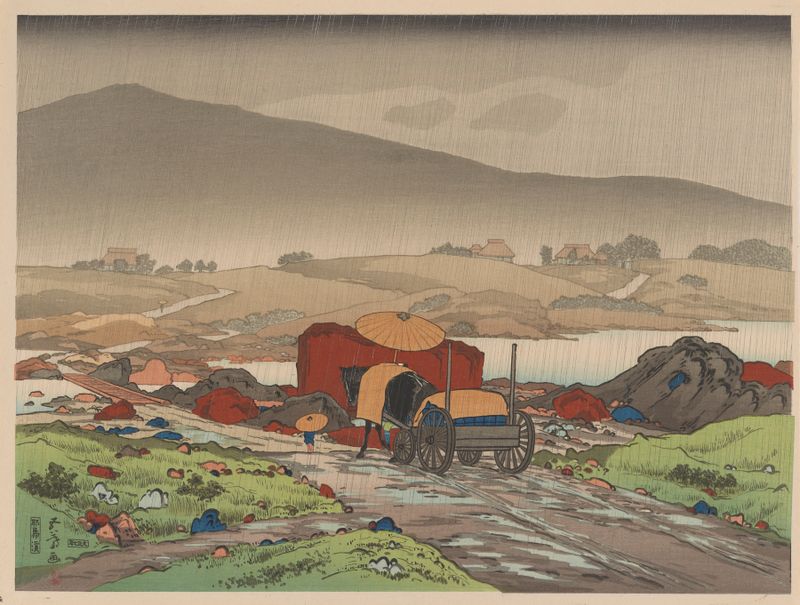
Art reveals the soul when the world turns away. In moments of quiet reflection, the heart longs for deeper connections, a sentiment beautifully encapsulated within the contours of a serene landscape. Look to the center of the canvas, where the delicate interplay of rain and verdant foliage unfolds. The artist employs a soft palette of greens and blues, creating a tranquil atmosphere that invites contemplation.
Notice how the gentle strokes evoke the rhythmic patter of raindrops, each droplet glistening as it dances upon the leaves. The meticulous attention to detail in the textures of the foliage draws the viewer in, transforming a simple scene into a rich tapestry of emotions. Beneath the surface, themes of solitude and longing resonate through the landscape. The solitary figure, barely perceptible beneath the canopy, embodies an introspective journey — caught between the beauty of nature and the yearning for human connection.
The rain, both a barrier and a cleansing force, symbolizes the duality of life’s experiences, enveloping the viewer in its tranquil yet poignant embrace. Each element beckons the observer to reflect not just on the scene, but on their own inner landscapes. In 1918, Hashiguchi Goyō painted this piece during a time of political upheaval, both in Japan and worldwide. As traditional art forms were evolving in response to modern influences, Goyō's work merged old techniques with contemporary themes, striving to capture fleeting moments of beauty and emotion in the midst of change.
It was a pivotal period for the artist, who sought to convey the nuances of human experience through landscape, reminding us of the power of art to connect us to our innermost feelings.