Yabakei — History & Facts
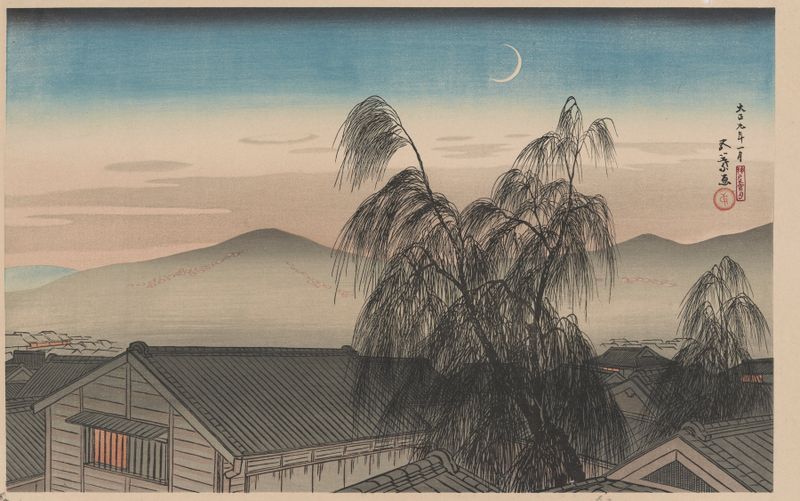
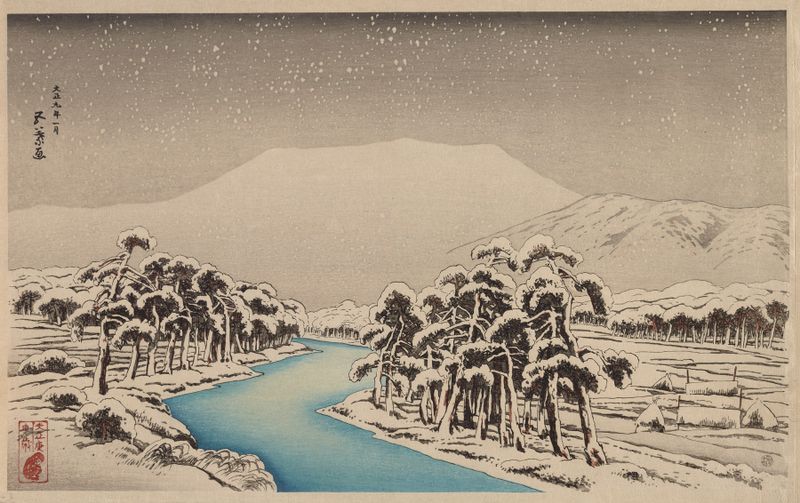
Could a single brushstroke hold eternity? In Yabakei, the essence of fleeting moments intertwines with a revolutionary spirit, capturing a world both timeless and transient. Begin by directing your gaze to the elegant curve of the mountains, rising majestically in the background. Notice the delicate interplay of colors, where soft greens meet muted blues, creating a serene yet dynamic harmony. The foreground is a tapestry of texture, where vivid strokes depict the lushness of the land, while a subtle wash of color evokes a sense of depth, inviting you to wander into the scene.
Each brushstroke seems intentional, as if Goyō is inviting the viewer to breathe in the very essence of nature itself. Hidden meanings lie beneath the surface: the duality of strength and fragility emerges in the contrast between the rugged mountain peaks and the gentle stream flowing at their base. This balance encapsulates the tension of a changing era, as nature remains steadfast while humanity transforms. Revisiting the subtle details, the interplay of shadow and light reveals a deeper narrative—an invitation to reflect on the cyclical nature of life amidst the unyielding march of progress. In 1918, Goyō painted this piece as part of a greater exploration of traditional aesthetics in a world embracing modernity.
Living in Japan during an era marked by political upheaval and societal change, he sought to bridge the past with the present, embracing both the beauty of the natural landscape and the revolutionary spirit of his time. This piece stands as a testament to a delicate balance, one that resonates in the hearts of viewers across generations.