Mountain Landscape with Travelers at a Well — History & Facts
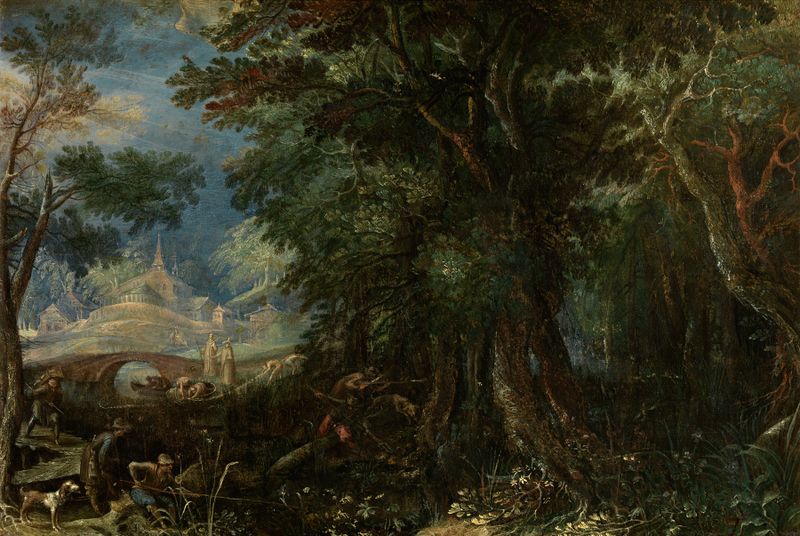
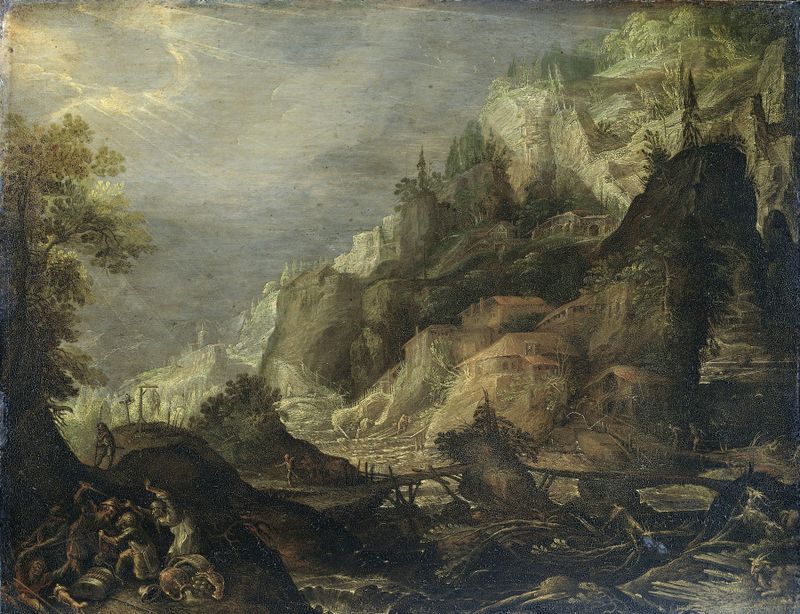
In a world frantic with change, serenity can feel like a fleeting memory, captured only in the stillness of art. Look to the center of the canvas, where figures pause beside a rustic well, their presence grounding the landscape that unfolds around them. The gentle slope of the mountains rises majestically in the background, kissed by soft pastels of dawn. Notice how the light dapples through the trees, its golden hue enveloping both travelers and nature, creating a harmonious dialogue between humanity and the wilderness.
The meticulous brushstrokes breathe life into the scene, inviting you to linger in this tranquil moment. Delve deeper into the details—the travelers’ expressions reveal hints of weariness and hope as they gather water, a symbol of sustenance amid their journey. The contrast of the robust mountains against the delicate figures evokes a sense of vulnerability in the face of nature’s grandeur, suggesting a narrative of resilience and introspection. The well stands not just as a source of water, but as a metaphor for refreshment and nourishment, a reminder of the need to pause and rejuvenate in life's journey. Frederik Van Valckenborch painted this work around 1610-1620 during his time in Antwerp, where he was influenced by the natural beauty of the Flemish countryside.
This period was marked by a growing interest in landscape painting, as artists sought to reflect both the external world and the internal human experience. Valckenborch’s meticulous attention to detail and serene compositions were pivotal in bridging the transition from Mannerism to a more naturalistic approach in art.