Mountainous Landscape — History & Facts
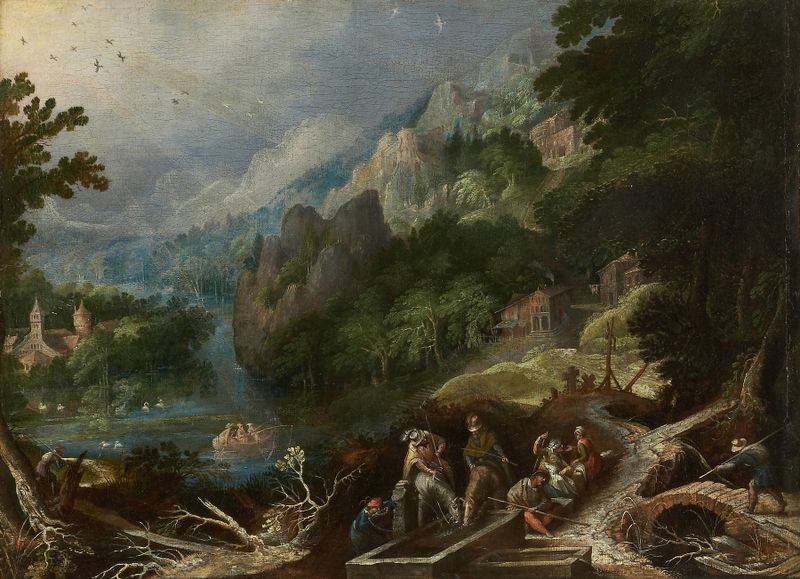
What if beauty was never meant to be finished? The expansive embrace of nature’s grandeur in Mountainous Landscape beckons us to ponder the infinite depths of its serene vistas. Look to the foreground where a lush meadow, painted in vibrant greens and dotted with wildflowers, draws the eye into the scene. Notice how the majestic mountains rise dramatically in the distance, their peaks kissed by soft clouds, creating a striking contrast to the foreground's liveliness. The artist employs a rich palette, with deep blues and earthy tones that evoke both tranquility and awe, while the delicate brushstrokes suggest movement within the landscape, as if time itself is suspended. In this artwork, contrasts abound—the tension between serene beauty and untamed wilderness mirrors life's own dualities.
The mountain range, both imposing and majestic, symbolizes the relentless pursuit of transcendence, while the gentle valley below offers an invitation to rest and reflect. Each detail, from the subtle play of light on the landscape to the distant figures engaged in daily life, adds layers of meaning that invite viewers to contemplate their relationship with the natural world. Frederik Van Valckenborch painted Mountainous Landscape in 1605, during a period when the Northern Renaissance was blossoming in Flanders. At this time, artists were deeply influenced by humanism and the natural world, seeking to capture both realistic detail and the beauty of the divine.
Van Valckenborch, known for his breathtaking vistas, was positioned at the intersection of this artistic movement, reflecting the era's fascination with both nature's splendor and its deeper, transcendental implications.