Mountain Stream on a Summer Day — History & Facts
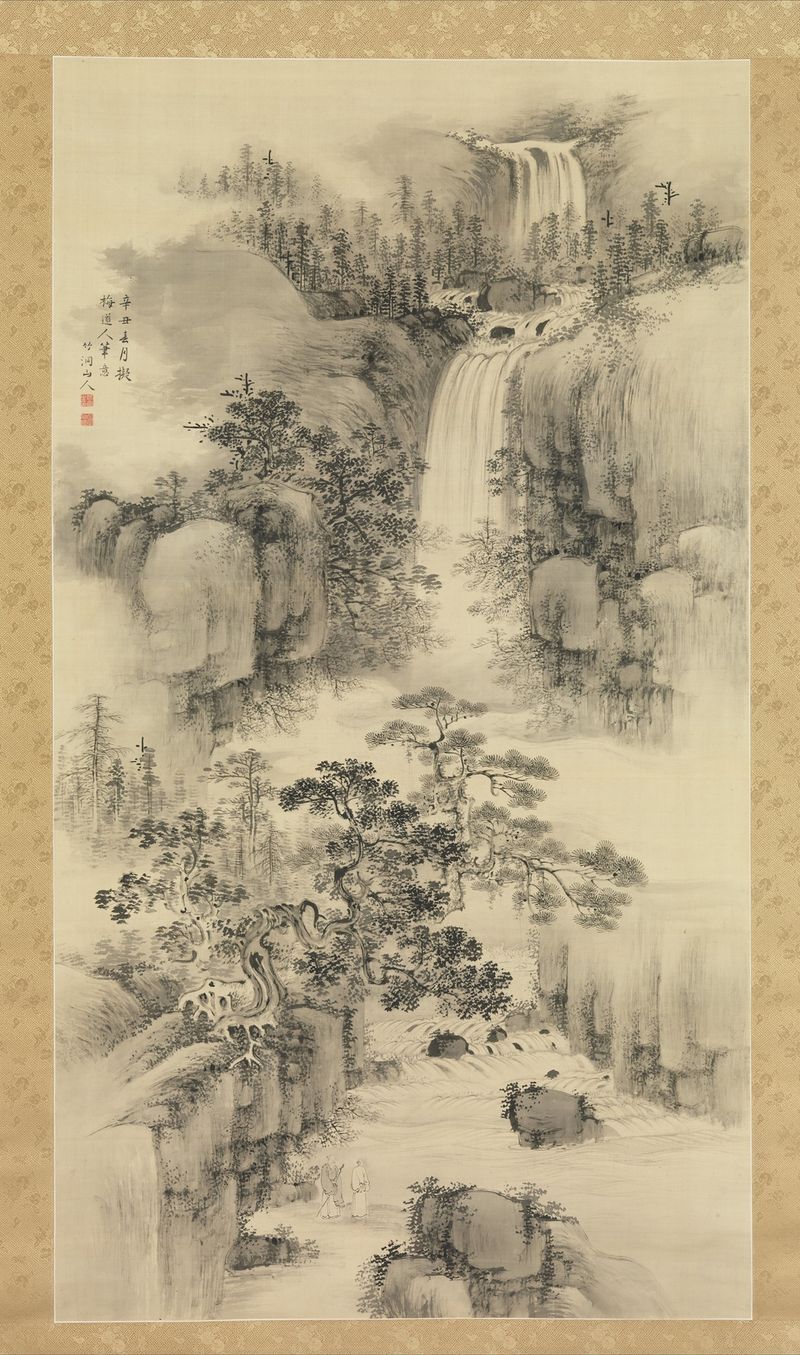
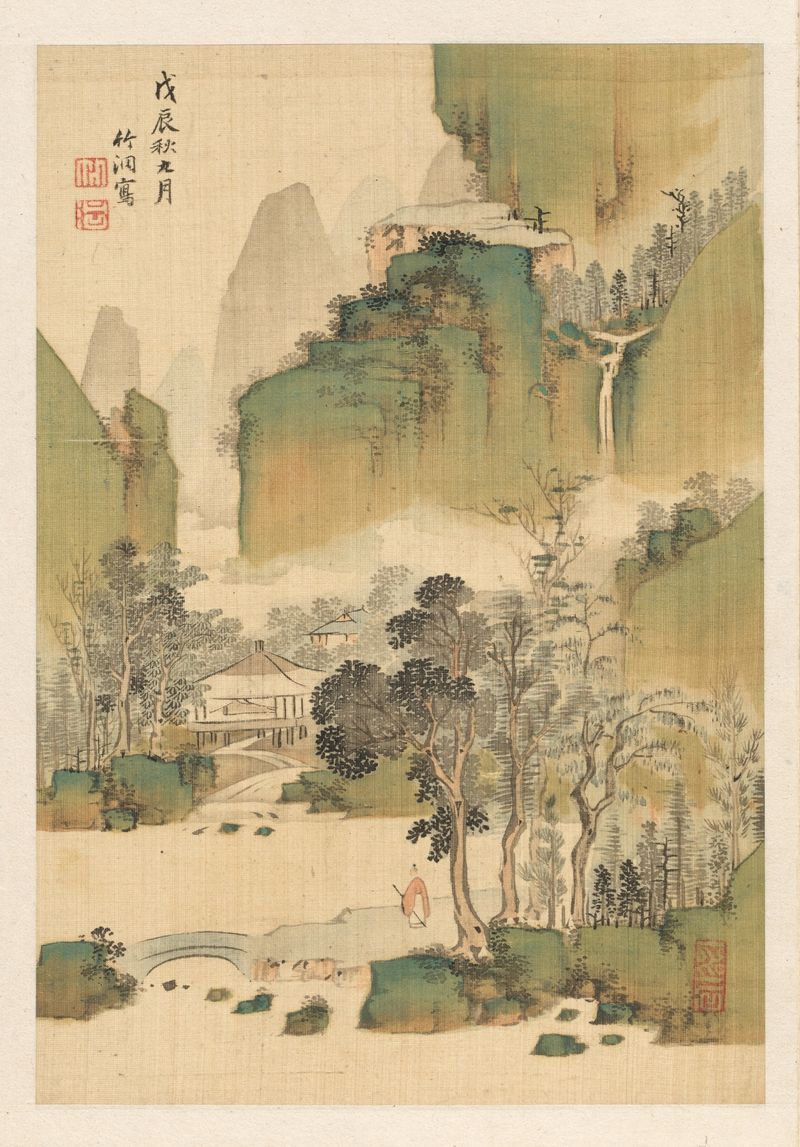
Could a single brushstroke hold eternity? In Mountain Stream on a Summer Day, divinity unfurls gently, merging the earthly with the ethereal, suggesting that nature's essence transcends mere observation. Look to the foreground, where delicate strokes depict a babbling stream, its water glistening beneath the summer sun. Notice how the artist captures movement through swirling lines, inviting the viewer's eye to dance along the currents while the vibrant greens of the surrounding foliage pulse with life. The composition is a harmonious blend of tranquility and energy, expertly balanced by Chikutō’s thoughtful use of space and color, evoking a sense of serenity amidst the flow. Hidden within the scene lies a profound contrast: the fleeting nature of summer captured in the permanence of paint.
The stream’s lively flow suggests time rushing onward, while the stillness of the mountains in the background evokes permanence and stability. Each brushstroke invites contemplation of cycles—life, beauty, and decay—echoing the divine in nature's simplicity, infusing a sense of reverence for the moment depicted. During the 19th century, Nakabayashi Chikutō was navigating the complexities of a rapidly modernizing Japan while firmly grounded in traditional landscape painting techniques. He created this piece at a time when the appreciation for nature and its divine connections were central themes in art, reflecting a broader cultural dialogue about the balance between progress and heritage.