Mutton Cove, Plymouth — History & Facts
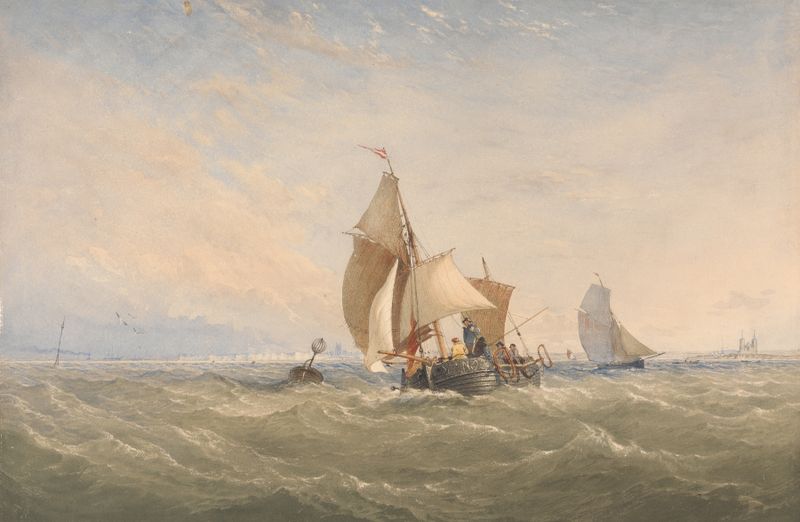
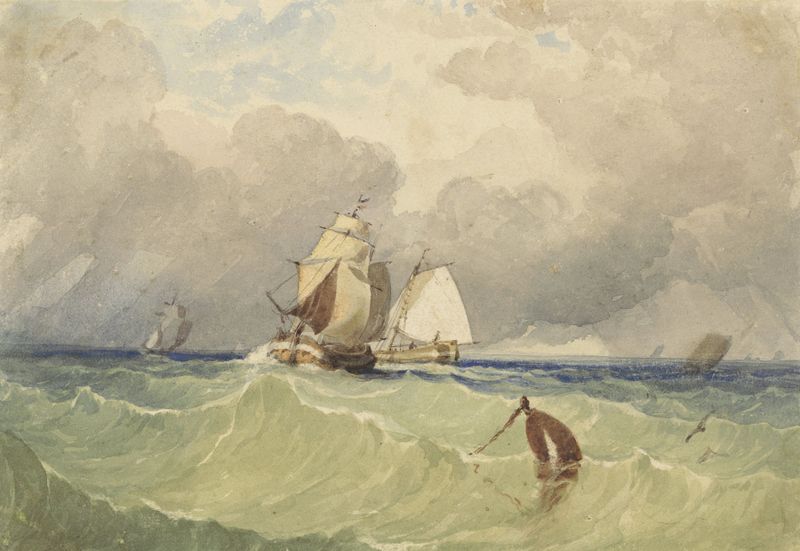
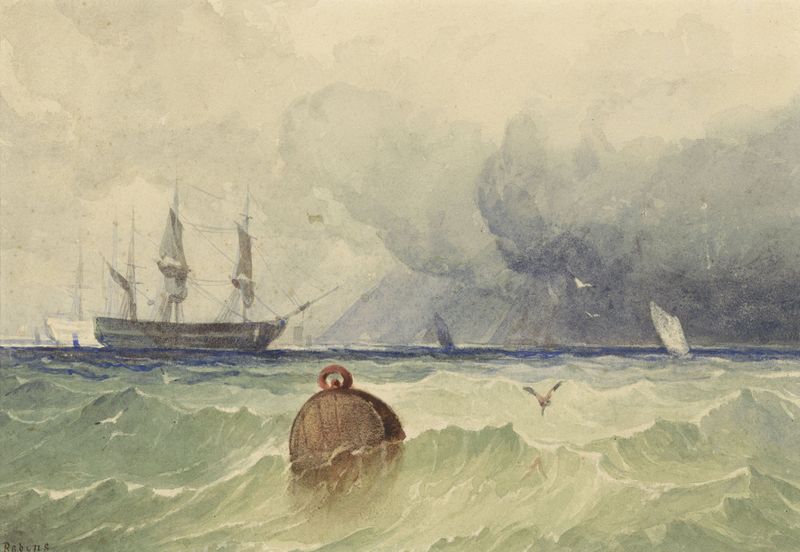
Did the painter know this moment would outlive them? The quiet violence of nature unfolds in Mutton Cove, as tumultuous waves crash against rugged rocks, an eternal struggle between earth and sea. Look to the left at the sharp, jagged cliffs rising defiantly from the turbulent waters. The artist employs a palette of somber greens and grays, evoking a sense of foreboding, while flecks of white foam at the water's edge hint at both beauty and danger. Notice how the horizon is obscured by a heavy, brooding sky, capturing the weight of impending storms, as if nature itself holds its breath in anticipation. Beneath the surface of this serene yet unsettling landscape lies an emotional tension — the conflict between tranquility and chaos.
The interplay of shadow and light creates a dichotomy, suggesting both solace and threat, while the rough textures of the rocks reflect the harsh realities of existence. This painting serves as a reminder of nature's might and the fragility of human life, evoking a sense of vulnerability against the powerful backdrop of the sea. Created in an unspecified period, Mutton Cove emerged during a time when Romanticism was influencing many artists. Robins, often focused on coastal scenes, painted during an era where the sublime landscapes of Britain were deeply cherished.
His work reflects not only a personal connection to the maritime environment but also a broader cultural appreciation for nature’s beauty intertwined with its ferocity.