
Naniwabashi bridge — History & Facts
Can beauty exist without sorrow? In the haunting allure of the Naniwabashi bridge, a delicate tension between joy and melancholy emerges, captivating the viewer with its intricate layers. Focus on the bridge itself, elegantly arched across a tranquil body of water. Notice how the warm, golden hues of the setting sun bathe the scene, illuminating the wooden structure while casting long, soft shadows that stretch across the water’s surface. The serene reflections ripple gently, suggesting a calmness that is, paradoxically, both inviting and elusive.
The meticulous brushstrokes and subtle gradations of color reveal a deep care for detail that draws the eye and holds it captive. Beyond the aesthetic beauty lies a deeper narrative. The bridge stands as a symbol of connection; yet, the stillness surrounding it hints at the isolation that often accompanies longing. Each element—the gentle sway of the water, the distant trees silhouetted against the sky—serves to evoke a bittersweet ache, suggesting that every moment of ecstasy is shadowed by the knowledge of transience.
The artist’s choice of muted tones paired with the vibrant sunset invites contemplation of life's impermanence and the coexistence of joy and pain. Created in 1947, Naniwabashi bridge emerged during a period of reconstruction in post-war Japan. Akamatsu Rinsaku, influenced by the shifting social landscapes and the resurgence of traditional aesthetics, sought to fuse the essence of the natural world with emotional depth. This work reflects a time of reflection and renewal, embodying both a yearning for beauty and an acknowledgment of the scars left by the recent past.
More Artworks by Akamatsu Rinsaku
Browse all →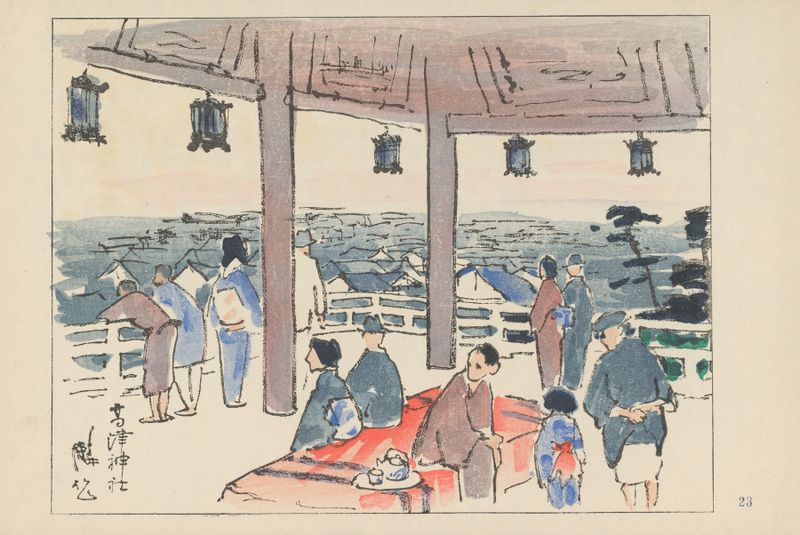
Kozu shrine dedicated to Nintoku Emperor
Akamatsu Rinsaku
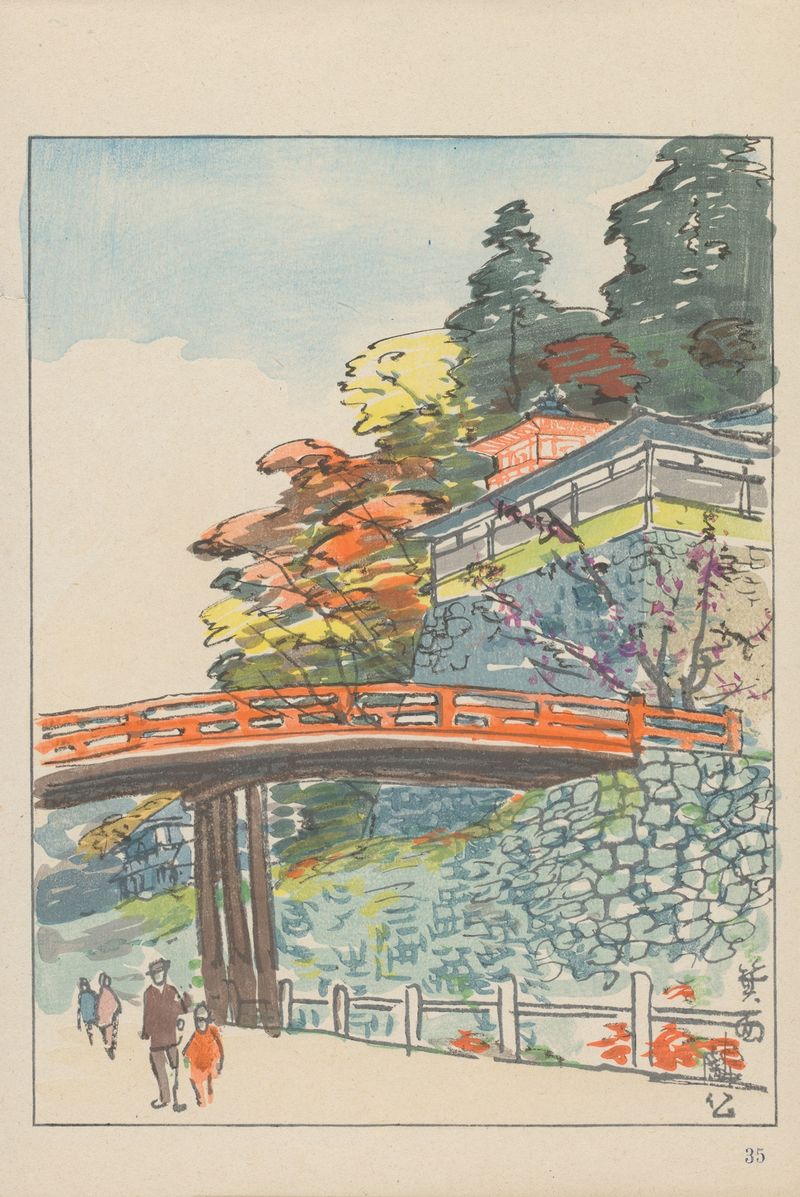
Minoo, National Park
Akamatsu Rinsaku
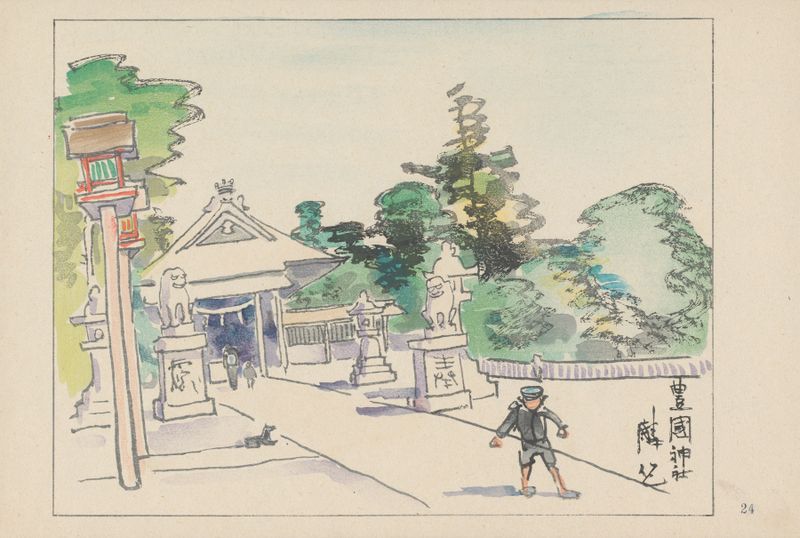
Toyokuni shrine dedicated to Toyotomi Hideyoshi
Akamatsu Rinsaku

Tsumura betsuin, the agency of Nishi-honganji
Akamatsu Rinsaku
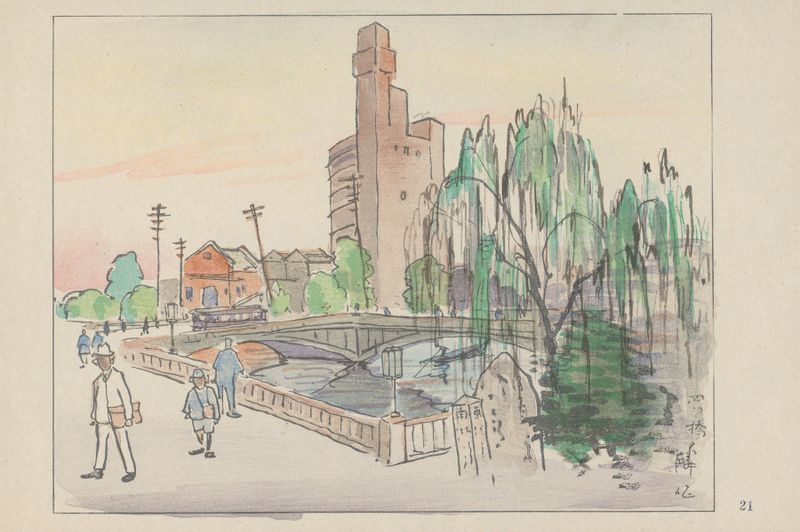
Yotsubashi, four joint bridges
Akamatsu Rinsaku
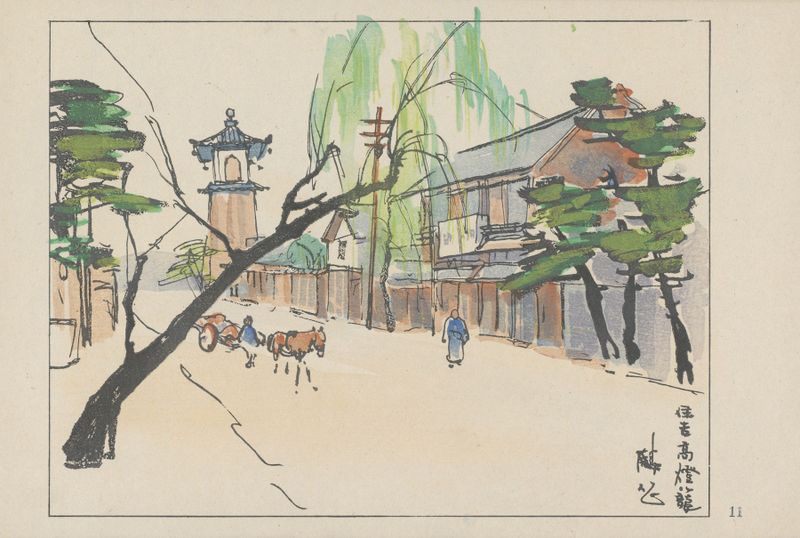
The high lanton at Sumiyoshi, a light house in older time
Akamatsu Rinsaku
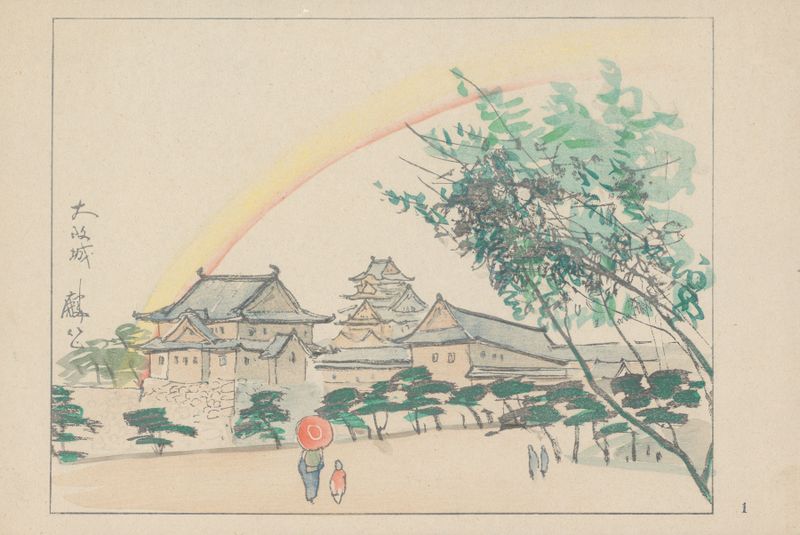
Osaka Castle, built by Toyotomi Hideyoshi in 1585 A.D
Akamatsu Rinsaku
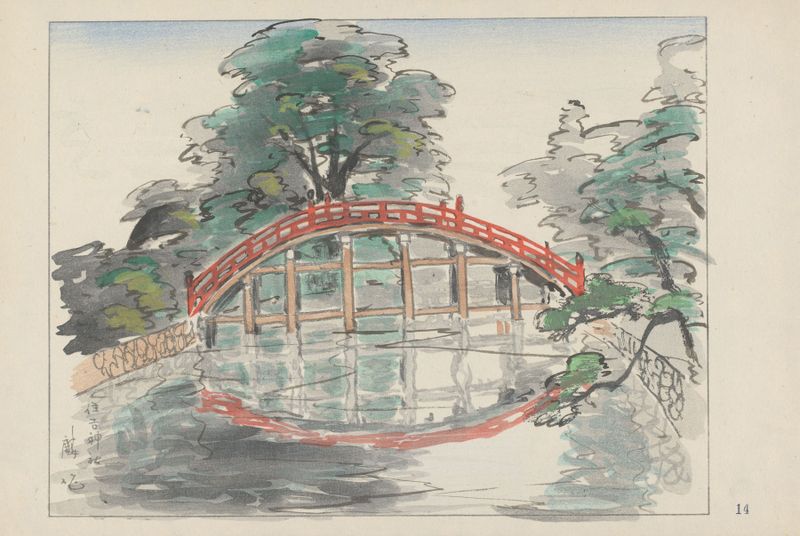
Sumiyoshi Shinto shrine
Akamatsu Rinsaku
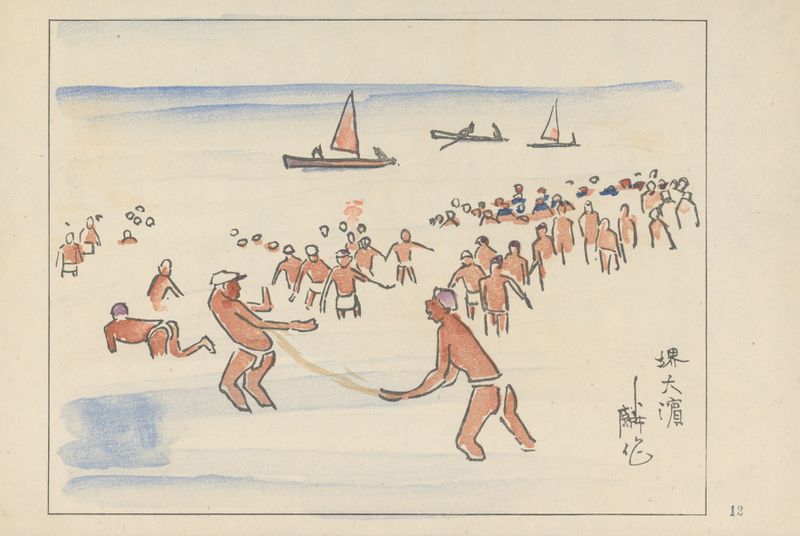
Sakai Ohama, swiming beach
Akamatsu Rinsaku

Kawaguchi, the estuary of Yodo river
Akamatsu Rinsaku
More Architecture Art
Browse all →
The statue of Liberty
Frédéric Auguste Bartholdi

View of Houses in Delft, Known as ‘The Little Street’
Johannes Vermeer

View of Houses in Delft, Known as ‘The Little Street’
Johannes Vermeer

The Cathedral in Rouen. The portal, Grey Weather
Claude Monet

The yellow house
Vincent van Gogh

The Church in Auvers-sur-Oise, View from the Chevet
Vincent van Gogh