Near Arco On Lake Garda — History & Facts
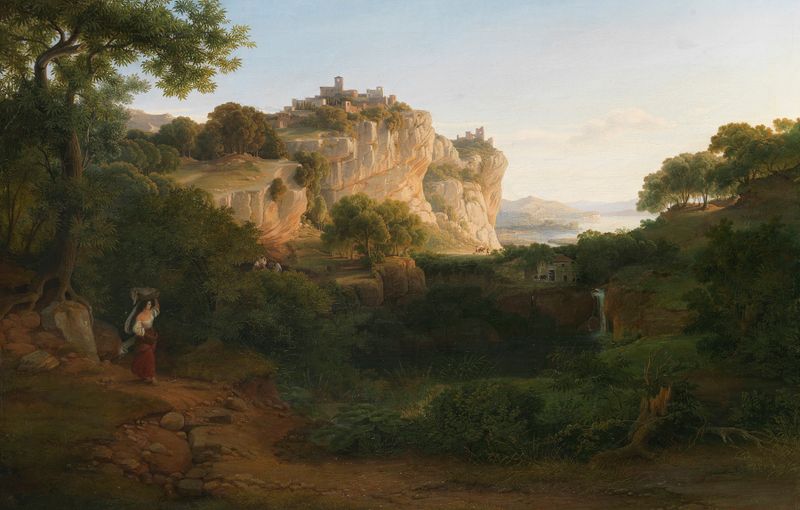
When did color learn to lie? The hues of serenity can often mask the deeper pangs of isolation lurking beneath the surface of beauty. Each brushstroke carries a weight, whispering secrets of solitude that only the keen observer can decipher. Focus on the tranquil expanse of the lake, its gentle ripples shimmering under the sun’s golden embrace. Look to the left where the distant hills cradle the water, their lush greens contrasting against the gentle blues and soft whites of the sky.
Notice how the golden light bathes the scene, illuminating not just the landscape but the solitary figure in the foreground, casting a long shadow that speaks to a profound absence. The composition draws the eye in a circular motion, inviting one to explore both the peaceful surroundings and the underlying tension of the lone presence. This artwork encapsulates a striking duality: the idyllic scenery and the poignant sense of loneliness it evokes. The vibrant colors of the landscape seem to celebrate life, yet they only serve to highlight the figure's isolation.
The stillness of the water and the quiet hills amplify the solitude, creating a contrast between the external beauty and the internal struggle. The blending of hues suggests that while the world may appear joyous, there is a hidden sorrow that those who look closely might recognize. During the period when this piece was created, Alexander Herrmann was deeply influenced by the natural landscapes of Italy. He painted Near Arco On Lake Garda around the late 19th century, a time when artists were beginning to explore new techniques and emotional responses to nature.
This was also an era marked by personal and artistic journeys, as many sought to convey the complexities of human experience against the backdrop of the evolving world around them.