Niagara Falls — History & Facts
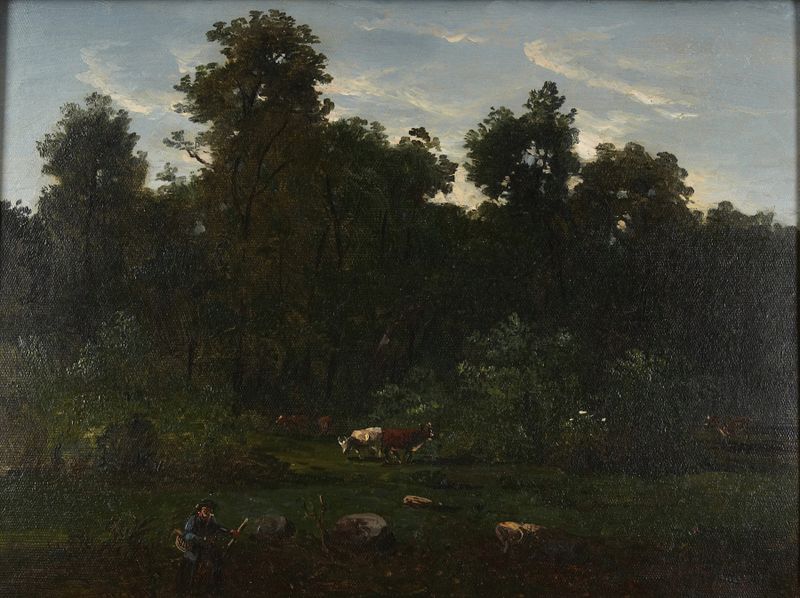
Is this a mirror — or a memory? The silence of cascading water can echo in the deepest corners of our soul, drawing us into a moment both eternal and fleeting. Look to the left at the soaring cliffs, their rugged textures rendered with delicate brushstrokes that dance between light and shadow. Notice how Gignoux captures the ferocity of the falls, the water tumbling with relentless energy, while the mist hangs delicately in the air. The palette, dominated by blues and whites, evokes a sense of cool tranquility, even amidst the chaos of nature's power.
Each stroke brings life to the scene, inviting you to feel the crispness of the air and the weight of the moment. Beneath the surface, the painting reveals a juxtaposition of serenity and tumult. The stillness of the foreground contrasts sharply with the violent descent of the water, suggesting a deeper reflection on life’s dualities. The interplay of light and shadow creates a meditative space, inviting viewers to contemplate their own narratives amid the grandeur of nature.
The absence of people emphasizes solitude, allowing for a personal connection with the scene, as if one could stand there, lost in thought. In the mid-19th century, Gignoux was part of the American landscape painting movement, having settled in the United States after his training in Europe. During this period, the burgeoning appreciation for the American wilderness and its romantic portrayal in art flourished, mirroring a nationalistic pride in the vast, untamed beauty of the land. This painting reflects that ethos, serving as both a homage to nature and a testament to the artist's mastery in translating the sublime into paint.