Pastoral Scene — History & Facts
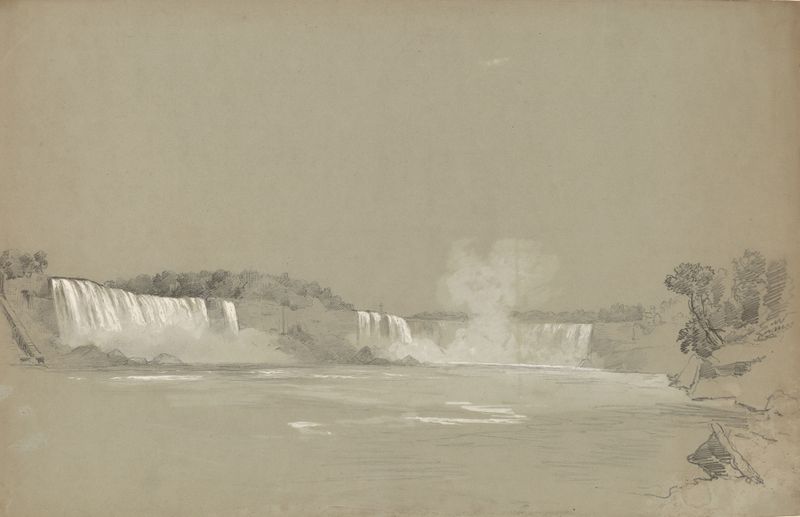
Can paint confess what words never could? In Pastoral Scene, the lush landscape breathes with a tranquility that belies the chaos of the human experience, inviting viewers to tread the fine line between serenity and madness. Look to the right at the serene stretch of rolling green hills, where a gentle river meanders, its waters shimmering under a soft, golden sunlight. The vibrant greens contrast with the rich earth tones of the cottages nestled in the background, creating a harmonious balance that draws the eye. Gignoux’s brushwork, fluid yet precise, evokes a sense of movement in the grass and trees, suggesting a whisper of wind—a moment suspended in time where nature's beauty reigns supreme. Yet, beneath this idyllic surface lies an unsettling tension.
The placement of the cottages, so inviting yet isolated, hints at a solitude that can quickly spiral into madness. The figures dotting the scene, though engaged in simple labor, appear oddly disconnected from their surroundings, suggesting an unspoken struggle against an overwhelming silence. This juxtaposition of labor and peace reveals a profound anxiety that resonates within the viewer's core, reminding us of the fragility of our own sanity in the face of nature's vastness. Created in 1880, this artwork reflects Régis François Gignoux's fascination with rural life amid the transformative changes sweeping Europe.
During a period of industrialization, he sought solace in pastoral themes that celebrated a simpler existence, all while grappling with the societal shifts that threatened to engulf it. Gignoux's work captures a moment in art when the romanticization of nature stood as a counterpoint to the encroachment of modernity, providing a poignant commentary on the human condition.