Rapids at Niagara Falls — History & Facts
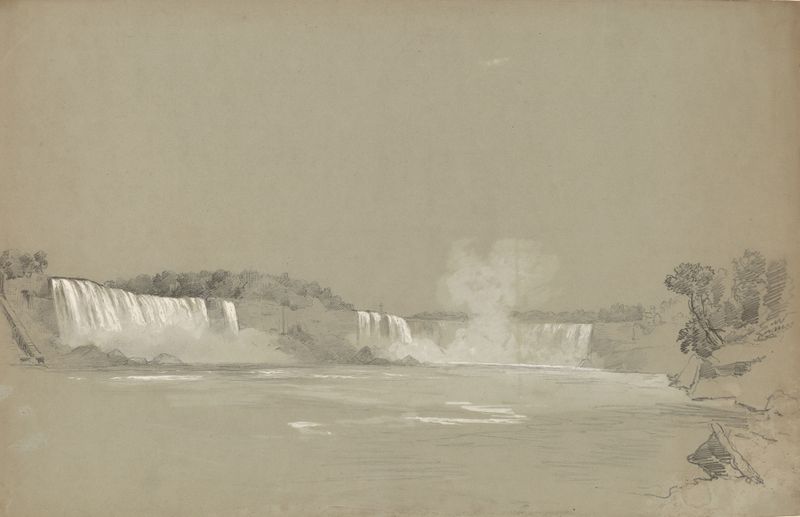
In the ever-changing dance of water, the artist captures a moment suspended in the void, a fleeting glimpse of nature's raw power and beauty. Look to the left at the tumultuous cascade of water, where the falls tumble dramatically, foaming white against the rough stone. The vibrant greens of the surrounding foliage contrast sharply with the grays and blues of the rock and water, drawing your eye into the heart of the scene. Gignoux’s deft brushwork creates an impression of movement, imbuing the water with life and energy, while dappled light plays across the surface, suggesting both serenity and chaos intertwined. Beyond the immediate spectacle, the interplay of light and shadow here speaks to a deeper tension—the transient nature of beauty and the inexorable force of time.
Each droplet of water, while vibrant and full of life, is also caught in a relentless journey towards the abyss. This juxtaposition of vitality and impending loss resonates with the viewer, inviting contemplation of our own ephemeral existence amidst the relentless flow of the world around us. Painted in 1855, this work emerged during a time of great change in both Gignoux's life and the broader art world. He was immersed in the Romantic movement, which emphasized emotion, nature, and the sublime.
This particular piece reflects the artist’s fascination with America’s landscapes, as well as a burgeoning interest in capturing the dynamic energy of natural phenomena in a way that challenged traditional representations of beauty.