
Off to the fishing grounds — History & Facts
What first catches the eye in Off to the fishing grounds is the restless energy of the sea, its surface whipped into movement by wind and tide, guiding the viewer’s gaze from the churning foreground to the distant horizon. The sails, taut and angled, speak of both purpose and skill, while the small figures aboard their boats are dwarfed by the expanse of water and sky. Light glances off the waves, picking out foam and spray, and the creamy palette of the clouds above echoes the sails below, binding sea and sky into a single, luminous stage.
The red pennants atop the masts add a note of urgency, as if the day’s work cannot wait. Every detail is chosen to draw us into the moment of departure, the anticipation of the day’s uncertain fortunes. Works like this by Abraham Hulk belong to a tradition of 19th-century marine painting, when scenes of everyday labor at sea became both a record and a celebration of coastal life. Such paintings were often sought by collectors who wanted reminders of the rhythms and risks of maritime work, at a time when industrialization was transforming both cities and countryside.
Though little is recorded about this particular canvas beyond its appearance at Bonhams London in 2004, its subject and style place it firmly within the world of Dutch and British seascapes, where the drama of ordinary lives played out against vast, changeable skies. The painting invites us to linger, to follow the boats outwards, and to imagine the stories waiting beyond the horizon.
More Artworks by Abraham Hulk

A freshening breeze
Abraham Hulk
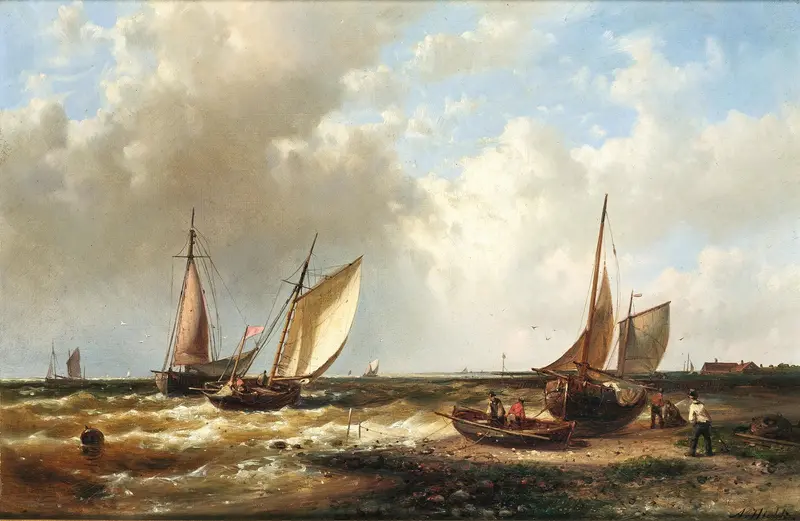
Fishermen at the Seaside
Abraham Hulk

Shipping off the coast
Abraham Hulk
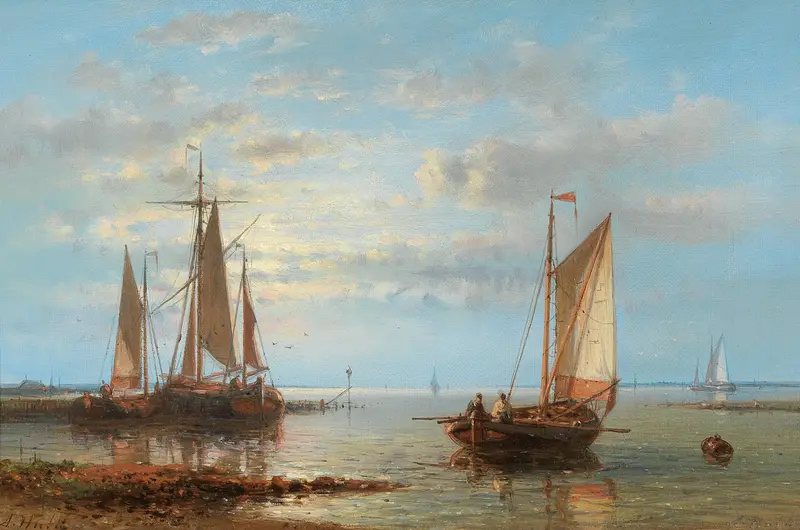
Sailing Boats on Rough Seas
Abraham Hulk
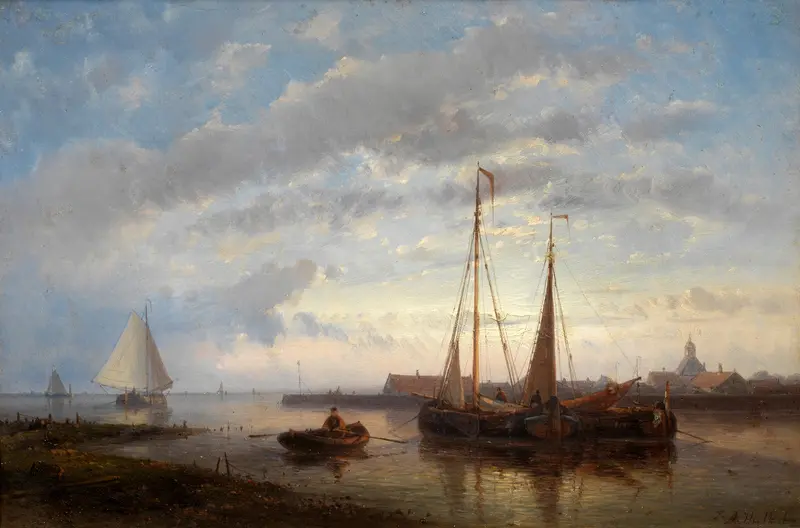
Fishermen at sunset
Abraham Hulk
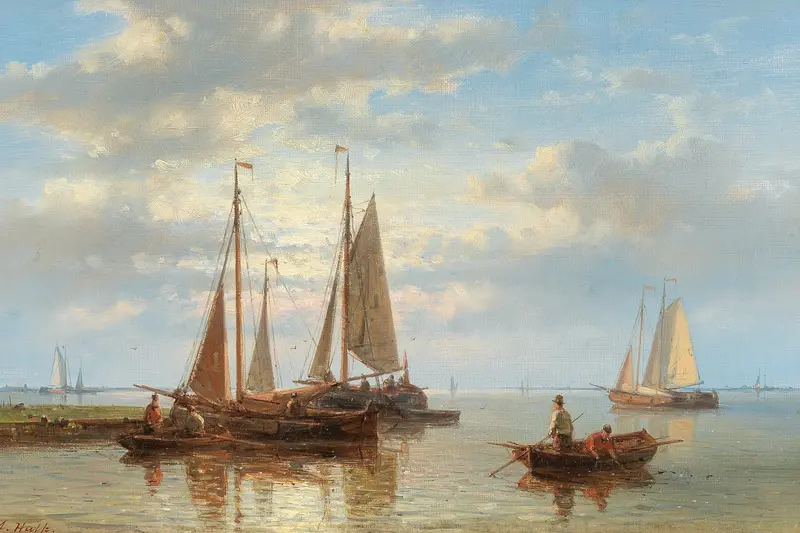
Sailing Boats On Rough Seas
Abraham Hulk
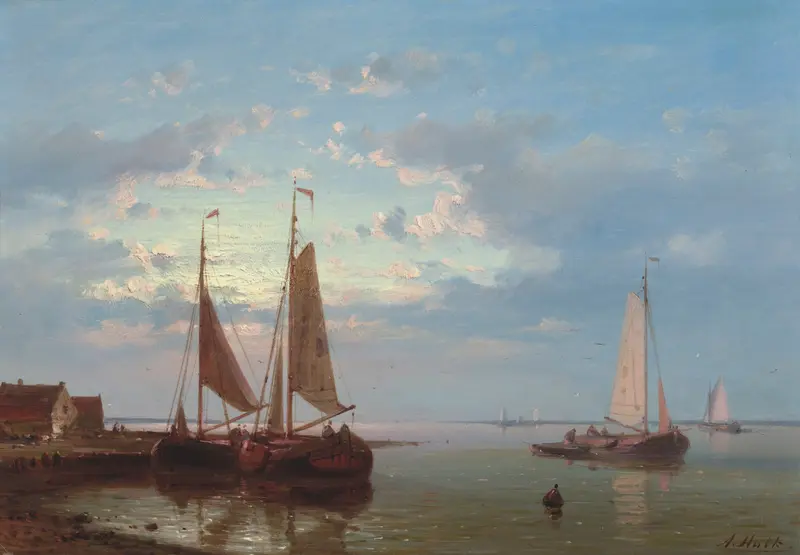
Fishing boats moored in a calm harbour
Abraham Hulk
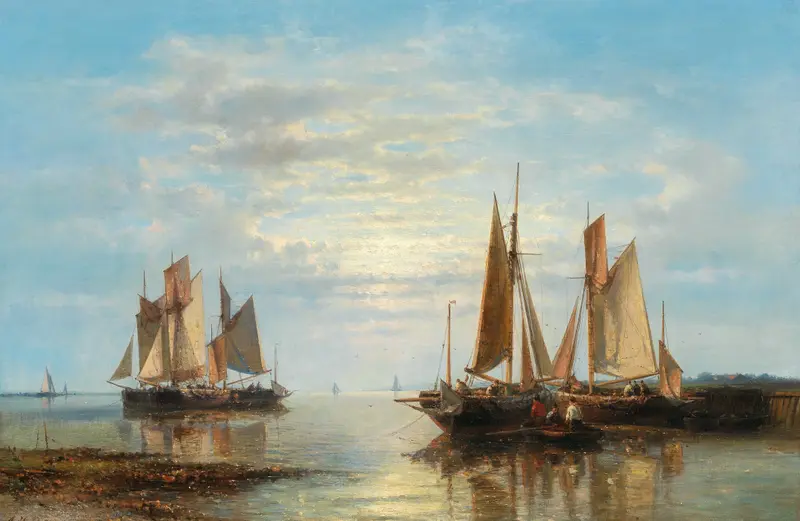
Sailing Boats On A Calm Sea
Abraham Hulk
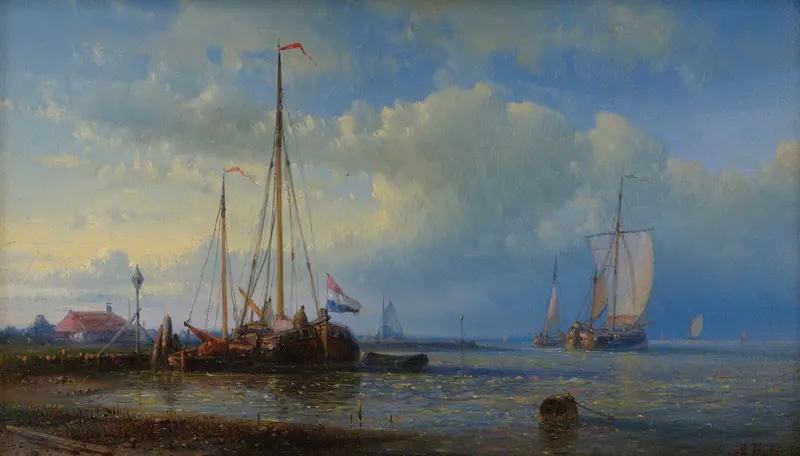
Seascape
Abraham Hulk
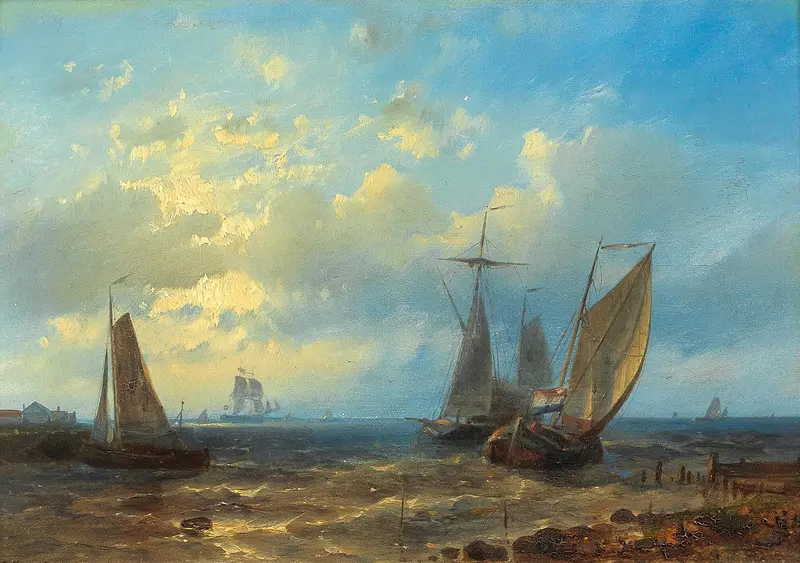
Fishing Boats By The Coast
Abraham Hulk





