Ohio River at Empire, Ohio — History & Facts
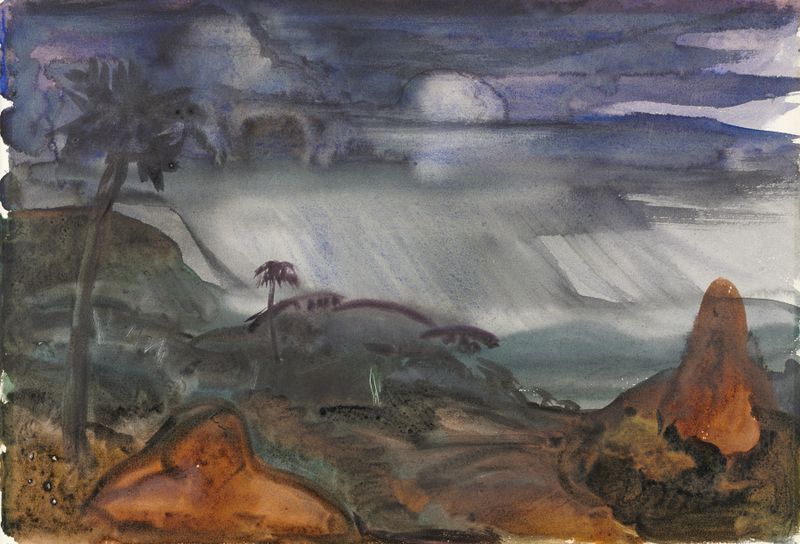
Could beauty survive in a century of chaos? In Paul B. Travis's Ohio River at Empire, Ohio, a haunting stillness beckons the viewer to explore the interplay between nature and human presence. The void of the landscape invites a contemplation of what remains when the world around us is in turmoil. Look to the left at the serene flow of the river, its waters mirroring the gentle curves of the distant hills.
The artist’s palette is a harmonious blend of greens and blues, punctuated by soft earth tones that breathe life into the scene. Notice how the light dances upon the water's surface, creating a luminous pathway that draws the eye toward the horizon. Each brushstroke evokes a sense of tranquility, contrasting sharply with the undercurrents of unease that linger beneath the surface. Hidden within this idyllic portrayal are whispers of tension—the edge of civilization pressing against the wild beauty of the landscape.
The lack of human activity suggests a yearning for solitude, as if the river itself holds onto memories of an unspoiled past. The composition encapsulates a moment caught in time, reflecting both the longing for connection and the inevitability of loss, a duality that resonates with the viewer's own experience of the world’s chaos. In 1922, Travis created this piece while living in New York, navigating the complexities of a rapidly changing art scene. The aftermath of World War I loomed large, influencing artists to reflect on themes of nature and humanity's place within it.
As modernism began to reshape artistic expression, Travis's focus on the serene landscape of Ohio reveals his deep connection to the American heartland amidst the tumult of a new century.